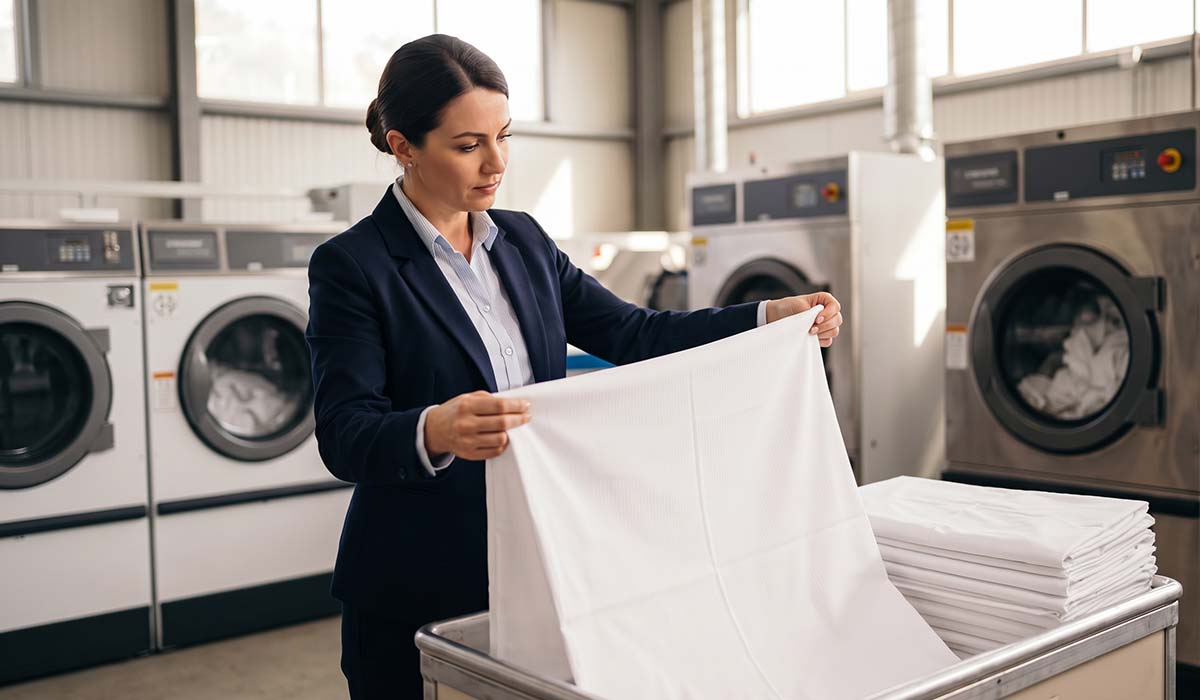
Replacing hotel bed sheets prematurely is an expensive, but avoidable issue for hotels. Commercial bedding faces severe wear & tear from daily laundering, heavy stain treatments, and continuous guest use.
Since most damage occurs during washing and drying rather than guest use, optimizing your laundry protocols can significantly extend fabric lifespan, protect your inventory, and ensure five-star comfort.
Here’s everything hoteliers need to learn to extend hotel bed sheets’ life and reduce replacement frequency.
How Hotel Sheet Lifespan Impacts Hotel Linen Budget
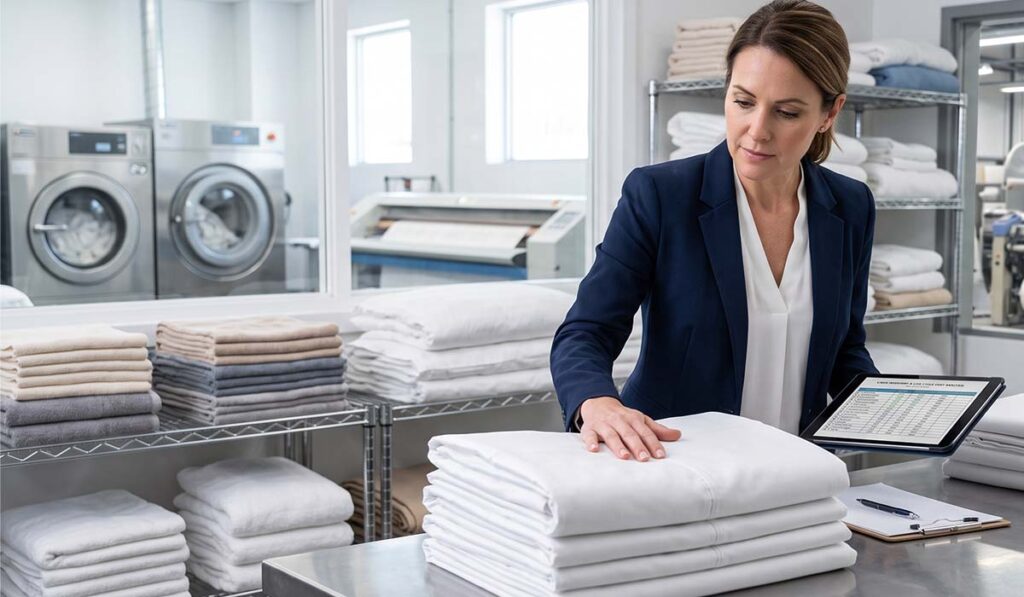
Hotel bedding is one of the largest operational expenses in hospitality purchasing. Extending the lifespan of your commercial bed sheets by even 20% to 30% delivers significant cost savings.
| Metric | Impact of Proper Care | Impact of Poor Care |
| Average Sheet Lifespan | 150 – 200 wash cycles | 50 – 75 wash cycles |
| Replacement Frequency | Every 12–18 months | Every 4–6 months |
| Annual Linen Budget | Predictable & controlled | High due to frequent reorders |
| Guest Satisfaction | High (soft, white, crisp sheets) | Low (frayed, rough, or dull sheets) |
Beyond direct replacement costs, longer-lasting sheets reduce labor hours spent inspecting, eliminating, and reordering compromised bedding stock.
5 Proven Steps to Make Hotel Sheets Last Longer
Proper hotel linen care requires a balance between hygiene, stain removal, and fiber preservation. Follow these core practices to maximize the lifespan of your commercial bed sheets.
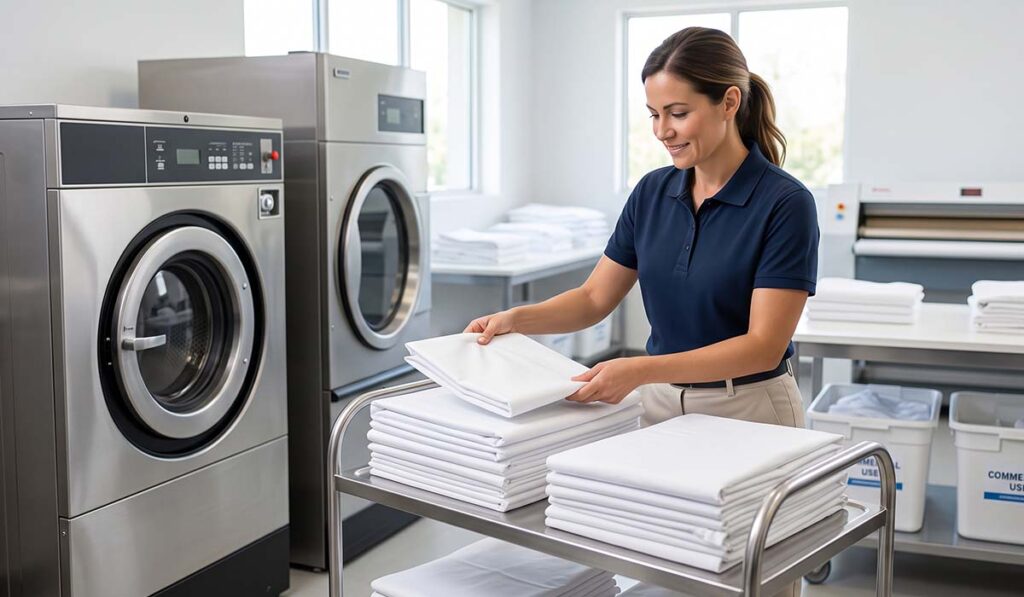
- Par Levels: Rest Your Linens Between Uses
One of the most common mistakes in hotel laundry management is working with an inadequate linen inventory.
- The 4-Par Rule: Always maintain a minimum of 4 Pars of bedding per room:
- 1 Par: On the bed
- 1 Par: In the floor closet (ready for use)
- 1 Par: In the laundry room (being washed/dried)
- 1 Par: Resting in storage
Cotton fibers need at least 24 hours to recover their natural shape and moisture balance after being washed, dried, and ironed. Rotating inventory prevents continuous mechanical stress on the same set of sheets.
- Wash at the Right Temperature and Water Level
Knowing how to wash hotel bed sheets correctly starts with water chemistry and thermal control.
- Water Temperature: Wash white cotton bed sheets and cotton-blend bed sheets at 140°F to 160°F (60°C to 71°C). This range effectively eliminates bacteria, body oils, and makeup without thermal shock damaging the cotton fibers.
When washing microfiber sheets, avoid using fabric softeners or excessive heat, as high temperatures can melt the synthetic fibers and degrade their soft texture.
- Water Levels: Maintain appropriate water levels in your commercial washers. Too little water increases mechanical friction between fabrics, leading to premature pilling and fiber weakening.
- Smart Chemical Dispensing
Chemical overuse is a primary cause of yellowing, fabric thinning, and tearing in hotel bedding.
- Avoid Excessive Chlorine Bleach: While bleach keeps sheets white, overuse breaks down cotton fibers rapidly. Switch to oxygen-based bleach (hydrogen peroxide) for regular wash cycles, reserving chlorine bleach strictly for severe stain reclamation.
- Monitor pH Balance: Ensure your final rinse cycle includes an acid sour (neutralizer) to bring the fabric pH to 5.5 – 6.5 (matching human skin). Residual alkaline detergent left in fibers makes fabric feel stiff and accelerates wear during drying.
- Skip Fabric Softeners: Liquid fabric softeners leave a chemical coating that reduces sheet absorbency and weakens cotton yarns over time.
- Optimize Drying Cycles (Don’t Over-Dry)
Excessive heat in commercial dryers causes more damage to hotel bed sheets than any other stage of laundering.
- Stop at 90-95% Dry: Remove sheets from the dryer while they retain a slight hint of moisture (about 5–10%).
- Use Cool-Down Cycles: Always allow a 3- to 5-minute cool-down phase at the end of the drying cycle. Dropping fabric temperatures gradually prevents thermal shock, reduces permanent wrinkling, and stops heat-induced shrinkage.
- Proper Storage Conditions
Store clean bed sheets in a cool, well-ventilated linen room away from direct sunlight. Sunlight UV rays fade whites and yellow cotton fibers over time. Avoid stacking sheets too tightly on shelves, as fabric needs room to breathe.
Extend Hotel Sheets Life with ACME Textiles Quality Hotel Bed Sheets
Investing in high-quality commercial bedding, such as the ACME Textiles collection, is another highly effective way to extend the lifespan of your hotel sheets.
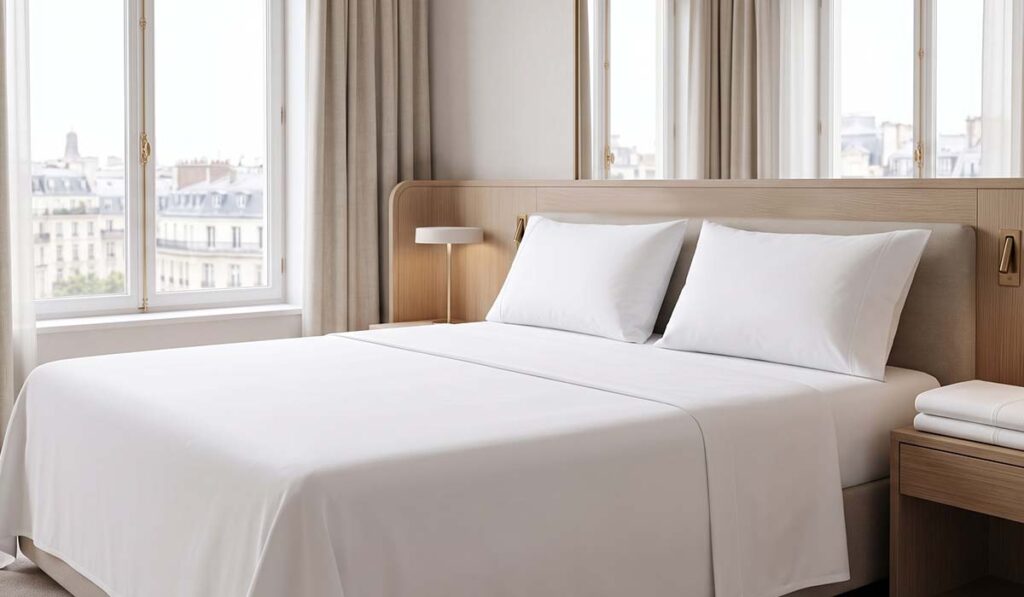
Every single sheet in our collection is engineered for superior durability, featuring reinforced stitching and high-strength yarns that outlast standard market sheets and withstand frequent industrial laundering.
Explore our wide collection of durable and premium hotel sheets designed for frequent commercial laundering:
Blended Bed Sheets
- Opal Super Blend – Everyday Sheets: Our ultra-durable, highly dependable everyday commercial blend.
- Icon T-200 Percale Sheets: A premium polycotton choice blending high durability with extra comfort for soft bed sheets that last.
- Forte T-250 Soft Plain Satin Sheets: Crafted using a crisp cotton percale weave. These percale bed sheets provide a silky-smooth texture that keeps guests cool.
- Swiss Stripe T-250 Tone on Tone Satin Sheets: Tone-on-tone striped satin sheets that instantly create a Hotel Collection Sheets look.
- Icon 300 Premium Sheets: Our luxurious cotton-rich hotel sheets for an ultra-soft guest experience.
Cotton Bed Sheets
For cotton programs, ACME offers Ryotei T-300 Luxury Cotton Sheets; our hotel luxury sheets are ultra- soft, designed for a superior guest experience.
Microfiber Bed Sheets
Microfiber options include Opal Fast Drying Microfiber Sheets and Belem Colored Microfiber Sheets. Our microfiber sheets are designed for high-traffic properties featuring quick-drying and wrinkle-resistant quality.
Quick Checklist for Hotel Linen Management
Use this operational checklist to audit your hotel’s daily laundry room workflow:
- Pre-sort by soil level: Never wash lightly soiled bed sheets with heavily stained food & beverage linens or cleaning rags.
- Inspect wash drums: Check washer and dryer drums weekly for burrs, sharp edges, or loose bolts that snag fabric.
- Train housekeeping staff: Teach staff never to use bed sheets as rag bags to haul dirty towels or trash.
- Stain pre-treatment: Pre-soak makeup, blood, and rust stains before putting sheets through high-heat cycles.
- Calibrate chemical pumps: Work with your chemical vendor monthly to test water hardness and auto-dosing accuracy.
Frequently Asked Questions
- How long should hotel bed sheets last?
With proper hotel sheet laundering and a 4-par rotation system, high-quality commercial bed sheets typically last between 150 to 200 commercial wash cycles (approximately 1 to 1.5 years of continuous hotel use).
- What is the best way to wash hotel sheets to keep them soft and white?
The best way to wash hotel sheets is using a dedicated commercial laundry formula: wash with a high-quality alkaline detergent at 140°F–160°F, use oxygen bleach instead of harsh chlorine, add an acid sour in the final rinse to neutralize pH, and line-dry or tumble-dry on medium heat with a mandatory cool-down cycle.
- Why are my hotel sheets tearing or yellowing prematurely?
Yellowing is usually caused by unremoved body oils trapped in fibers due to under-dosing detergent, or residual detergent left behind due to insufficient rinsing. Premature tearing is typically caused by over-bleaching with chlorine, over-drying at extreme temperatures, or running washers with insufficient water levels.
Final Words
Extending the lifespan of your hotel bed sheets relies on smart laundry management, proper inventory rotation, and choosing high-quality commercial linens.
By optimizing wash temperatures, chemical usage, and drying cycles, hoteliers can significantly reduce replacement costs while maintaining a luxurious guest experience.
Explore ACME Textiles’ premium hotel bed sheets collection today to discover durable, long-lasting linens engineered for commercial performance.