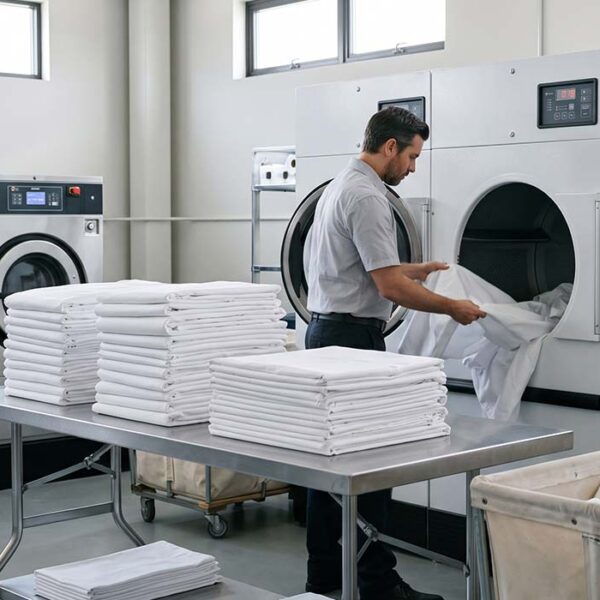
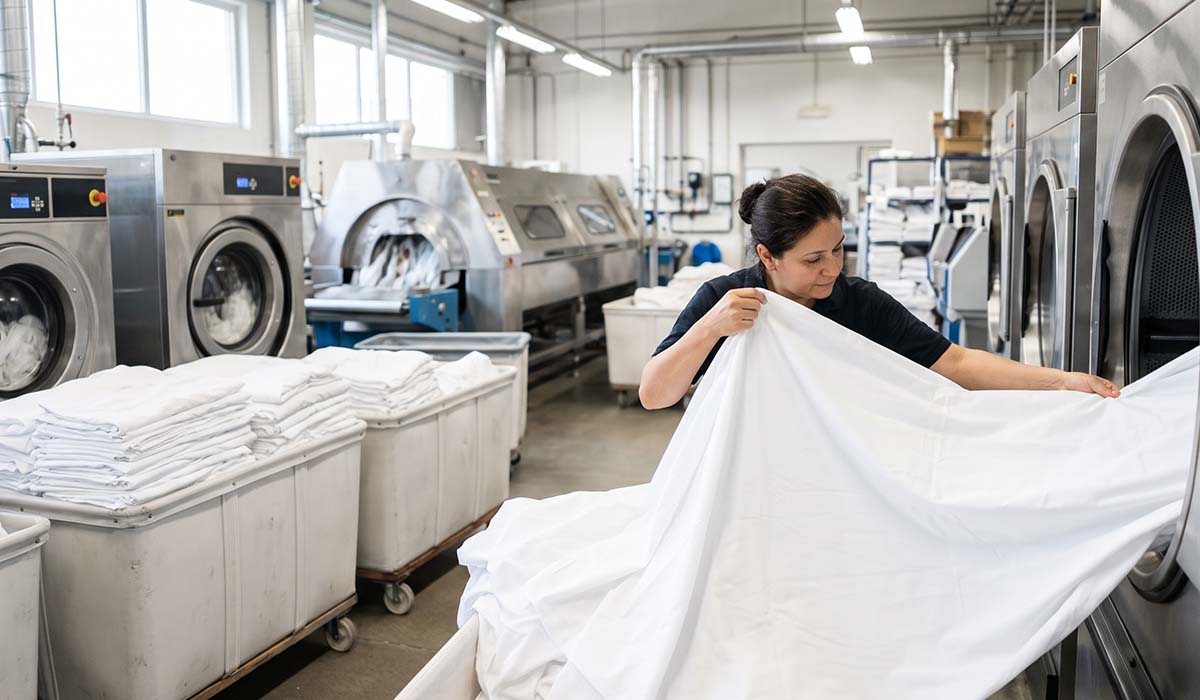
The easiest way to keep hotel sheets bright is to use soft water, a proper alkali and detergent, a targeted bleach step, a sour rinse, and correct load size.
Most dullness comes from residue, mineral scale, and trapped body oils, not from “dirt.”
Gray, yellow sheets hurt guest reviews and shorten linen life because replacing them early costs far more than a better wash program.
This guide explains why sheets dull and how to fix it. It also shows how the sheet itself affects how well it stays white.
Why Do White Hotel Sheets Turn Gray or Yellow?
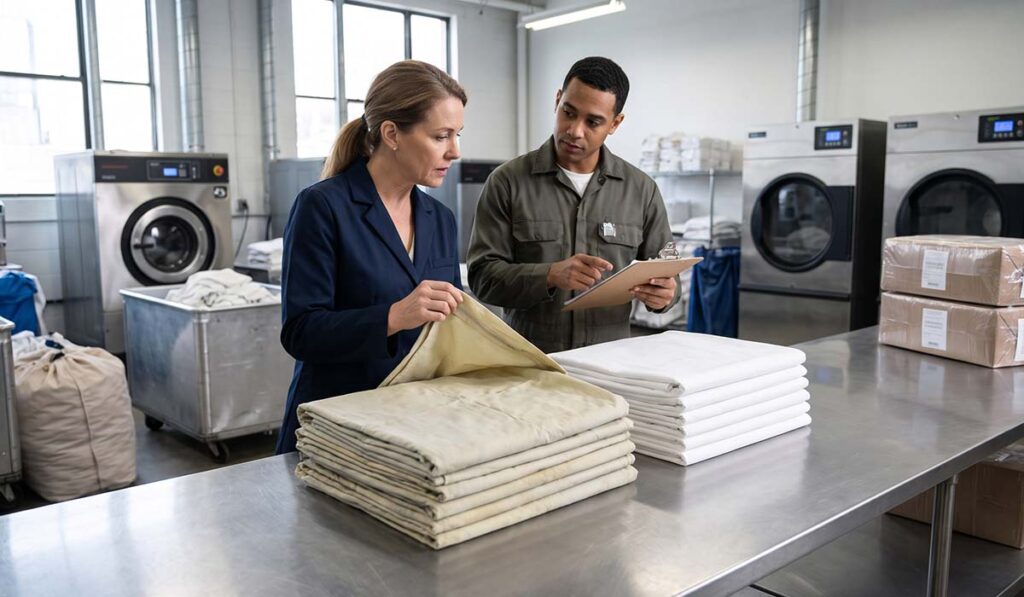
Sheets turn gray or yellow mainly because of body oils, mineral buildup, and chemical residue. They rarely come from a lack of washing.
- Body oils (sebum) and proteins. These oxidize and turn yellow, especially around pillow areas and the top of the bed. Plain detergent often can’t break them down.
- Hard water. Calcium and magnesium bind to fibers and leave a dull, stiff, gray film. This is called mineral scale.
- Redeposited soil. Overloaded machines and too little water let soil settle back onto cleaned linens.
- Alkali or detergent residue. Poor rinsing leaves a film that yellows when the sheets are heat-dried or ironed.
- Overuse of chlorine bleach. It whitens at first but can weaken cotton and yellow some fibers over time.
- Mixed loads. Washing whites with colored items, or with towels that shed lint, causes graying.
If you’re not sure which problem you have, check the water first. Hardness causes more gray-sheet complaints than most properties realize.
How To Wash Hotel Sheets In Commercial Laundering to Keep Them Bright
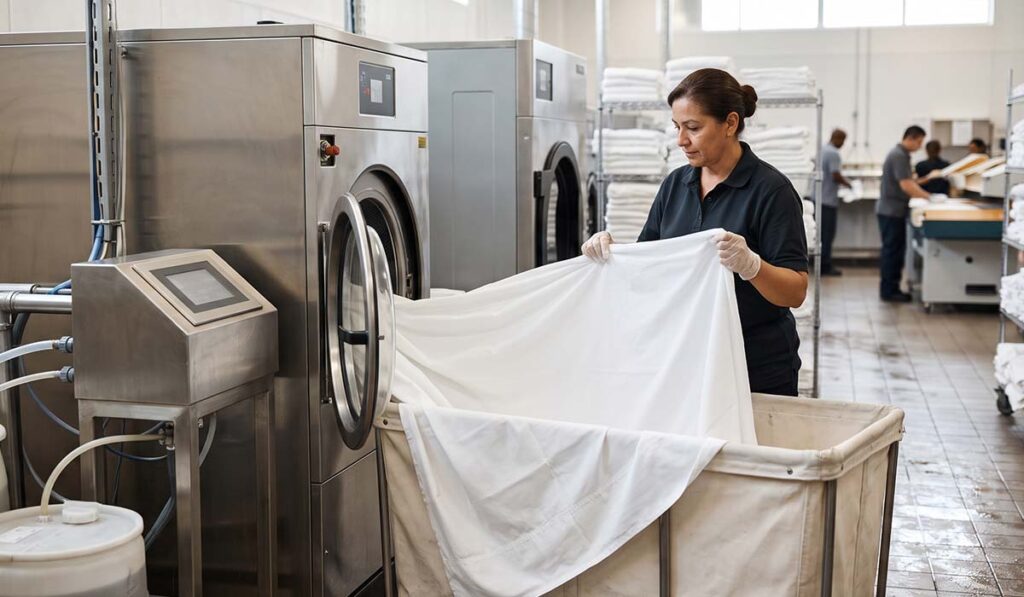
A good program follows a set order. Exact settings vary by machine and chemical supplier, so confirm dosing with your chemical provider.
- Sort and Load Correctly
Separate whites from colors. Separate heavily soiled linens from lightly soiled ones. Fill machines to the manufacturer’s rated capacity, not beyond it. Overloading blocks the mechanical agitation that lifts soil. Underloading wastes water and reduces friction.
- Start With Soft Water
If your water is hard, install a softener or use a isolate builder. Without that, no detergent will keep sheets white for long. Ask your chemical supplier to test water hardness at your property.
- Pre-Wash or Flush
A short flush or gentle pre-wash removes loose soil and prevents proteins from setting. Very hot water at this stage can set protein stains.
- Main Wash: Alkali, Detergent, and Temperature
The main wash does the heavy lifting. Alkali breaks down oils, detergent suspends soil, and enzymes can target proteins and sebum.
What temperature should hotels wash white sheets at?
Many hotel programs wash whites hot, often in the range of roughly 140–160°F (60–71°C), though some properties use lower temperatures with stronger chemicals. Hotter water is not always better. It raises energy costs and can stress blended fibers.
- Bleach Step
Chlorine bleach vs. oxygen bleach for hotel sheets?
| Factor | Chlorine Bleach | Oxygen Bleach (Peroxide-Based) |
| Whitening power | Strong | Moderate to strong |
| Fiber impact | Can weaken fibers with overuse | Gentler on fibers |
| Stain targets | Sanitizing, general whitening | Organic stains, yellowing |
| Best for | Heavily soiled white cotton, used carefully | Regular maintenance, blends, longevity |
| Main risk | Fiber damage and yellowing if overdosed | Needs proper temperature and alkalinity to work |
For most hotels, a rotation works well: oxygen bleach for routine loads and controlled chlorine use only when needed. Never mix chlorine bleach with acidic products or with sour in the same step. Follow the manufacturer’s safety instructions.
- Rinse Thoroughly
Multiple rinses remove soil and chemical residue. Skimping on rinses to save water is a common cause of dull, stiff sheets.
- Sour Rinse (Laundry Sour)
A laundry sour is a mild acidic rinse that neutralizes leftover alkali. This brings the fabric’s pH down to a comfortable range, which helps prevent yellowing, stiffness, and skin irritation. Many commercial programs aim for a near-neutral to slightly acidic final pH. Your chemical supplier can confirm the right target for your system.
8. Dry and Finish Carefully
Over-drying scorches fibers and yellows sheets. Remove linens while slightly damp where your ironer allows it. Clean lint filters often, because lint recirculation dulls whites.
Learn More: How To Extend the Life of Hotel Bed Sheets
How to Remove Body Oils and Yellow Stains
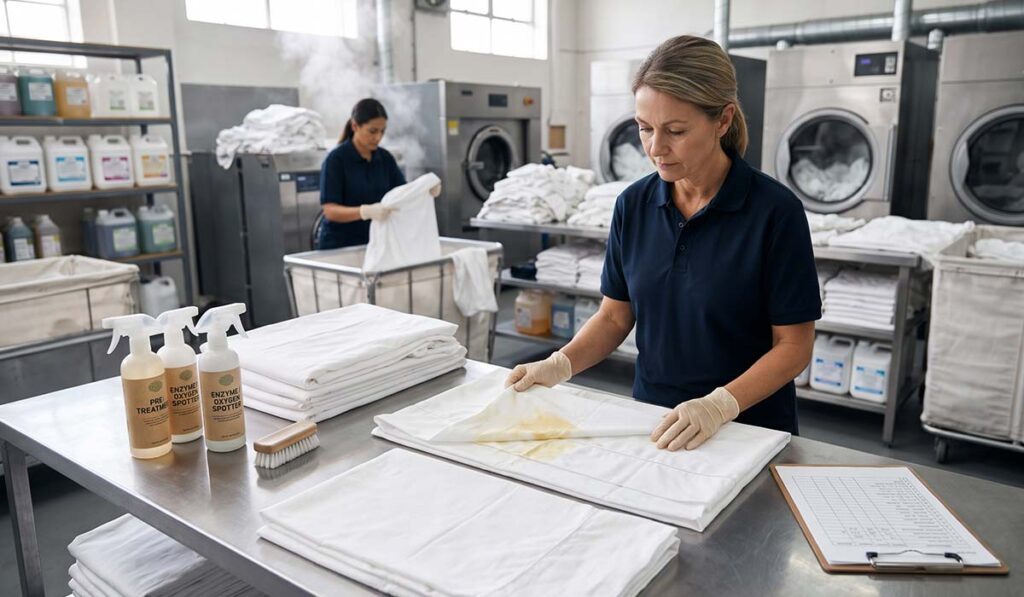
- Use an enzyme-based detergent or booster designed for protein and sebum breakdown.
- Pre-treat heavily stained sheets before they enter a regular load.
- Run a strip wash occasionally on dull linens. It uses high alkalinity, hot water, and a builder to remove accumulated residue.
- Fix the underlying cause, such as hard water or underdosed chemistry, or the yellowing will return.
Common Mistakes That Dull Hotel Linens
- Using too much detergent. This leaves residue.
- Using too little. This leaves soil.
- Washing at the wrong temperature for the chemistry.
- Skipping the sour rinse.
- Letting wet linens sit for hours.
- Ignoring water hardness.
- Overloading washers to save time.
- Guessing at chemical dosage instead of using automated dispensing.
Automated chemical dosing improves consistency. It also removes the guesswork that causes most whitening failures.
Learn More: How To Buy The Best Hotel Bed Sheets on a Fixed Budget
How Hotel Bed Sheet Choice Affects Whiteness and Lifespan
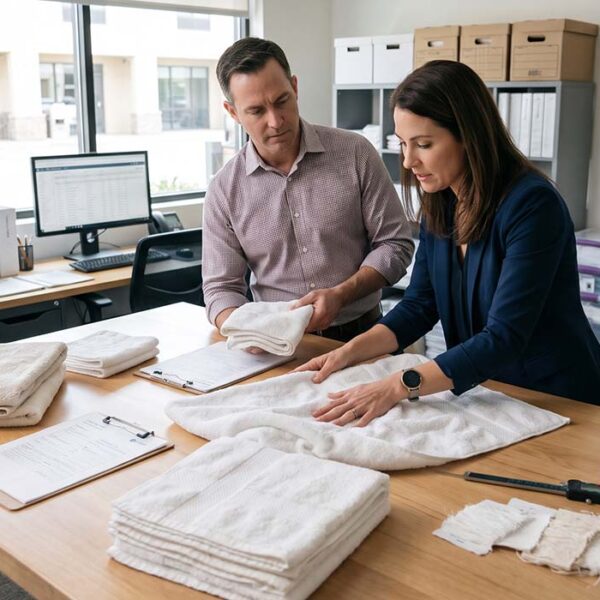
Laundering is only half the equation. The sheet itself determines how well it holds up to repeated hot washes, bleach, and tumble drying.
Which sheets last longest in commercial laundering? Blended and cotton-rich sheets are common choices in hotels because they balance durability, appearance, and laundry cost. Pure cotton feels softer but needs more careful chemistry. Blends typically add polyester for strength and wrinkle resistance. Confirm fiber content and weave on each product page.
Percale vs. sateen: Percale has a crisp, matte finish and tends to be a practical choice for high-volume operations. Sateen has a smoother, silkier feel and a slight sheen, which suits upscale positioning but may need gentler handling.
Here’s how ACME Textiles’ sheet categories fit common hotel needs:
| Property Need | Category to Consider |
| High-volume, budget-conscious operations | Blended bed sheets, such as Opal Super Blend everyday sheets |
| Classic crisp hotel feel | Icon T-200 percale sheets |
| Smooth, upscale look | Forte T-250 soft plain satin sheets or Swiss Stripe T-250 tone-on-tone satin sheets |
| Premium guest experience | Icon 300 premium sheets or Ryotei T-300 luxury cotton sheets |
| Fast drying, lower energy use | Opal fast-drying microfiber sheets |
| Cribs and family rooms | White baby crib sheets |
Browse the full range of hotel bed sheets, or compare cotton sheets, blended sheets, and microfiber bed sheets options.
When Is It Time to Replace Sheets Instead of Re-Washing?
Replace sheets when:
- Gray or yellow tones remain after a strip wash.
- Fabric feels thin, rough, or see-through.
- Pilling, small holes, or seam failures appear.
- Sheets fail your housekeeping inspection standards.
Track par levels (the number of linen sets needed per room, usually accounting for sets in use, in laundry, and in storage).
Rotating stock evenly keeps wear consistent. It also prevents a few sets from taking all the abuse.
Cost per use, not purchase price, is the better measure: a slightly better sheet that survives more wash cycles often costs less over its life.
Learn More: Reduce Hotel Linen Costs Without Sacrificing Guest Comfort
ACME Textiles: Trusted Manufacturer & Hotel Linen Supplier in The US
ACME Textiles is a vertically integrated global manufacturer and hotel linen supplier in the US. Operating certified facilities, ACME Textiles serves thousands of hotels worldwide with sustainable, high-quality bath, bed, and commercial textiles at competitive factory-direct pricing.
With a strong distribution network including strategic distribution centers across the US, ACME Textiles manages the entire lifecycle from manufacturing to doorstep delivery. This end-to-end approach ensures consistent quality control, reliable lead times, and seamless logistics for high-volume hospitality buyers and distributors.
Frequently Asked Questions
- How do luxury hotels keep their sheets so bright white?
They combine soft water, controlled chemical dosing, oxygen or carefully managed chlorine bleach, a sour rinse, and regular replacement of worn linen.
- What chemicals do commercial laundries use to whiten sheets?
Typically alkali, detergent, enzymes, bleach (oxygen or chlorine), laundry sour, and sometimes optical brighteners.
- Should hotels use chlorine or oxygen bleach?
Oxygen bleach is gentler for routine use. Chlorine can be effective on tough whites but may shorten fiber life if overused.
- Why do hotel sheets turn yellow over time?
Body oils, residue, overdrying, excess bleach, and mineral buildup are the usual causes.
- What is the right pH for the final rinse?
A near-neutral to slightly acidic finish is typical. Confirm the target with your chemical supplier.
- How often should sheets be washed at high temperatures?
Wash after every guest stay. The temperature depends on your chemistry and fabric, so hotter isn’t always better.
- Do blended sheets stay white better than 100% cotton?
Blends often resist wear and wrinkling well. Whiteness still depends mainly on your wash process.
- How do hotels fix gray sheets?
Test water hardness, review dosing, add a sour rinse, and run a strip wash. Replace sheets if grayness persists.
Final Words
Maintaining crisp, bright white hotel sheets comes down to a consistent laundering process, managing water hardness, proper chemical dosing, correct wash temperatures, and thorough rinsing. Pairing smart wash habits with high-quality linens tailored to your property’s needs ensures longer fabric lifespan, reduced replacement costs, and an exceptional experience for your guests.
Better laundering protects the sheets you own. The right sheets make that job easier. Explore ACME Textiles’ wholesale hotel bed sheets or contact our team for bulk pricing, specifications, and reorder support.