

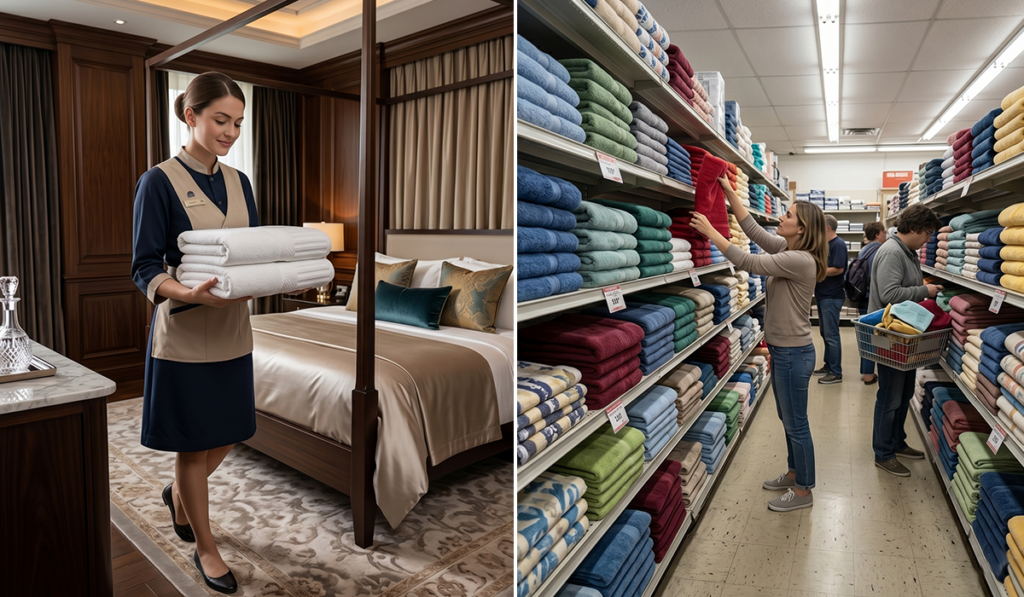
In the wholesale textile market, your reputation is only as strong as the fibers you sell. For high-volume distributors and hospitality wholesalers, the “Retail vs. Institutional” debate isn’t about aesthetics; it’s about product lifecycle management and Supply Chain Integrity.
Selling a retail-grade towel to a commercial client is a recipe for high churn and quality claims. At ACME Textiles, we manufacture with a “Commercial DNA,” ensuring that every bale you ship is an investment in your client’s profitability, not just another line-item expense.
In this guide, we’ll break down why ACME Textiles’ commercial engineering is the only way to ensure your inventory survives the “industrial harshness.”
The Engineering Gap: ACME Commercial vs. Standard Retail
Retail towels are designed for “shelf appeal.” They are often treated with silicone softeners to feel plush in a store, but they lack the structural integrity required for daily industrial laundering. ACME Textiles towels are manufactured using advanced air-jet looms and automatic stitching to ensure they hold their shape after hundreds of washes.
| Feature | Retail Towels (Consumer) | ACME Textiles (Commercial) |
| Edge Stitching | Single-needle (High fray risk) | Double-needle Lock-stitch (Anti-unravel) |
| Yarn Type | Low-twist “Soft-spun” | Premium Ring-Spun Cotton |
| Structural Integrity | Stretches and warps over time | Pre-shrunk, stable base weave |
| Wash Life | ~25–40 industrial cycles | 150+ industrial cycles |
Learn More: How Cabana Stripe Pool Towels Boost Your Wholesale Revenue
Core Differences That Impact Your ROI
- The Power of the Double-Needle Lock-Stitch
The edges are the first place a towel fails. Standard retail towels use a decorative hem or a simple chain stitch that can unlock like a string on a sweater if snagged.
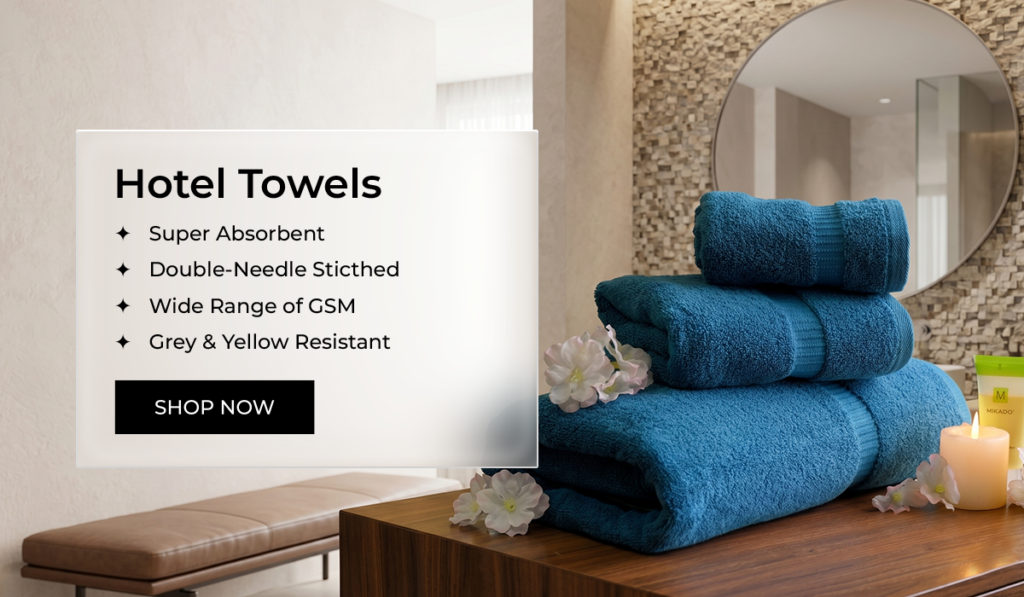
ACME Textiles utilizes Double-needle Lock-stitching with a minimum of 7 stitches per inch. This creates a structural knotting process; even if a thread is caught in a machine, the entire hem remains secure. This feature alone significantly extends the life of your inventory.
- Ring-Spun Strength vs. Open-End Cotton
Most budget retail towels use “Open-End” cotton, which is cheaper but prone to pilling and thinning.
At ACME, our towels, from our Economy Collections to our Platinum and Luxury lines, utilize Ring-Spun Cotton. This process continuously twists and thins the fibers, creating a much stronger and smoother yarn. The result? A towel that maintains its “scrubbing power” and softness long after premium retail alternatives have turned into rags.
- The Myth of High GSM (Grams per Square Meter)
In the retail world, “900 GSM” is marketed as the ultimate luxury. In a commercial laundry room, it’s an operational nightmare.
- The Problem: Heavy retail towels trap moisture, leading to bacterial “sour” smells and requiring double the drying time.
- The ACME Solution: We optimize our GSM to balance plushness with drying speed. For high-turnover properties, we recommend a 350–500 GSM range for economy efficiency, or our Luxury Collection for a heavy-weight feel that still utilizes fast-wicking technology to save you thousands in annual utility costs.
Learn More: Bulk Towel Supplier: How To Choose The Right Supplier?
4. Optical Brightening Agents and Bleach-Friendly Technology
Retail whites often turn gray or yellow after exposure to high-alkaline commercial detergents. This ensures that our towels are bleach-friendly and fade-resistant, maintaining that “fresh-from-the-factory” look through aggressive wash cycles.
The Math of Total Cost of Ownership (TCO)
Don’t look at the price per towel; look at the price per wash.
- Retail Towel: $12.00 ÷ 40 washes = $0.30 per use
- ACME Wholesale Towel: $8.50 ÷ 150 washes = $0.05 per use
When you multiply those $0.25 savings across 50 rooms and 365 days a year, the “cheap” retail towel becomes the most expensive item in your facility.
ACME Textiles: 50+ Years of Manufacturing Excellence
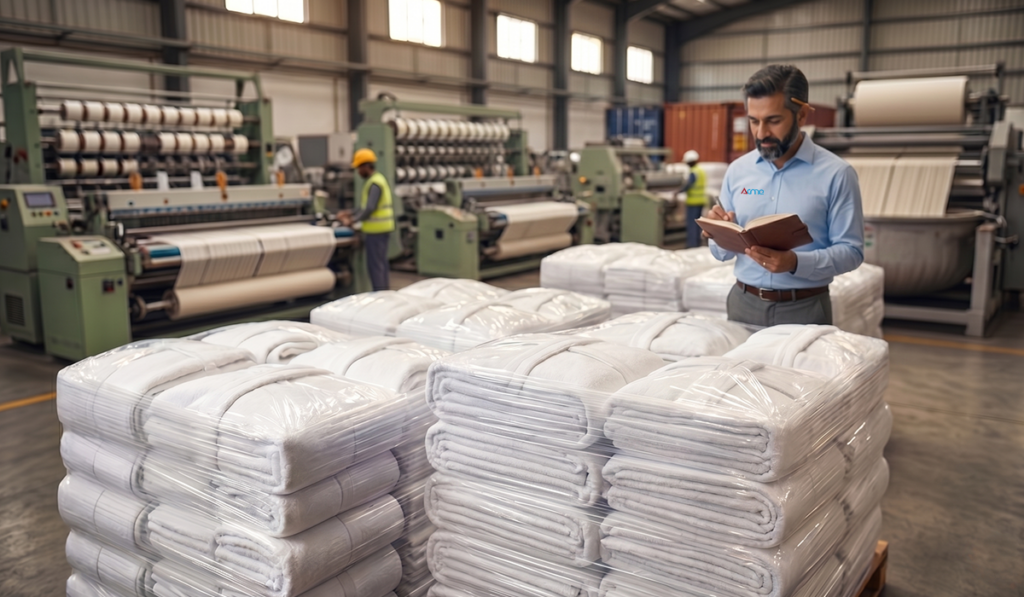
Since 1965, ACME Textile Mills has been a vertically integrated manufacturer. By controlling the process from raw fiber selection to the final stitch, we remove unnecessary middleman costs and deliver “Institutional Strength” linens directly to you.
Our Collections Include:
- Luxury Piano Towels & Platinum Towels: Featuring elegant Greek dobby borders and heavyweight 100% ring-spun cotton.
- Economy Towels: Built for durability-first performance in high-traffic budget environments.
- Pool & Beach Towels: Chlorine-resistant, quick-drying, and available in vibrant cabana stripes.
- Cosmetic Towels: Lightweight, highly absorbent, and designed to withstand frequent sanitization.
- Kitchen Towels: Super absorbent kitchen towels for mess-free wipe-offs.
Learn More: How We Manufacture The Longest Lasting Wholesale Towels?
Housekeeping Pro-Tips for Longevity

- The 3-Par Rule: Always maintain three sets, one in the room, one in the laundry, and one resting. Giving cotton fibers 24 hours to “recover” their shape can extend towel life by up to 40%.
- Avoid Chemical Softeners: Softeners coat fibers in wax, which actually repels water. ACME towels stay soft due to their high-quality ring-spun weave, not chemical additives.
- The Snag Test: Our loops are locked into a reinforced ground weave. In a retail towel, a snag will “run” down the length of the towel. In an ACME towel, the loop stays put.
Final Words
In the hospitality industry, retail towels prioritize the first touch; ACME Textiles towels prioritize the 100th wash. Protect your margins and your reputation by investing in linens engineered for the industrial world.
Contact ACME Textiles today for wholesale pricing on our durable hospitality collections.
