


Can a single fabric switch cut a hotel’s utility bill by 40% while simultaneously slashing room turnover times in half?
In high-turnover hospitality ecosystems, operational margins live and die by laundry processing efficiency and linen replacement rates. That is exactly why forward-thinking hospitality supply wholesalers and property procurement managers are abandoning low-tier retail blends and shifting capital directly into bulk ultra-durable synthetic fabrics.
Investing heavily in high-performance bulk microfiber sheets is no longer a budget compromise; it is an aggressive strategy to maximize bottom-line ROI.
Why Microfiber Wins the Commercial ROI Battle
To successfully sell to hotels, resorts, and vacation rental chains, a textile wholesaler cannot simply pitch “softness.” You must pitch operational math.
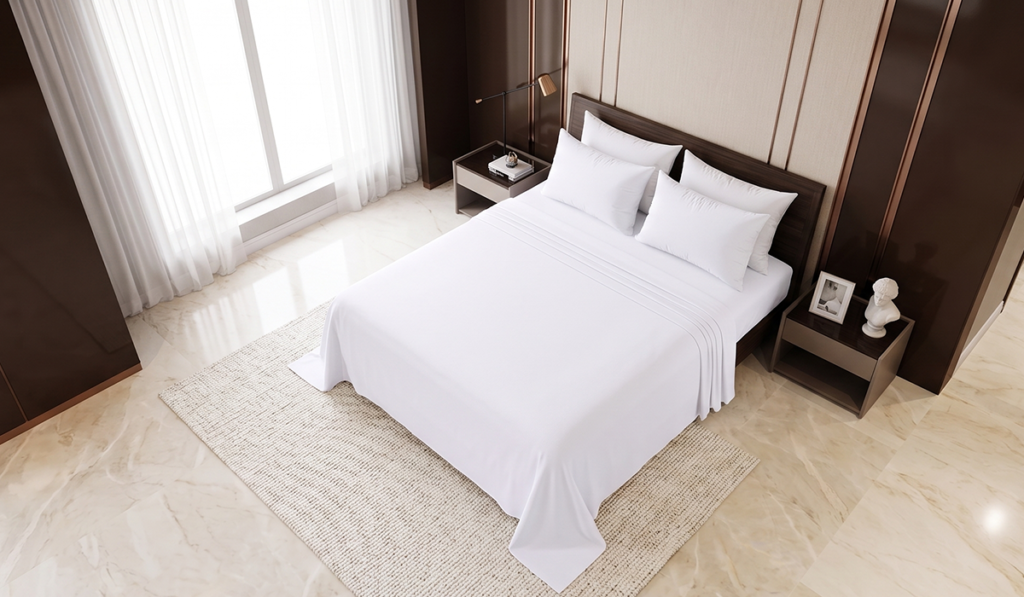
When evaluated across industrial laundry lifecycles, microfiber continuously outperforms traditional mid-tier cotton blends on key financial metrics.
- The Laundry Metric: 40% Faster Processing Times
The true cost of a hotel sheet is never its purchase price; it is its lifetime laundering expense. Synthetic microfibers feature a tight, hydrophobic (water-repelling) weave.
- The Math: Microfiber retains significantly less water during the extraction cycle than absorbent cotton.
- The Savings: This cuts industrial drying time by 30% to 40%. For a 150-room hotel operating daily laundry shifts, this equals thousands of dollars saved annually in commercial gas, electricity, and labor.
Learn More: Microfiber Sheets Vs. Cotton Sheets: Detailed Manufacturer’s Guide
- High-Density Tensile Strength
Industrial washers destroy standard retail linens via friction and chemical degradation. Premium 100% polyester microfiber sheets utilize ultra-thin, tightly spun filaments that distribute mechanical stress evenly across the fabric plane.

This dense structure resists the premature thinning, tearing, and fraying common to long-staple cotton under harsh commercial washing protocols.
Learn More: The Ultimate Guide To Long Staple Cotton Sheets
- Immediate Room Turnover: Built-In Wrinkle Resistance
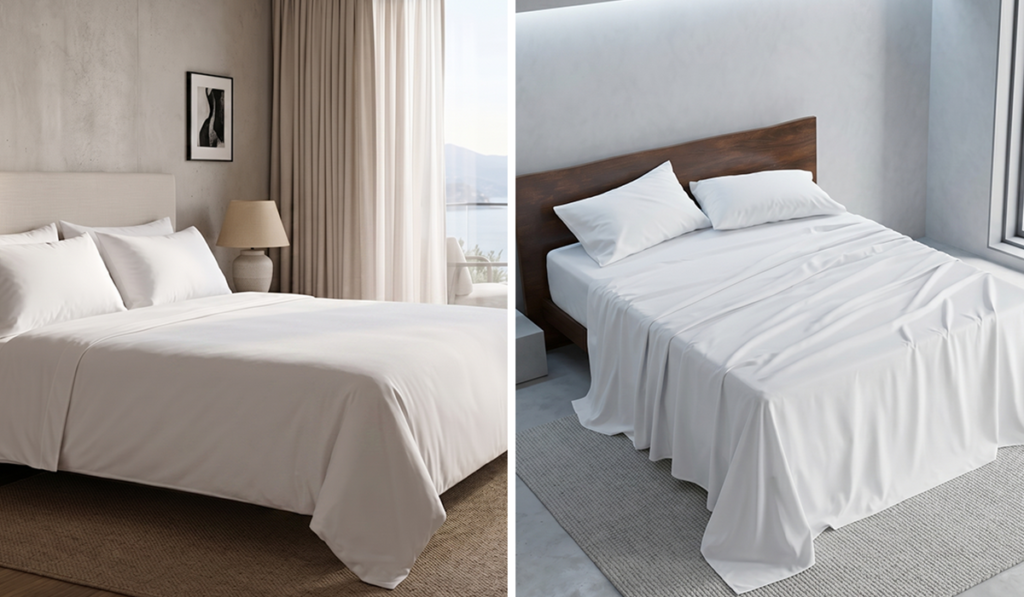
Housekeeping speed directly impacts a property’s profitability. Unlike cotton, which requires high-temperature industrial calendering (ironing) to look presentable, brushed microfiber releases wrinkles naturally during a standard tumble dry.
Housekeeping staff can pull a sheet straight from the bin and dress a bed to pristine, crisp hospitality standards in half the time.
Learn More: Difference Between Home & Hospitality Sheets: A Manufacturer’s Guide
Technical Comparison: Microfiber vs. Traditional Cotton Blends
| Operational Metric | ACME Bulk Microfiber Sheets | Standard T-200 Cotton Blend |
| Average Drying Time | 18–22 Minutes | 35–45 Minutes |
| Industrial Calendering Required | No (Naturally Wrinkle-Resistant) | Yes (Prone to Severe Creasing) |
| Stain Release Capability | High (Repels oils, spa treatments) | Moderate (Absorbs organic compounds) |
| Tensile Longevity Lifecycle | 120+ Industrial Wash Cycles | 70–90 Industrial Wash Cycles |
| Average Per-Unit Sourcing Cost | Exceptionally Low | Moderate to High |
Why Wholesalers Must Source Microfiber Sheets in Bulk
As a hospitality textile wholesaler, your inventory volume dictates your profitability. Sourcing wholesale quantities of microfiber bedsheets allows you to capture market demand from budget-conscious motels, high-end spas, and multi-property vacation rental management firms simultaneously.
Maximizing Shipping Cubes and Freight Logistics
Because microfiber fabrics compress tightly without damaging the structural integrity of the fibers, you can pack significantly more units per pallet and shipping container compared to bulky cotton linens. This optimization drops your inbound ocean or domestic freight cost-per-unit to its absolute floor, passing better margins down to your regional distribution channels.
Learn More: Polycotton Vs. Microfiber Bedsheets: What’s Best For Hospitality
Uniformity Across High-Volume Batches
Hotels expect perfect continuity; Room 104’s white sheets must flawlessly match Room 508’s white sheets. Natural cotton crops suffer from seasonal color variations and fiber inconsistencies. Synthetic microfibers, conversely, offer absolute chemical uniformity. Sourcing in bulk guarantees that your entire inventory maintains identical GSM weight, brilliant white color matching, and texture profiles across thousands of units.
Partner Safely: Establish Authority with ACME Textiles
With over a decade of dedicated manufacturing experience, ACME Textiles stands as a global gold standard in high-volume hospitality fabrication. We don’t manufacture retail linens; we design commercial-grade textiles engineered to withstand the rigorous operational strain of the international hospitality supply chain.
Our specialized ACME Microfiber Bedsheets Product Line provides global wholesalers with competitively priced, high-GSM options tailored for rapid room turnover. By controlling our production line from base polymer extrusion to the final reinforced hem stitching, we guarantee the structural integrity and structural continuity that legacy hotel groups demand. Wholesalers partnering with ACME gain a dependable, scalable supply chain capable of fulfilling massive case-pack contracts without logistical delay.
Frequently Asked Questions
- Are microfiber sheets durable enough for high-turnover hotels?
Yes. High-quality 100% polyester microfiber sheets feature exceptional tensile strength. They resist the pilling, fraying, and edge-tearing caused by industrial laundry machinery far better than mid-range cotton sheets, resulting in a much lower replacement frequency.
- What is the ideal GSM for commercial hotel microfiber sheets?
For commercial hospitality use, microfiber sheets should ideally range between 90 GSM and 120 GSM. This range ensures optimal opacity, weight, and premium hand-feel while retaining the lightning-fast drying times that drive down operational utility costs.
- Do microfiber sheets retain stains from oils or makeup?
No. Because microfiber is woven tightly from hydrophobic synthetic filaments, it naturally repels liquids rather than absorbing them deeply into the core of the yarn. Commercial laundering agents easily lift tough cosmetic oils, spa treatments, and organic stains out of microfiber far more efficiently than from porous natural cotton.
Final Words
The math is clear: switching to bulk microfiber slashes drying utility bills, cuts out industrial ironing labor, and extends linen replacement lifecycles. For a textile wholesaler, stocking this high-velocity product is the fastest way to capture massive procurement orders from modern hospitality operators.
Stop losing contracts to suppliers offering superior operational margins. Contact the commercial production team at ACME Textiles today to secure tier-one wholesale pricing, request physical sample case-packs, and lock in guaranteed inventory volumes for the upcoming peak travel seasons.
