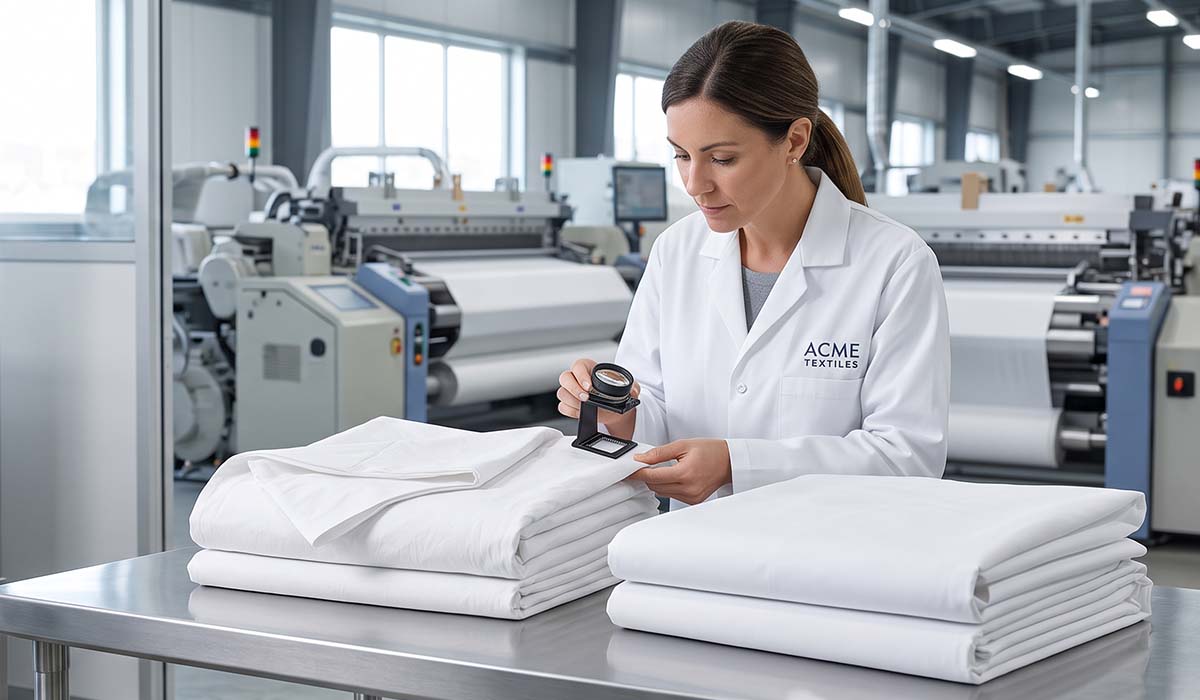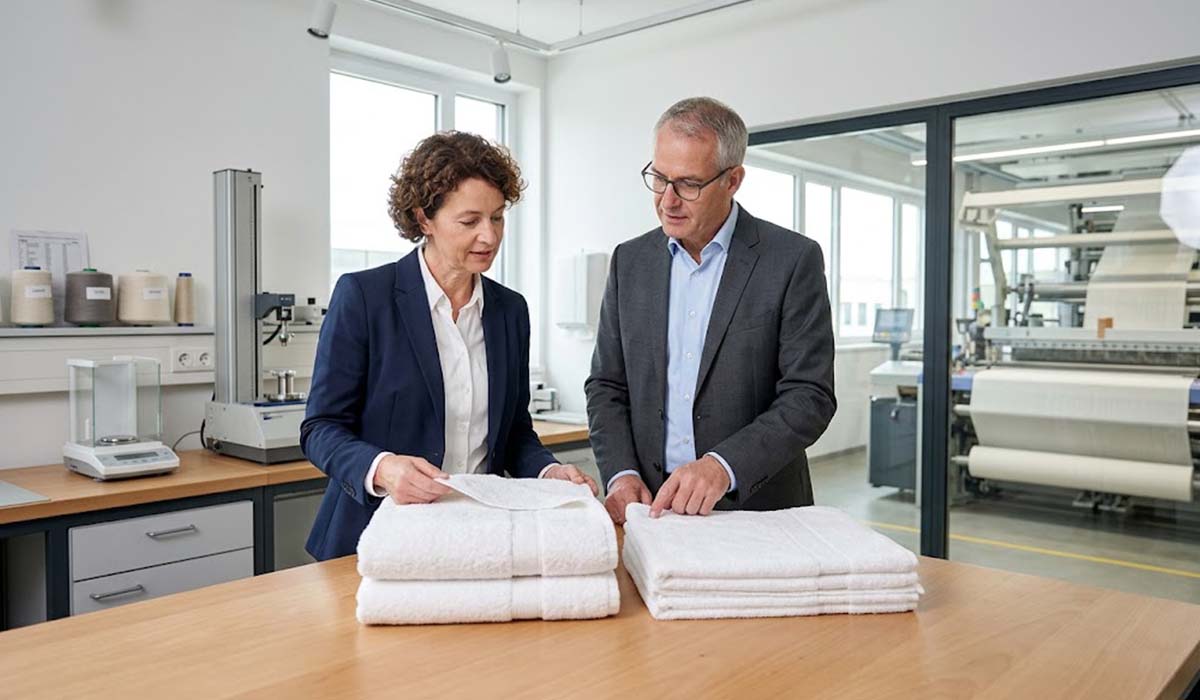
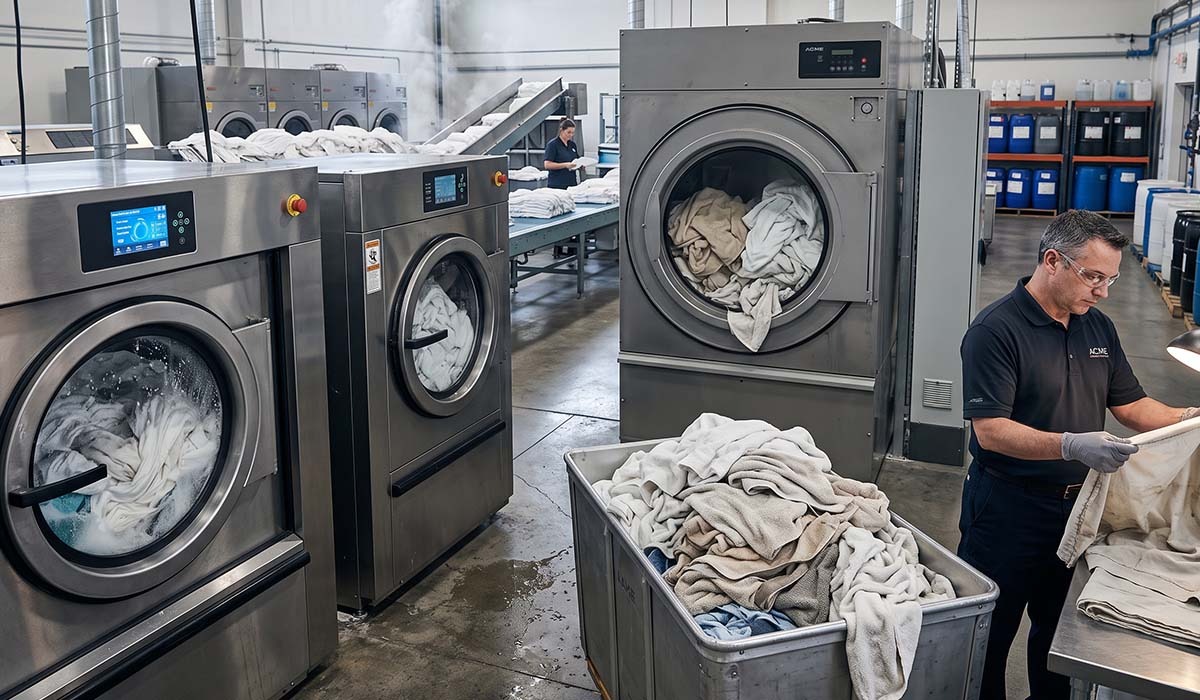
Commercial laundry impacts hospitality linens by dictating their lifespan, hygiene level, and tactile softness.
Especially when high heat, strong mechanical action, or improper chemical use is involved. , These conditions can affect fabric strength, dimensions, appearance, and softness
This guide explains what causes linen wear, which products are most affected, and what wholesale buyers should look for when selecting hospitality linen.
1. How Commercial Laundry Wears Hospitality Linens
Unlike residential bedding, hospitality textiles are processed frequently and must withstand repeated washing, drying, folding, and handling.
Over time, this repeated processing can cause:
- Shrinkage and dimensional changes
- Fiber and surface wear
- Fading
- Fraying at hems and seams
- Pilling or increased lint
- Changes in softness and hand feel
The important factor is cumulative wear. A single laundry cycle may cause little visible damage, but hundreds of cycles can gradually reduce a linen’s usable service life.
2. Five Laundry Factors That Affect Linen Lifespan
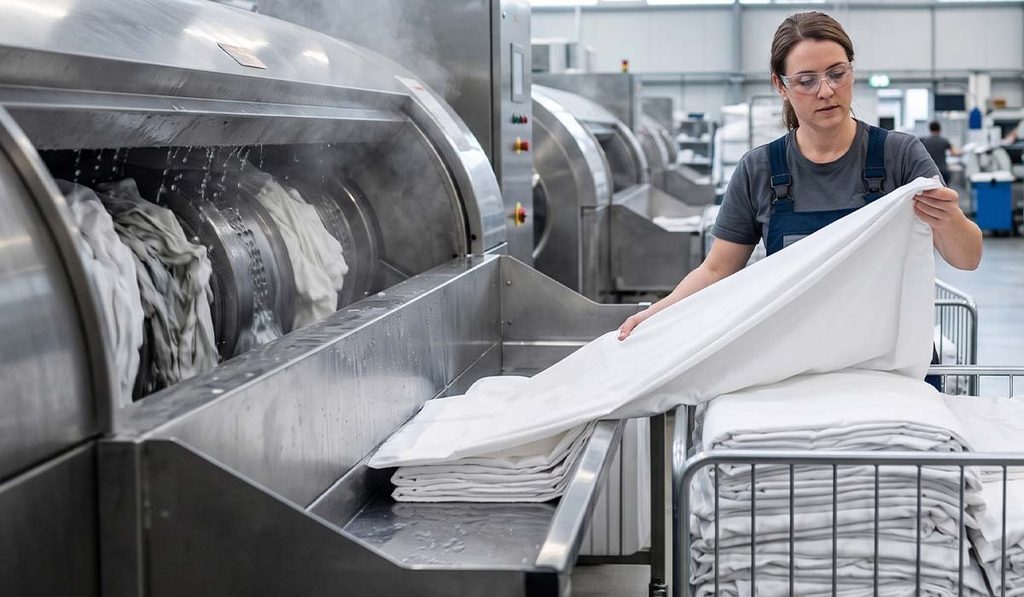
3. How Laundry Affects Different Hospitality Linens
Different hospitality textiles experience different types of wear because they have different constructions and uses.
| Linen Type | Common Laundry Impact | What Buyers Should Look For |
| Hotel Bed Sheets | Shrinkage, wrinkling, surface wear, and seam stress | Dimensional stability, suitable finishing, and strong construction |
| Bath Towels | Fiber wear, lint, loss of softness, and hem stress | Quality yarn, strong loops, and reinforced hems |
| Commercial Blankets | Shrinkage, pilling, and changes in shape | Commercial construction and shrinkage control |
| Pillow Protectors | Seam and zipper stress | Durable fabric and secure closures |
| Mattress Pads | Compression, shrinkage, and seam wear | Stable construction and strong stitching |
This is why buyers should not apply the same durability criteria to every linen category. A bath towel and a fitted sheet may face the same laundry room but experience very different forms of wear.
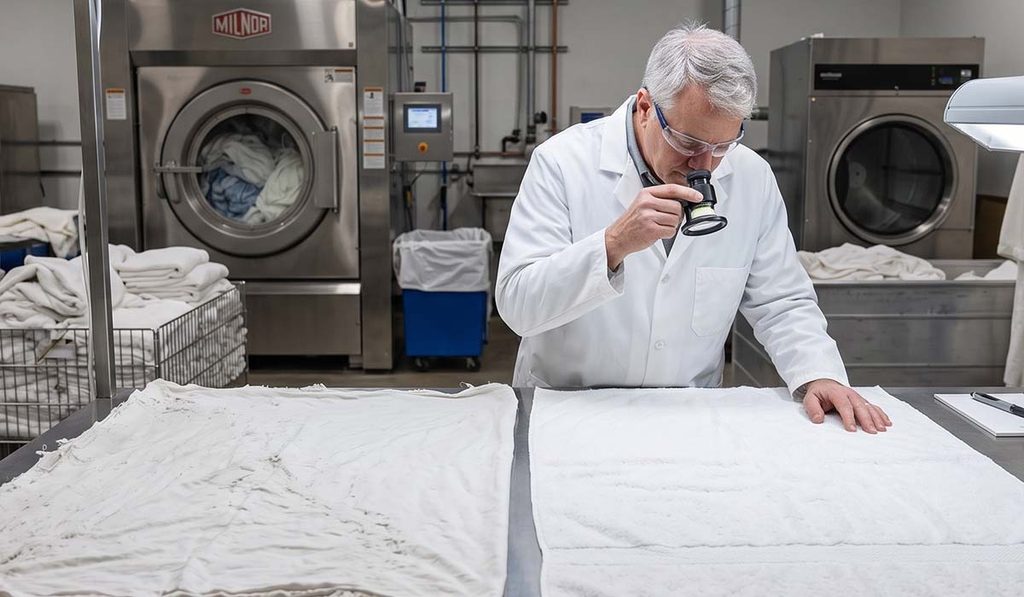
4. Why Linen Construction Matters
Laundry performance starts before a linen enters the washing machine.
Two products can go through identical laundry cycles and have very different service lives because of differences in yarn quality, weave, construction, and finishing.
- Yarn Quality
Well-constructed yarns provide a stronger foundation for repeated washing and mechanical processing.
- Weave
The weave affects fabric strength, surface characteristics, and how the textile responds to repeated use.
- Reinforced Stitching
Strong stitching helps protect hems and seams from the pulling and mechanical stress associated with commercial laundering.
- Loom-Locked Selvages
Loom-locked selvages help control fraying along sheet edges and support better edge durability.
- Finishing
Finishing treatments can help control characteristics such as shrinkage, wrinkling, fading, and surface wear.
5. How to Extend the Service Life of Hospitality Linens
Hotels, motels, and vacation rentals cannot avoid frequent laundering. The goal is to reduce unnecessary stress during each cycle and identify problems before they shorten linen service life.
- Follow recommended wash temperatures. Use the manufacturer’s guidelines instead of assuming higher temperatures provide better cleaning.
- Measure laundry chemicals correctly. Incorrect concentrations can cause unnecessary fiber and colour damage.
- Control drying. Avoid excessive heat and over-drying, which can accelerate fabric wear.
- Load machines correctly. Overloading can reduce cleaning performance and increase mechanical stress.
- Match processing to soil levels. Heavily soiled linens may require different treatment than lightly soiled items.
- Inspect linens regularly. Look for thinning, fraying, seam damage, shrinkage, or unusual lint before returning items to service.
Track where and how linens are failing. If multiple batches develop the same problem, such as excessive shrinkage or repeated seam damage, the issue may be in the laundry process rather than the textile itself.
Learn More: What Makes a Hospitality Textile Supplier Reliable?
ACME Textiles: Hospitality Linens Built for Commercial Use
For more than 60 years, ACME Textiles has manufactured hospitality textiles for hotels, resorts, distributors, healthcare facilities, and institutional buyers worldwide.
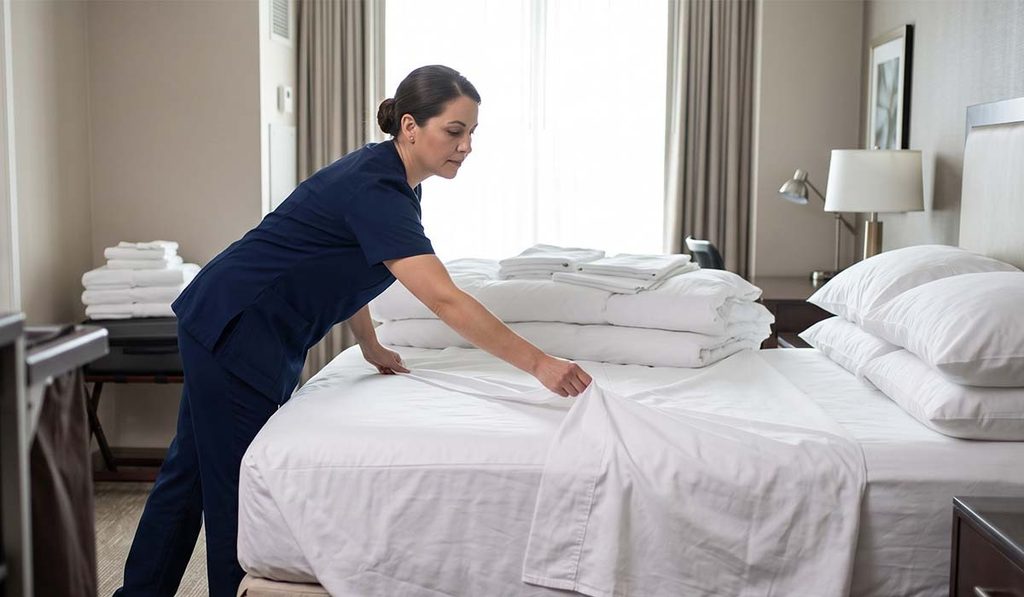
Our hospitality textile range includes wholesale hotel bed linens, towels, blankets, hotel pillows, pillow protectors, mattress pads, duvet inserts, bathrobes, and other commercial textile products.
Each category requires different construction considerations because each product experiences different levels and types of use, handling, and laundering.
Why Wholesale Buyers Choose ACME Textiles
- Over 60 years of hospitality textile manufacturing expertise
- Commercial-grade hospitality textile collections
- Consistent quality across production runs
- Factory-direct pricing and volume discounts
- Reliable supply for recurring wholesale programs
- Global manufacturing and export capabilities
Frequently Asked Questions
- How does commercial laundry affect hospitality linens?
Repeated washing, high-temperature drying, overuse of chemicals, and mechanical action can all contribute to shortening the lifespan of commercial laundry. Over time, these processes can cause shrinkage, fiber wear, fading, seam damage, and changes in softness.
- Does high-temperature laundry damage hotel linens?
Yes. Excessive heat can accelerate shrinkage, fiber wear, and dimensional changes in hotel linens. Following the manufacturer’s recommended wash and drying temperatures helps reduce unnecessary wear.
- What makes hospitality linens more durable?
Yarn quality, fiber content, weave, construction, stitching, and finishing all affect how well hospitality linens withstand repeated commercial laundering. Products designed for institutional use are better suited to frequent processing.
- How can hotels make their linens last longer?
Hotels can extend linen service life by following recommended wash temperatures, measuring laundry chemicals correctly, controlling drying temperatures, avoiding overloaded machines, and inspecting linens regularly.
- How often should hospitality linens be replaced?
There is no fixed replacement schedule for hospitality linens. Service life depends on the product’s construction, laundry frequency, operating conditions, maintenance practices, and signs of wear.
- Should wholesale buyers test linens before placing a bulk order?
Yes. Wholesale buyers should test linen samples through their actual commercial laundry process before placing a large order. This helps determine how the product performs under real washing, drying, and handling conditions.
Final Thoughts
Commercial laundry is unavoidable in hospitality, but premature linen replacement is not.
The lifespan of hospitality linens depends on both how they are laundered and how they are made. Proper laundry practices can reduce unnecessary wear, while quality materials, construction, and finishing help textiles withstand repeated processing.
For wholesale buyers, the best approach is to evaluate linens based on long-term commercial performance, not just how they look or feel when they arrive.
Looking for hospitality linens built for commercial use?
Explore ACME Textiles‘ hospitality textile collection or contact our team to discuss your requirements, request product samples, and get factory-direct pricing for your next wholesale order.