


GSM stands for Grams per Square Meter. It measures fabric density and weight. In commercial procurement, GSM wholesale towels directly determine a product’s absorbency, durability, and drying time.
To calculate GSM, divide the towel’s total weight in grams by its dimensions in square meters. Ideal commercial ranges span from 300 GSM for fast-drying gym towels to over 600 GSM for luxury hotel bath mats.
Key Takeaways
- GSM dictates performance by acting as the global scientific standard for measuring fabric weight, density, and commercial absorbency.
- Avoid weight inflation by testing for hidden chemical starches that dishonest manufacturers use to mimic premium textiles.
- Calculate weight accurately by dividing the total weight of the towel in grams by its exact square meter dimensions.
- Prioritize yarn quality over raw weight alone, choosing combed or ring-spun cotton to ensure long-term lifecycle durability.
- Optimize operational costs by selecting mid-weight, high-absorbency options that lower drying times and utility expenses.
Commercial textile procurement managers face a constant balancing act. You must secure durable, high-quality inventory while protecting operational margins. A single miscalculation in fabric weight can destroy your laundry efficiency. It can also lead to premature fiber degradation and guest complaints.
When sourcing GSM wholesale towels, relying on vague descriptions like “luxury” or “premium” exposes your business to supply chain risk. You need objective, empirical metrics to evaluate bulk textile shipments.
This comprehensive guide gives you the exact technical formulas and quality standards required for strict quality control. You will learn how to verify fabric density accurately. This ensures your procurement strategy reduces the total cost of ownership and drives long-term commercial ROI (Return on Investment).
What is GSM in Textiles and Why It Matters for B2B Buyers
Every commercial procurement manager must master the technical foundations of fabric construction. What is GSM in textiles? It stands for Grams per Square Meter. This metric serves as the global scientific standard for measuring fabric weight and density.
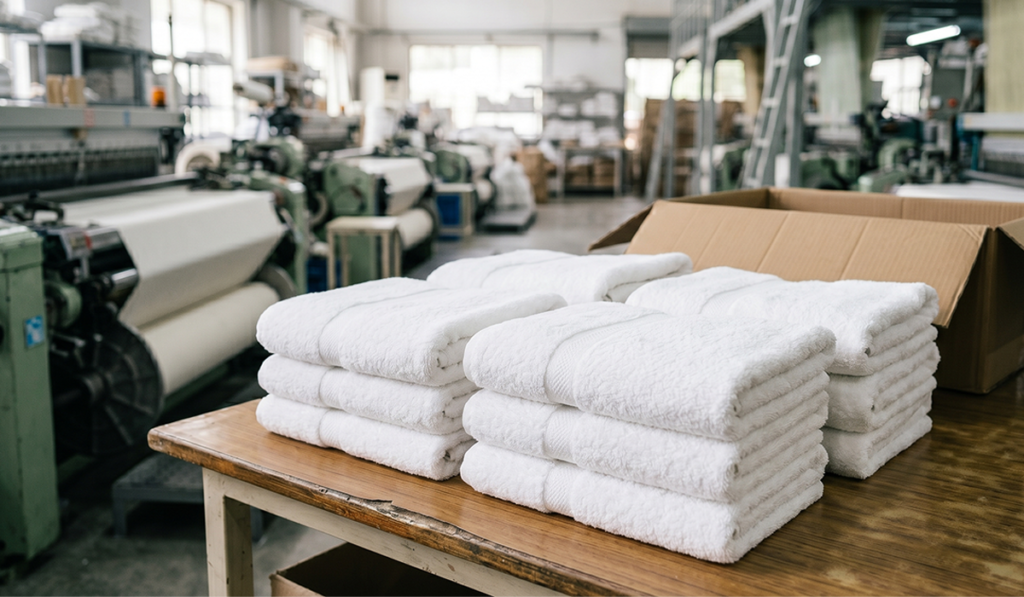
In terry towel manufacturing, this measurement indicates the amount of raw cotton woven into every square meter of fabric. Higher density means more loops and greater surface area.
- Low GSM (300 to 400): Fast drying, low pile, engineered for high-turnover gym or spa use.
- Mid GSM (400 to 600): Balanced absorbency, standard pile, engineered for mid-tier hospitality.
- High GSM (600 to 900): Maximum absorbency, dense pile, engineered for luxury resorts.
Understanding this metric helps you look past subjective marketing terms. It allows you to write precise technical specifications for your suppliers. This clear communication eliminates product variance and secures consistent bulk shipments.
- Yarn Count Calculation: This process measures the thread thickness, which heavily influences the ultimate density of the weave.
- Fabric Density Measurement: This metric tracks the concentration of loops per square inch to determine overall fabric weight.
- Terry Towel Manufacturing: This specialized production method forms loop piles on the fabric surface to maximize liquid retention.
Fabric weight per square meter directly dictates how a product performs under commercial laundering conditions. Lower numbers yield thin, quick-drying textiles. Higher numbers produce thick, highly absorbent products. Sourcing the wrong weight disrupts your operational workflows and harms user satisfaction.
The Financial and Operational Impact of Incorrect GSM Selection
Procurement departments often choose incorrect fabric weights when trying to cut upfront purchasing costs. Buying a low-density product for a high-end luxury resort causes immediate problems. Guests will complain about thin, abrasive textiles that fail to dry effectively.
Conversely, deploying heavyweight luxury products in a high-turnover fitness center damages operational efficiency. Thick items retain water longer and require extended drying cycles. This excess drying time inflates utility bills and strains commercial laundry equipment.
Commercial laundry dryers consume roughly 15% more energy for every 100 GSM added to a standard bath towel.

- Excessive drying cycles: Lead to higher utility expenses and an accelerated carbon footprint.
- Weak structural stability: Results in frequent replacement cycles and inflated procurement costs.
- Low fiber absorbency: Causes poor guest satisfaction scores and diminished brand equity.
Learn More: What Wholesale Towels Dry Fastest in Professional Laundry Operations?
Choosing the wrong fabric density shortens the product lifecycles of your inventory. Low-density items often lack the structural integrity needed for industrial laundering. They thin out rapidly, tear along the borders, and fray at the hems.
This fast degradation forces you to reorder stock more frequently. Balancing upfront cost against the total lifecycle cost of the fabric protects your operational margins.
How to Calculate GSM of Fabric: Formulas and Testing Methods
You do not have to rely only on the product data sheets provided by your manufacturer. Your quality assurance team can independently verify fabric weight using a standard laboratory formula.
GSM = Weight of Sample in grams / Area of Sample in square meters
To find the exact weight of an entire piece of inventory, use this specialized towel GSM calculator formula:
GSM = Total Weight of Towel in grams / (Length in meters x Width in meters)
To implement this verification process in your incoming quality control workflow, follow these four steps:
- Extract the sample: Use a specialized GSM fabric cutter to stamp out a precise 100-square-centimeter circular sample from the textile bulk.
- Calibrate the equipment: Place a commercial digital weighing scale on a flat, vibration-free surface and set it to zero.
- Weigh the specimen: Position the round sample slice in the center of the scale plate to read the mass in grams.
- Multiply for final calculation: Take the scale reading in grams and multiply it by 100 to calculate the exact weight per square meter.
For comprehensive compliance auditing, your team should use a dedicated fabric GSM testing machine. This laboratory apparatus performs an automated fabric construction analysis.
It evaluates the warp and weft structure while cross-referencing yarn counts. This advanced textile lab testing guarantees your bulk shipments match your precise contract specifications.
Common GSM Pitfalls in Commercial Procurement and How to Avoid Them
Many wholesale buyers assume that a higher weight always means a better product. This oversight often causes severe supply chain problems. Unscrupulous manufacturers sometimes artificially inflate weight by leaving processing chemicals or industrial starches in the fabric.
During the first commercial wash, these additives rinse away. This leaves you with a much lighter, coarser, and lower-quality product.
- Chemical starch loading: Perform mandatory pre-wash testing on all initial samples to find the true baseline weight.
- Cheap open-end yarn choices: Specify combed or ring-spun cotton in purchasing contracts to prevent premature shedding.
- Inconsistent edge stitching: Mandate lock-stitched hems with double-needle reinforcement to avoid unravelling.
Another common issue involves ignoring the specific yarn type used in the weaving process. A heavy product made with low-grade open-end yarn will feel rough and shed fibers quickly.
To prevent this, ensure your purchase contracts specify ring-spun cotton or premium combed cotton. These processing techniques use longer fibers. They deliver superior tensile strength, excellent absorbency, and a softer feel at lower weights.
Always verify that your suppliers follow recognized international standards. Your agreements should require adherence to ISO textile testing standards alongside strict textile quality control frameworks.
Mandate that all shipments undergo a formal textile inspection process before leaving the factory. This proactive approach prevents defective or off-spec inventory from ever reaching your distribution centers.
B2B Evaluation Criteria: High GSM vs Low GSM Fabric Performance
Procurement teams must match fabric weights to the exact operational needs of the property. For example, a high-volume cruise ship requires fast-drying inventory to optimize laundry turnaround times.
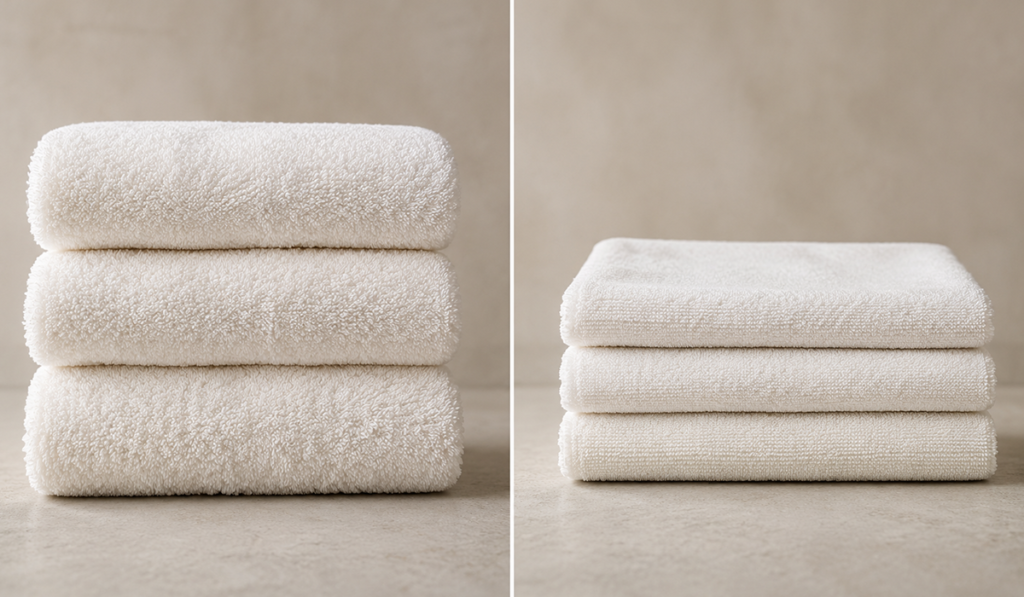
In contrast, a luxury day spa needs thick, heavy textiles to maintain its premium brand positioning. Selecting the right fabric density requires evaluating absorbency, drying time, and expected product lifespan.
| Performance Metrics | Low GSM Fabric (300 to 450) | High GSM Fabric (600 to 800) |
| Absorbency Level | Low to Moderate | Exceptionally High |
| Drying Cycle Speed | Very Fast (Optimized) | Slow (Energy Intensive) |
| Tensile Strength | Moderate | Superior Lifecycle Durability |
| Storage Footprint | Low Volume | High Volume |
| Best Commercial Use | Athletic Gyms, Salons, Motels | Luxury Hotels, Resorts, Spas |
A thorough warp and weft analysis shows that heavy fabrics use a dense backing weave to support their long loops. This robust construction helps the textile survive hundreds of industrial wash cycles without thinning out.
However, low-density options remain an effective, cost-efficient choice for businesses focused on rapid inventory turnover and lower utility bills.
Real-World Case Study: Optimizing Towel Specification for a Regional Hotel Chain
A regional hospitality chain managing 14 mid-tier properties noticed their textile replacement costs were rising rapidly. Their current inventory consisted of unrated bath towels that suffered from severe edge fraying and thinning after just 40 wash cycles.
The chain’s procurement director ran a complete fabric weight analysis to find the root cause. The test revealed the towels were an inconsistent 350 GSM constructed from low-grade open-end yarn.
The corporate procurement team rewrote its sourcing contracts to address these performance gaps. They upgraded the specifications to a mid-weight 520 GSM option made from 100% ring-spun cotton.
They also required double lock-stitched hems to prevent unraveling. The properties laundered these updated samples under standard commercial conditions to evaluate long-term durability.
The results of this specification adjustment were immediate and significant. The stronger 520 GSM products lasted over 150 industrial wash cycles before showing signs of wear.
This extended lifespan reduced the chain’s annual textile replacement costs by 34%. Additionally, guest satisfaction scores across all 14 properties rose by 22% within six months.
Learn More: How ACME Manufactures Chlorine-Resistant Pool Towels for Maximum ROI
How to Measure Technical Success in Textile Quality Control
To maintain a reliable supply chain, you must run systematic quality checks on every incoming shipment. Do not rely on casual visual inspections. Your warehouse team should pull random product samples from every third pallet to run objective laboratory tests.
- Absorbency Testing: Measure the time it takes for water droplets to disappear from the fabric surface to ensure proper drying performance.
- Hotel Towel Quality Standards: Audit all shipments against strict hospitality metrics for colorfastness, shrinkage, and hem strength.
- OEKO-TEX Certification: Verify the fabric is certified free from harmful substances and processing chemicals.
Keep a detailed log of these weight metrics over time. If your calculated weights drop more than 3% below the contracted specification, flag the batch for review.
Consistently tracking these numbers helps you spot production issues early. This allows you to address quality slips before subpar products reach your customer-facing operations.
Leveraging ACME Textiles for High-Performance Commercial Inventory
Sourcing premium commercial linens requires a manufacturing partner that understands industrial operational demands. ACME Textiles specializes in producing precision-engineered GSM wholesale towels built for heavy-use commercial environments.
Our facility uses advanced manufacturing technology to keep fabric weights consistent across high-volume production runs. This rigorous quality control ensures your bulk orders perform reliably over time.
- Unreliable fabric weights: We use automated inline weighing for consistent specifications.
- Harsh texture after washing: We offer 100% long-staple cotton options for lasting softness.
- Chemical sensitivities: We follow certified safe manufacturing practices across all lines.
Learn More: Hospitality Towels Vs. Retail Towels: Manufacturers Guide
We look beyond superficial aesthetics to optimize the technical foundations of our textiles. We use long-staple cotton fibers and reinforced double-border construction. This design helps our products maintain their shape and absorbency through hundreds of commercial washes.
Partnering with ACME Textiles helps you secure inventory that reduces product replacement costs and improves operational efficiency. Discover our high-performance options by browsing the ACME Textiles Towels.
Future Trends in Commercial Towel Manufacturing and Sustainability
The commercial textile industry is changing rapidly due to new environmental regulations and rising resource costs. Modern commercial laundries face strict targets for water conservation and carbon reduction.
In response, industrial weaving mills are developing low-weight fabrics that offer the high absorbency of traditional heavyweight materials.
Engineered hybrid weaves are a major innovation in this space. These designs combine lightweight, high-tensile backing structures with long, untwisted surface loops.
This configuration produces a 450 GSM product that absorbs liquids like a traditional 600 GSM towel. However, it dries 25% faster in commercial equipment.
Adopting these advanced fabric technologies helps procurement departments prepare for stricter environmental regulations. These innovative textiles lower utility expenses and shrink your carbon footprint without sacrificing product quality.
Staying ahead of these manufacturing trends ensures your business maintains a modern, efficient, and sustainable supply chain.
Learn More: How We Manufacture the Longest Lasting Wholesale Towels?
Frequently Asked Questions
- How does fabric weight influence the drying costs in commercial laundry setups?
Fabric weight directly impacts industrial utility expenses because dense fabrics hold more water. A 700 GSM product requires roughly 35% longer in a commercial dryer than a 450 GSM alternative. This extended drying time increases gas and electricity usage while accelerating wear on your machinery. Sourcing an engineered mid-weight option lowers your monthly utility costs and optimizes laundry throughput.
- Why do some high-weight wholesale towels feel rough after their first commercial wash?
This texture change occurs when factories use cheap open-end yarns and mask the coarse feel with temporary chemical softeners. These surface starches wash away during the initial laundry cycle, revealing low-quality, short cotton fibers. To prevent this, ensure your procurement contracts specify 100% ring-spun or combed cotton. These longer fibers provide lasting softness and durability through repeated commercial washes.
- What is the most effective way to test a delivery of GSM wholesale towels for weight accuracy?
The most reliable method is using a circular cutter to remove a 100-square-centimeter sample from a random towel. Weigh this sample on a calibrated digital scale in grams, then multiply that number by 100 to find the true weight. If you do not have a sample cutter, weigh the entire towel, convert the weight to grams, and divide it by the total area in square meters.
- Are heavyweight textiles always the most durable choice for high-turnover hospitality businesses?
No, weight alone does not guarantee a long product lifespan. A 650 GSM option woven with weak, low-grade fibers will fray and tear faster than a 450 GSM product built with premium ring-spun yarn and reinforced borders. True durability depends on fiber quality, yarn spinning methods, and edge stitching rather than thickness alone.
- How does specifying a particular weight help our purchasing team build an internal business case?
Specifying exact weight metrics allows your team to forecast operational lifespans and utility costs accurately for your finance department. You can contrast the higher initial cost of a quality-verified product against the recurring costs of replacing cheap, unrated options. This data-driven approach demonstrates how reliable specifications reduce the total cost of ownership and protect your company’s bottom line.
- Can we find high-weight options that also meet strict international safety certifications?
Yes, reputable commercial manufacturers provide heavy, high-performance products that carry full OEKO-TEX certification. This independent label proves the textiles are free from harmful levels of processing chemicals and industrial toxins. You can source certified, hospitality-grade inventory directly through specialized suppliers by viewing the towels.
Final Words
Mastering fabric weight metrics is essential for running an efficient B2B textile supply chain. Relying on vague descriptions can lead to inconsistent inventory and inflated operational costs.
Using clear, metric-driven standards allows you to secure high-performance products that match your specific business needs. This disciplined approach protects your margins and guarantees consistent quality across all your properties.
Verifying your shipments with a standard fabric calculation formula keeps your suppliers accountable. It also ensures every dollar spent on inventory delivers measurable value.
Partnering with a specialized manufacturer protects your organization from product defects, high replacement rates, and guest complaints.
Are you ready to streamline your textile procurement and secure high-performance commercial inventory?
Contact our commercial sales team today to request custom product samples or explore our complete selection of premium GSM wholesale towels.
