The biggest mistake hotels make when purchasing hotel linen is prioritizing initial unit price over commercial laundry durability.
High-quality hotel linen must feature double-needle stitching, color-coded hems for housekeeping efficiency, and optimal fiber blends to withstand frequent industrial washing without shrinking or yellowing.
For B2B distributors and hotel owners, sourcing from reliable hotel linen suppliers protects the Total Cost of Ownership (TCO). This guide breaks down the ten most costly purchasing mistakes and explains how to build a commercial-grade textile inventory.
What Does a Complete Hotel Linen Program Include?
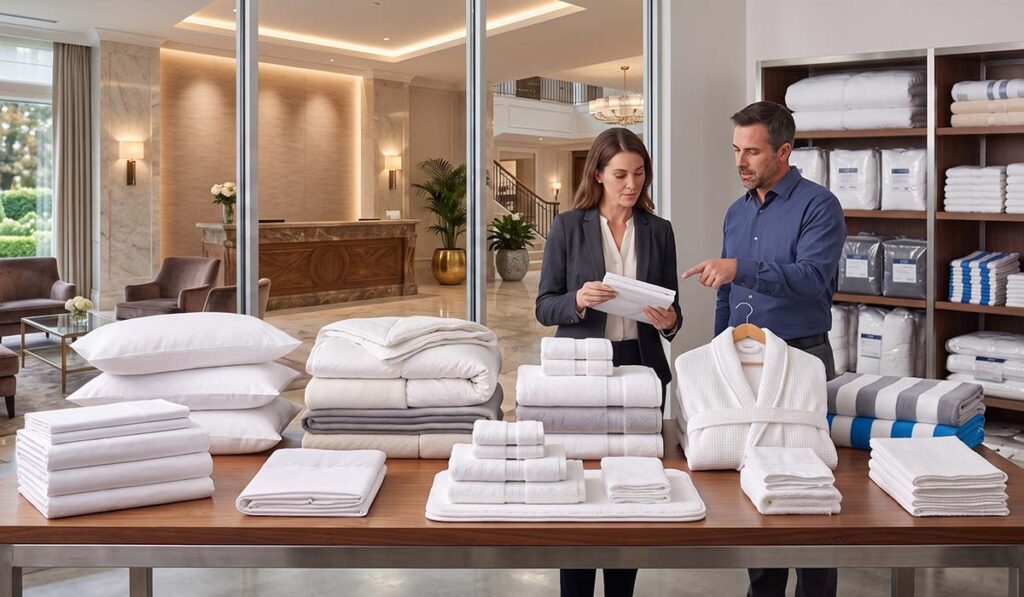
Before purchasing bulk hotel sheets, towels, and accessories, properties must define their exact operational needs across all textile categories.
A comprehensive commercial hotel linen program includes:
- Bed Linen: Flat sheets, fitted sheets, and pillowcases.
- Bath Linen: Washcloths, hand towels, bath towels, and bath mats.
- Pool & Spa Linen: Chlorine-resistant pool towels and bathrobes.
- Bedding Basics: Pillows, duvet inserts, blankets, and protectors.
10 Costly Mistakes in Sourcing Hotel Linen
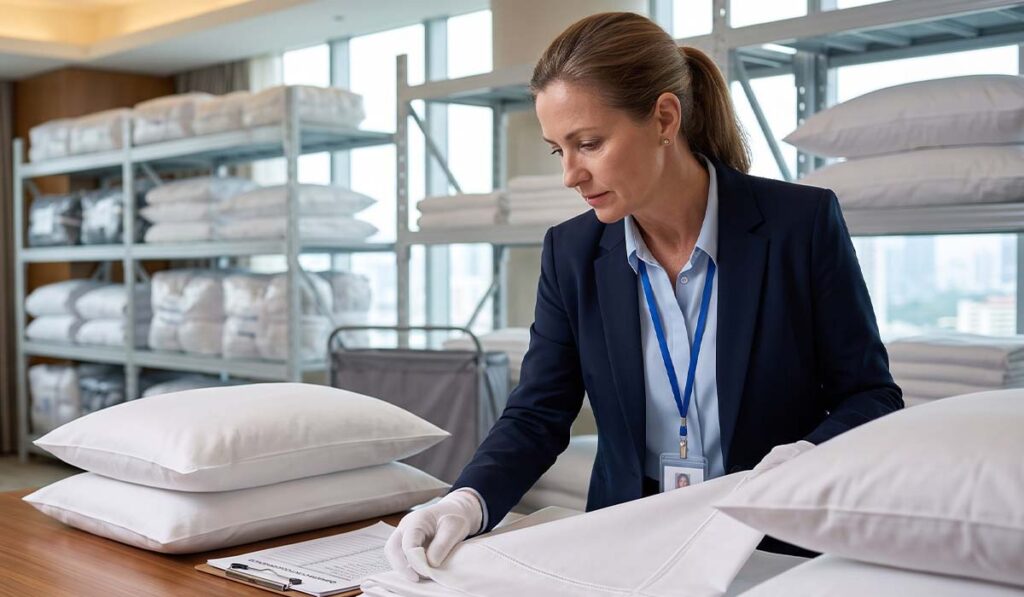
Procurement managers frequently increase their replacement costs by making these ten sourcing errors.
1. Buying strictly on unit price
Cheap sheets and thin towels flatten immediately. A higher initial investment in a durable T-200 sheet or a dense terry towel dramatically lowers long-term replacement costs.
Instead of focusing on the upfront price ticket, buyers must calculate the hotel linen cost per wash to determine true commercial value.
2. Ignoring commercial laundry durability
Weak single-stitched seams burst in industrial extractors. Always demand double-needle stitching and flat-woven dobby borders to prevent towel edges from puckering.
3. Overlooking housekeeping efficiency
Buying bed sheets without color-coded hems drastically slows down room turnarounds. Housekeeping staff waste valuable time sorting and identifying different sizes without clear color labels.
Saving just 45 seconds per room turnaround across a 150-room property recovers over 500 labor hours annually. Sourcing sheets with built-in color-coding instantly eliminates this inefficiency.
4. Chasing thread count over fabric quality
A tightly woven T-200 or T-250 poly-cotton blend survives commercial use much better than a poorly constructed T-400 sheet. Yarn quality matters more than high thread counts.
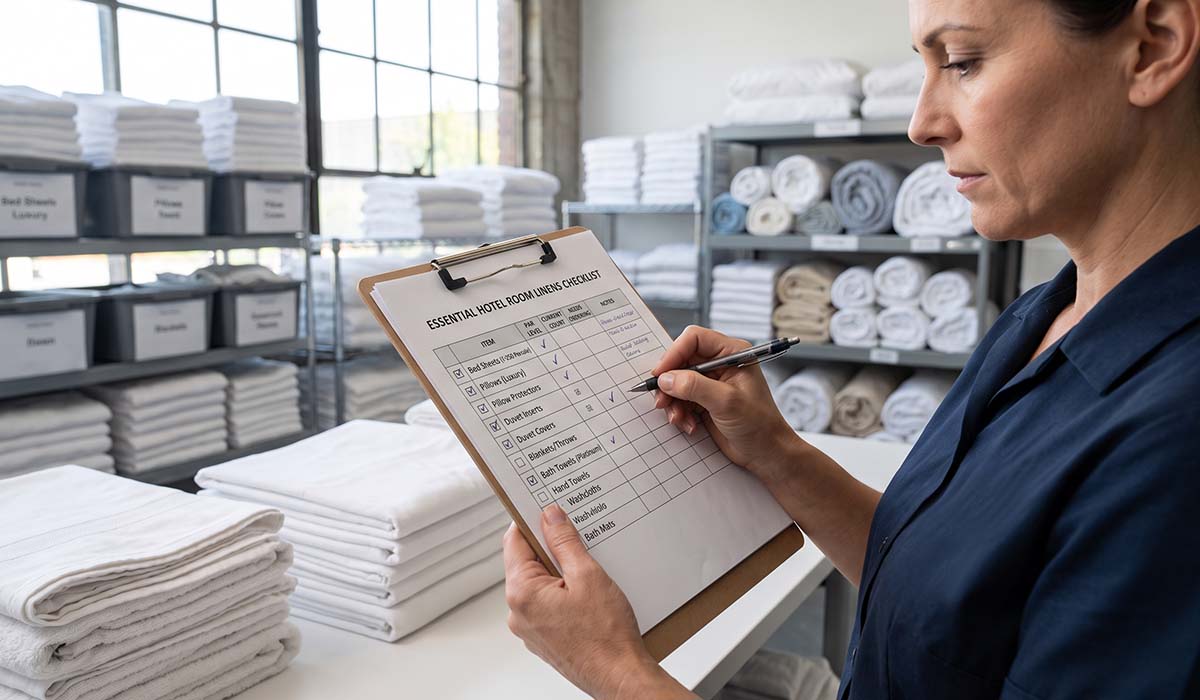
5. Failing to maintain proper par levels
Running out of linen forces housekeeping to hot-wash and immediately reuse textiles. This destroys fibers. Properties must maintain 3 to 4 par levels to let fabrics rest.
6. Mixing incompatible fabrics
Washing 100% cotton sheets with microfiber pillowcases causes uneven drying times. This mismatch wastes commercial dryer energy and creates an inconsistent guest aesthetic.
7. Forgetting the pillow shell
Buying cheap pillows results in filling leaking during wash cycles. Commercial hotel pillows require a tightly woven T-233 down-proof shell to survive heavy laundering.
8. Skipping mattress and pillow protectors
Ruining an expensive commercial mattress over a missing waterproof protector is a massive operational failure. Always cover core bedding assets.
9. Sourcing from middlemen instead of manufacturers
Buying from third-party resellers often eliminates factory-direct quality control. Partnering directly with a hospitality textile manufacturing facility ensures consistent specifications across massive bulk orders.
10. Skipping the wash test
Never buy bulk textiles without putting a sample through the property’s actual industrial extractors. Buyers must verify that the fabric withstands specific laundry chemicals.
Hotel Linen Fabric Comparison Guide
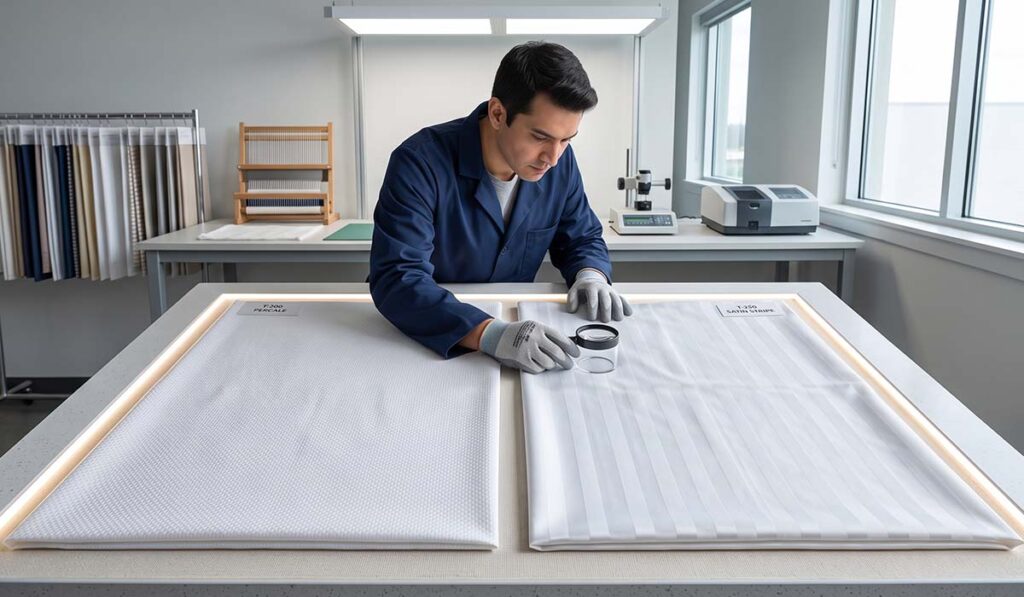
Choosing the right fabric blend prevents rapid degradation. B2B buyers should match the material to the property’s specific operational tier.
| Fabric Material | Key Characteristics | Best Hospitality Use Case |
| 60/40 Poly-Cotton Blend | Highly durable, crease-resistant, fast-drying. | Mid-tier hotels, motels, extended stays. |
| 100% Ring-Spun Cotton | Maximum breathability, ultra-soft, highly absorbent. | Luxury resorts, boutique hotels, 5-star properties. |
| 100% Microfiber | Cost-effective, wrinkle-resistant, ultra-fast drying. | High-turnover rentals, budget properties, institutions. |
How ACME Textiles Helps Buyers Avoid Linen Failures
ACME Textiles is a direct manufacturer that builds operational fixes right into the fabric. We include micro-white finishes to prevent yellowing, color-coded hems for fast housekeeping, and double-needle stitching for commercial durability.
Wholesale buyers rely on our complete hospitality textile catalog to match any property tier.
1. Commercial Bed Sheets
Our bed sheet collections are engineered for varying levels of luxury and high-frequency laundering.
- Blended Bed Sheets: ACME offers a complete range of blended bed sheets, including Opal Super Blend everyday sheets, Icon T-200 Percale, Forte T-250 Soft Plain Satin, Swiss Stripe T-250, and Icon 300 Premium, all featuring crease-resistant durability.
- 100% Cotton Bed Sheets: The Ryotei T-300 Luxury Cotton sheets deliver maximum breathability for five-star properties, alongside our White Baby Crib Fitted Sheets.
- Microfiber Bed Sheets: The Opal Fast Drying and Belem Colored collections provide highly cost-effective, wrinkle-resistant options for high-turnover properties.
2. Bath Towels & Accessories
ACME terry products utilize dense dobby borders and reinforced edges to survive industrial extraction.
- Bath Towels: The Opal Super Blend Plus cuts drying time by 30%. The Mikado Towels, Forte Towels, Belem Exclusive Towels, and Ryotei Towels collection delivers plush, 100% ring-spun cotton luxury.
- Spa Accessories: Our heavy-duty Hotel Bath Mats and Spa Bathrobes (Zero Twist Full Terry Shawl Collar and Honeycomb Waffle) withstand intense daily laundering.
3. Chlorine-Safe Pool Towels
Guest room towels degrade in pool water. ACME manufactures dedicated pool towels using vat-dyed, fade-resistant yarn to survive heavy chlorine and UV exposure.
| ACME Pool Towel Collection | Construction Features | Best For |
| Striped Pool Towels (Cabana, Center, Three, Horizontal) | Vat-dyed stripes, chlorine-resistant, fast-drying blends. | Resort pools, high-volume waterparks, gyms. |
| Solid Color Pool Towelsels (Economy & Luxury) | Bright vat-dyed colors, 100% ring-spun cotton options. | Upscale beach resorts, premium spas. |
Frequently Asked Questions (FAQs)
- What is the best material for hotel linen?
The best material depends on the property tier, with 60/40 poly-cotton being ideal for mid-tier durability and 100% combed cotton being the standard for luxury resorts. Polycotton resists wrinkles and lowers drying costs, while cotton offers maximum breathability.
- How many par levels of hotel linen should a property have?
Commercial properties should maintain three to four par levels of hotel linen. This inventory volume ensures one set is in the room, one in the laundry, one in storage, and one resting to extend fiber life.
- Why does hotel linen turn yellow?
Hotel linen turns yellow due to chemical buildup, poor water extraction, or a lack of optical brighteners. Sourcing commercial linens treated with a micro-white finish actively prevents this chemical yellowing.
Final Thoughts
Sourcing hotel linen is a direct investment in your daily operations. Stop wasting your budget on rapid replacements caused by weak seams, chemical yellowing, and incompatible fabrics.
Partner with a direct manufacturer that understands commercial laundry requirements.
Ready to upgrade your hospitality textile program?
Contact ACME Textiles today for factory-direct wholesale pricing, bulk inventory specifications, and physical samples to test in your own facility.