
Procurement managers prefer wholesale textile suppliers to reduce unit costs by 30% to 50% through tiered pricing. Unlike retail, wholesale partnerships offer consistent dye matching, custom specifications, and reliable bulk inventory. Retail channels often lack sufficient stock, carry higher markups, and cannot support commercial supply contracts.
By switching to direct wholesale partnerships, hospitality businesses can avoid the disruptions of mismatched dye lots and stock outs while benefiting from volume discounts and dedicated support.
Understanding Direct Sourcing from a Wholesale Textile Supplier
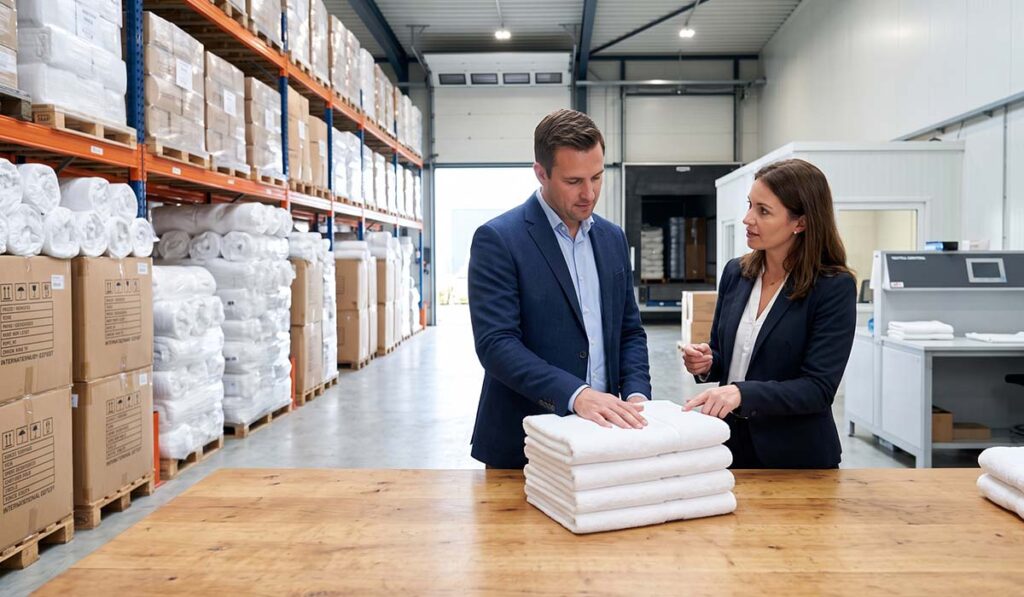
What separates direct commercial textile sourcing from buying fabric off the shelf?
Retail sourcing focuses on individual consumer transactions with static pricing. In contrast, commercial textile distribution operates on long-term supply agreements tailored to business operations.
Commercial Textile Supply Chain Flow
- Yarn Producer
- Textile Manufacturing Distributor / Mill
- Wholesale Textile Supplier Warehouse
- B2B Buyer / Hospitality Procurement Manager
- Hotels, Motels, Resorts, and Laundries
Working with a wholesale textile supplier connects you directly to the commercial manufacturing pipeline. A specialized bulk fabric supplier maintains dedicated warehouse facilities packed with specialized SKU (Stock Keeping Unit) inventory. They store high-volume inventory lots specifically for enterprise buyers.
Commercial buyers order fabric rolls wholesale or purchase wholesale fabric by the yard under pre-negotiated contracts. This setup connects procurement managers directly to a textile manufacturing distributor or material sourcing agent. Eliminating retail intermediaries preserves capital and protects supply stability.
Core Components of a B2B Textile Relationship

- Price Tier Structures: Unit costs decrease as purchase volume increases on every sales order.
- Mill Direct Textiles: Direct access to production runs ensures strict quality control and customized fabric weights.
- Master Purchase Orders: Long-term purchase order agreements lock in pricing and guarantee inventory availability over 12-month periods.
Establishing direct supply channels transforms textile purchasing from a reactive task into a strategic asset.
A Step-by-Step Evaluation Framework for B2B Textile Sourcing
How do top procurement teams evaluate a new commercial textile partner? Evaluating a supplier requires a structured process to ensure quality, capacity, and financial stability.
Procurement Evaluation Workflow
- Step 1: Technical Specification Verification
- Step 2: Mill Capacity Audit
- Step 3: Sample and Dye Lot Approval
- Step 4: Credit and Logistics Setup
Step 1: Technical Specification Verification
Verify yarn count, tensile strength, GSM (Grams per Square Meter, which measures fabric density), and shrinkage resistance.
Step 2: Mill and Facility Audits
Audit the vendor’s manufacturing capabilities. Confirm whether they operate as a true textile wholesaler or a broker.
Step 3: Sample and Dye Lot Approval
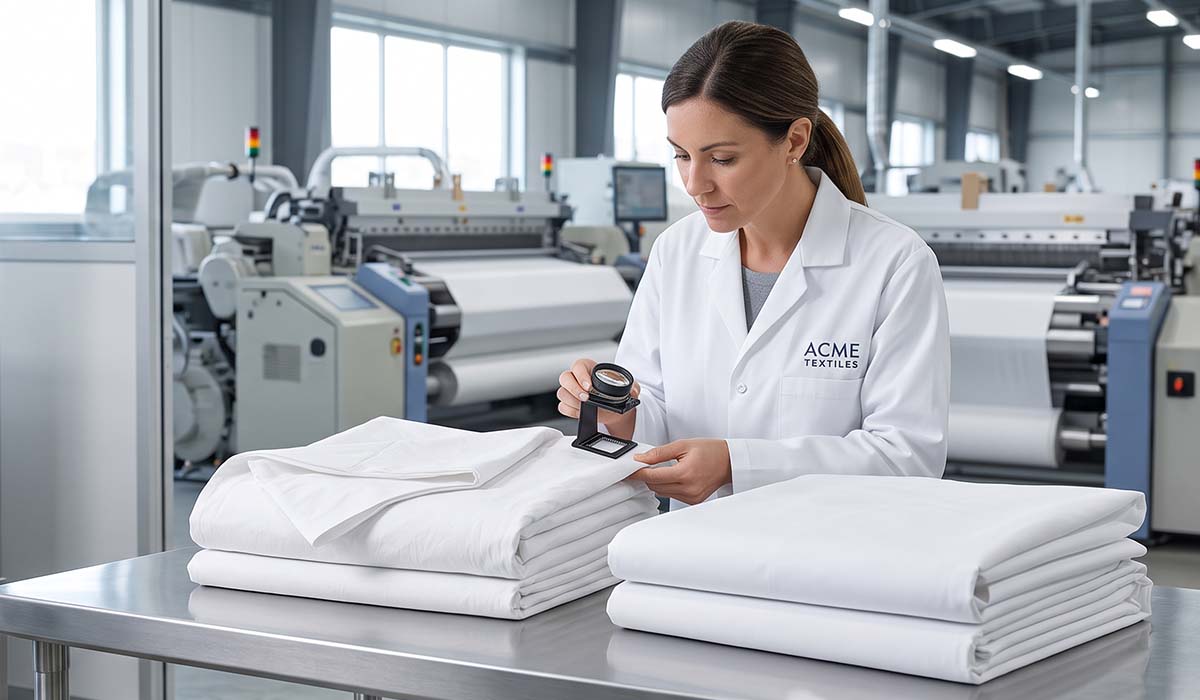
Order fabric samples to verify color and durability from the active inventory lot. Test these samples under industrial laundering cycles to verify colorfastness and shrinkage tolerances before signing a contract.
Step 4: Commercial Credit and Logistics Setup
Establish business terms, including invoice processing schedules, credit limits, and freight support. Ensure the supplier works with established carrier networks for reliable delivery.
Commercial Supplier Evaluation Standards
- Colorfastness: Grade 4 minimum after 50 industrial washes
- Shrinkage Tolerance: Under 3% maximum residual shrinkage
- Order Lead Time: 5 to 7 days for stocked warehouse SKUs
- Minimum Order Quantity (MOQ): Flexible tier structures matching demand
Following this clear framework minimizes sourcing risks and builds a reliable supply network.
Four Critical Procurement Mistakes and How to Prevent Them
Even experienced procurement teams can encounter setbacks during supplier transitions. Recognizing these common errors helps keep your sourcing strategy on track.
- Prioritizing Upfront Unit Price Over Total Cost of Ownership: A cheap fabric that wears out quickly costs more over time. Always calculate longevity and laundering durability into your financial models.
- Overlooking Logistics and Shipping Terms: Unclear shipping terms lead to unexpected freight costs.
- Failing to Reserve Buffer Stock: Unexpected demand spikes can drain local warehouse inventory. Require your supplier to hold buffer stock for core hospitality lines.
- Skipping Compliance Audits: Uncertified fabrics can fail municipal safety inspections. Always require OEKO-TEX or ISO certifications upfront.
Avoiding these common pitfalls protects your operating budget and maintains smooth supply continuity.
Retail vs. B2B Marketplaces vs. Direct Mill Distributors
Which supply channel aligns best with your organization’s purchasing volume and growth goals? Comparing these options clarifies the trade-offs between speed, cost, and control.
| Evaluation Criteria | Retail Craft Stores | Online B2B Marketplace | Direct Wholesale Supplier |
| Unit Pricing | Highest (Full retail price) | Moderate (Platform fees included) | Lowest (Mill-direct volume pricing) |
| Customization | None | Limited | Full (Custom dye, width, and weave) |
| Order Volume Capacity | Very Low | Moderate | High (Full container loads) |
| Dedicated Account Manager | No | No (Automated support) | Yes (Dedicated specialist) |
| Supply Chain Transparency | Low | Low to Moderate | High (Complete lot tracking) |
While consumer marketplaces handle small orders quickly, direct wholesale distributors provide the scale, stability, and savings required by commercial operators.
Streamlining Hospitality Sourcing with ACME Textiles
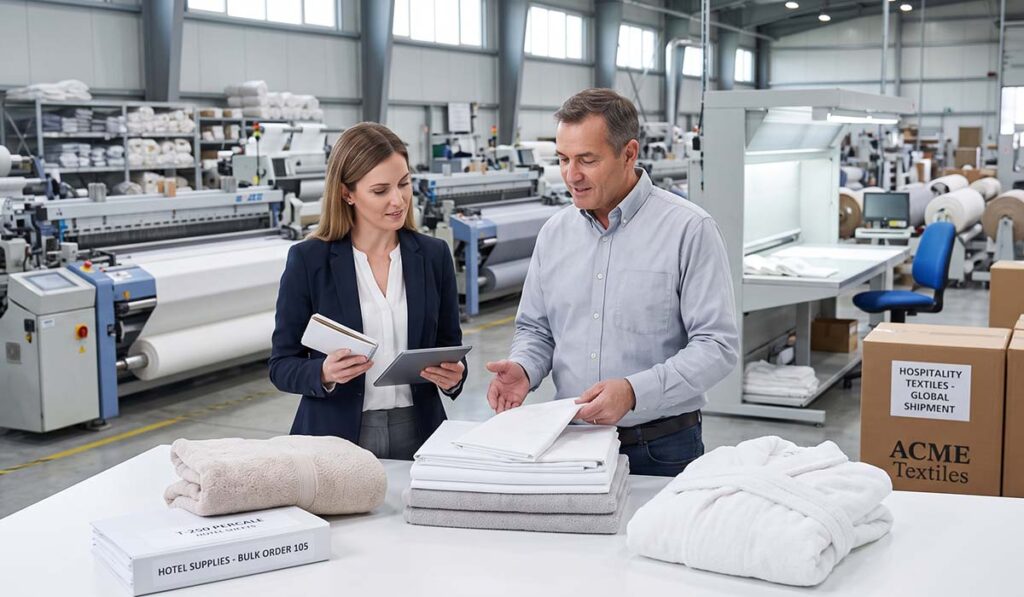
Managing commercial textile sourcing requires a partner that understands hospitality operations. ACME Textiles serves as a dedicated B2B distributor, helping hospitality businesses optimize their fabric supply chains.
- Institutional Fabric Engineering: Volume price tiers, low unit costs, and long-staple yarns that resist bleaching.
- Precision Seam Integrity: Complete lot tracking, guaranteed shade consistency, and preshrunk fabrics.
- Dedicated B2B Support: Custom orders, flexible credit terms, and fast nationwide shipping.
As a full-service commercial partner, ACME Textiles coordinates international textile import/export logistics to ensure consistent supply availability. Whether you need specialized garment fabric suppliers or high-volume bed linens, our team supports your business growth.
Future Trends Shaping Commercial Textile Sourcing
What key supply chain shifts will impact hospitality procurement over the next decade?
- Digital Sourcing Hubs: B2B buyers increasingly use online portals to manage bulk orders, track shipments, and review automated inventory updates.
- Circular and Recycled Textiles: Environmental regulations are driving demand for closed-loop recycled fabrics that withstand commercial washings without degrading.
- Automated Real-Time Tracking: Advanced supplier systems integrate directly with client inventory software, triggering automated reorders when stock levels drop.
Frequently Asked Questions
- Why is a specialized wholesale textile supplier less expensive than retail?
Wholesale suppliers work directly with textile mills and buy base fabrics in large quantities. They avoid retail storefront expenses, consumer advertising costs, and intermediary markups. These savings pass directly to commercial buyers through volume pricing.
- What minimum order volumes do commercial fabric suppliers require?
Minimum order quantities vary depending on the product line and customization level. Stocked warehouse items may have low minimums starting at a single fabric roll, while custom dye runs typically require larger order volumes.
- How do wholesale suppliers ensure consistent dye lots across large orders?
Commercial suppliers track production runs using strict inventory lot control numbers. They pull your entire order from a single continuous dye batch, guaranteeing consistent color matching across all items.
- Can wholesale textile vendors accommodate custom fabric weights and weaves?
Yes. Commercial distributors work directly with manufacturing mills to produce custom GSM weights, specialized weaves, and custom treatments like stain resistance or flame retardancy.
- How do payment terms work when buying textiles wholesale?
Qualified commercial accounts usually receive Net 30 or Net 60 payment terms after a standard credit check. This allows businesses to receive and inspect inventory before payment is due.
- How do I transition my business from retail buying to a wholesale partner?
Audit your current annual fabric usage, identify core specifications, and request quotes from commercial distributors. Establishing a primary supply contract streamlines purchasing and lowers unit costs.
Final Words
Choosing a dedicated wholesale textile supplier over retail is an essential strategy for modern procurement teams. Direct commercial sourcing reduces material expenses, stabilizes lead times, and protects brand standards across all properties. Moving away from retail purchasing eliminates unexpected stockouts and lowers your total cost of ownership.
Securing a reliable textile supply chain builds a strong foundation for business growth and operational efficiency.
Ready to optimize your procurement strategy and lower unit costs? Partner with ACME Textiles to access premium commercial fabrics, volume pricing, and reliable B2B support. Contact our commercial sourcing team today to request fabric samples and custom quotes for your business.