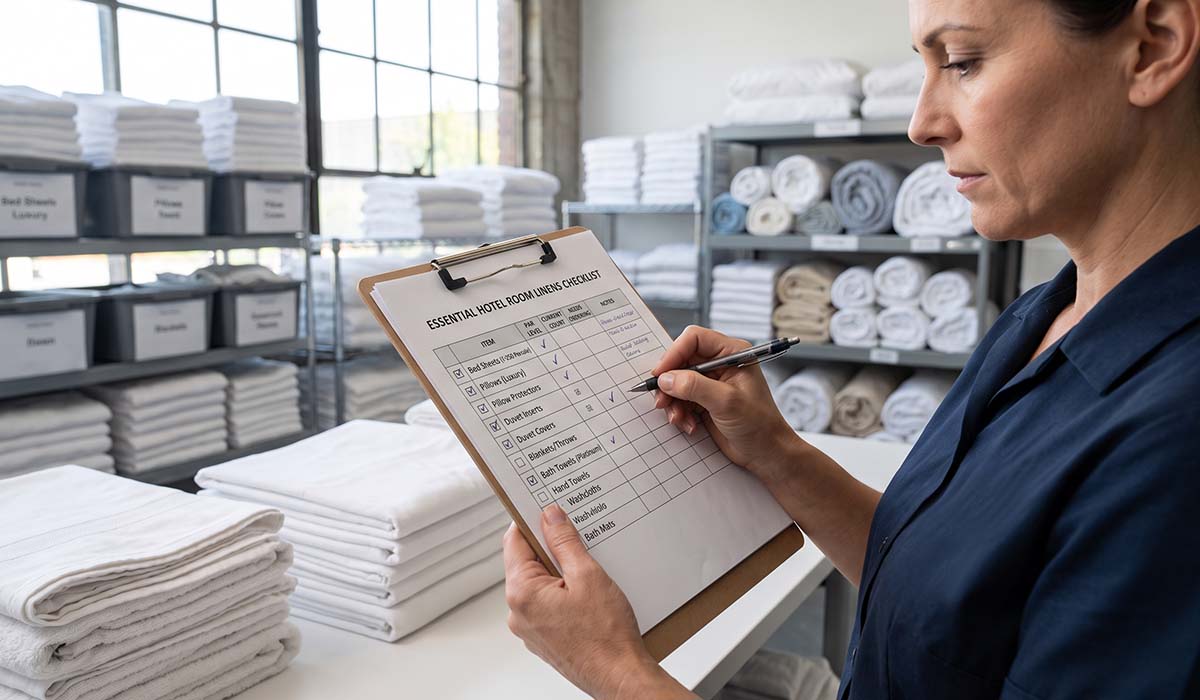
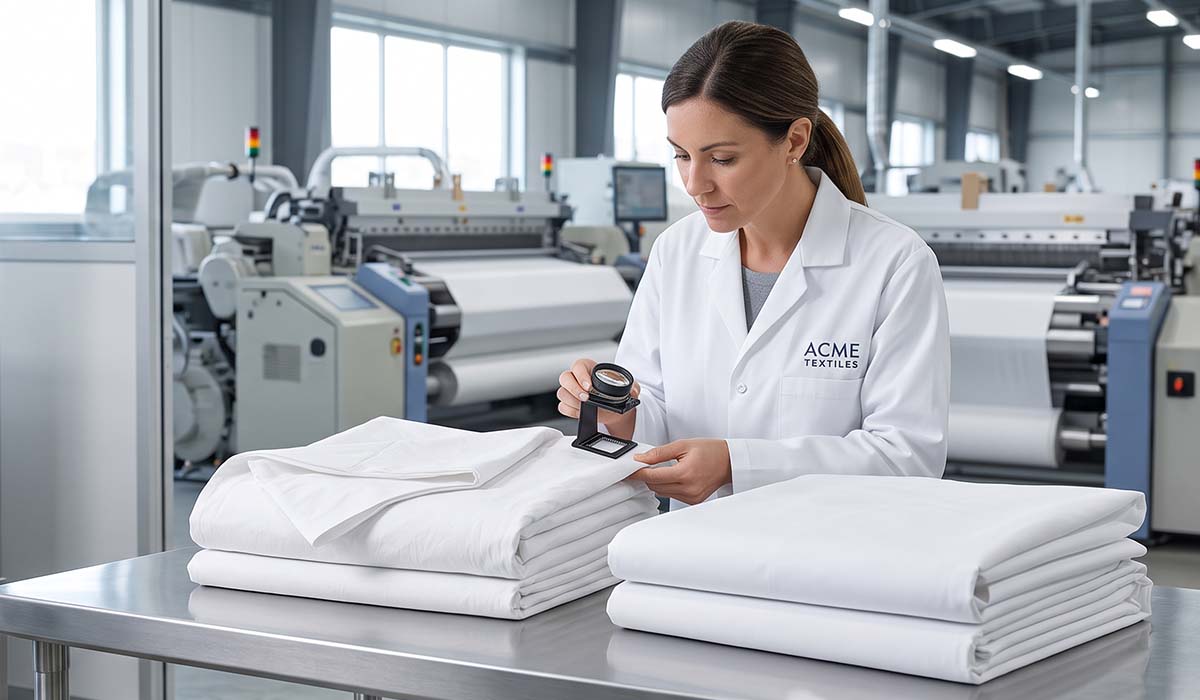
Poly-cotton hotel sheets generally offer enhanced durability
The polyester content adds strength, shrinkage resistance, and dimensional stability, helping sheets withstand repeated washing and drying cycles.
At the same time, 100% cotton sheets are highly valued for their superior softness, breathability, and natural comfort, making them a preferred choice for premium hospitality settings.
For wholesale buyers, the right choice depends on whether long-term durability and easy maintenance or premium natural comfort and feel is the higher priority for the property.
In this guide, we’ll compare both materials and explain what affects their service life in hotel operations.
1. What Makes Poly-Cotton Hotel Sheets More Durable?
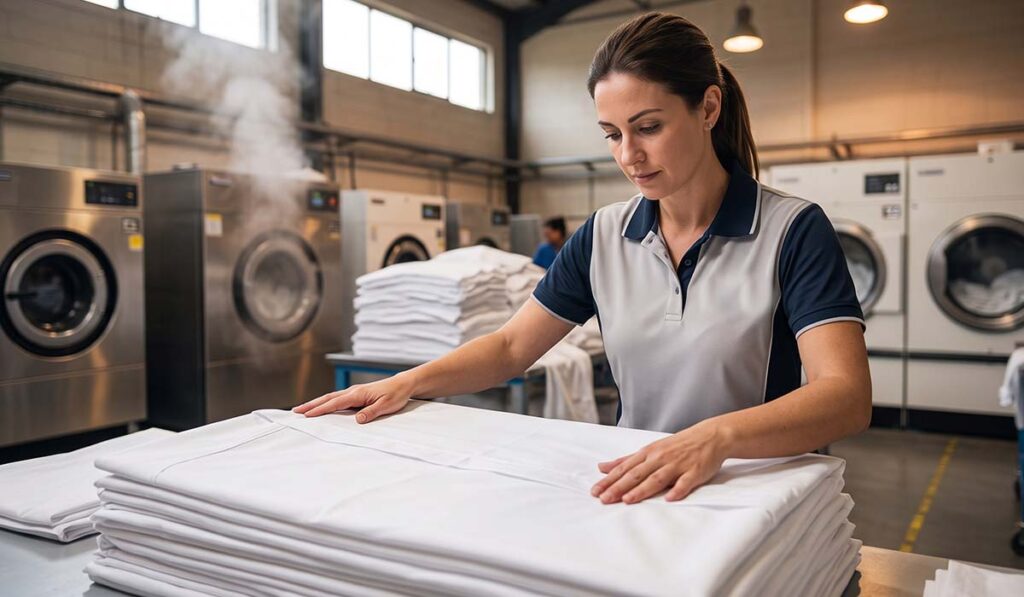
Poly-cotton generally lasts longer because polyester adds strength and dimensional stability to cotton.
This helps the fabric resist shrinkage, wrinkling, and shape loss through repeated commercial laundering.
Cotton provides softness and breathability, while polyester adds resilience for demanding hotel laundry cycles. For high-turnover properties, this can mean fewer replacements and longer service life.
The advantage is not simply the presence of polyester. It comes from combining cotton’s comfort with polyester’s durability and stability.
2. Cotton vs. Poly-Cotton: How the Materials Perfor
The main difference is how each material balances comfort, breathability, and durability in hotel use.
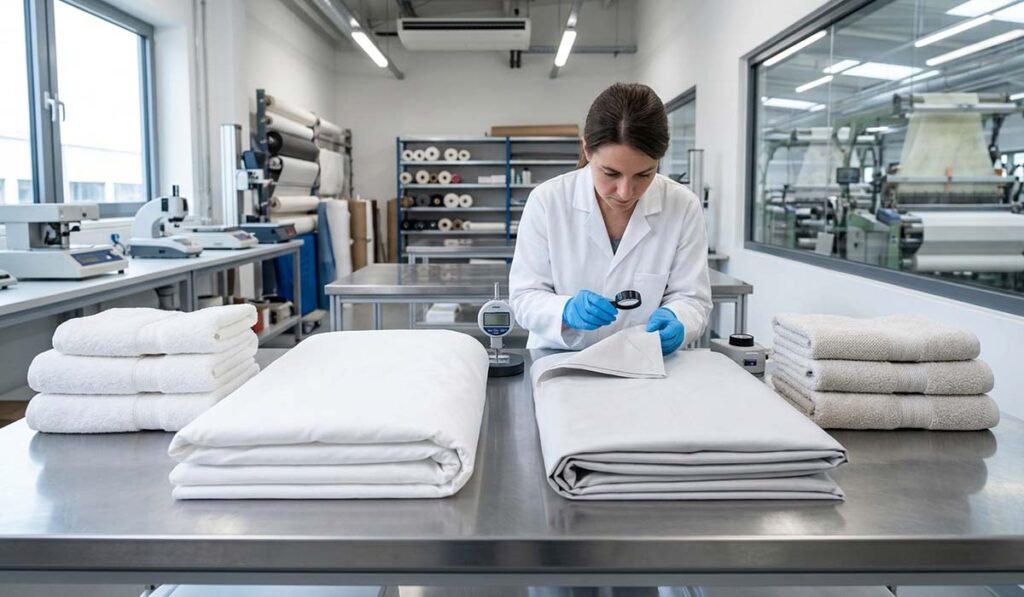
- Cotton Hotel Sheets
Cotton offers natural softness and breathability, making it well-suited to premium bedding where guest comfort is a priority.
Best suited for: Luxury hotels, resorts, and properties focused on natural comfort.
Learn More: Comparing Cotton Sheets Collection: T-180 to T-300 Comparison.
- Poly-Cotton Hotel Sheets
Poly-cotton combines cotton’s softness and breathability with polyester’s added resilience, making it a practical choice for demanding hotel operations.
Best suited for: High-turnover hotels and properties prioritising durability, easy maintenance, and longer service life.
3. What Matters More Than Fiber Content?
Fiber composition is important, but it is not the only factor that determines sheet life.
A well-constructed sheet can outperform a poorly made sheet regardless of whether it is cotton or poly-cotton. Look for factors such as:
- Yarn Quality
Stronger, well-constructed yarns create a more stable fabric that can better withstand repeated use and laundering.
- Weave
The weave affects the sheet’s strength, surface feel, and overall performance. Percale, twill, and satin constructions can each provide different performance characteristics.
- Construction
Features such as loom-locked selvages and double-needle stitching reinforce high-stress areas and help prevent fraying during repeated use.
Learn More: The Importance of Thread Count in Hospitality Bed Sheets
4. How Commercial Laundering Affects Sheet Life
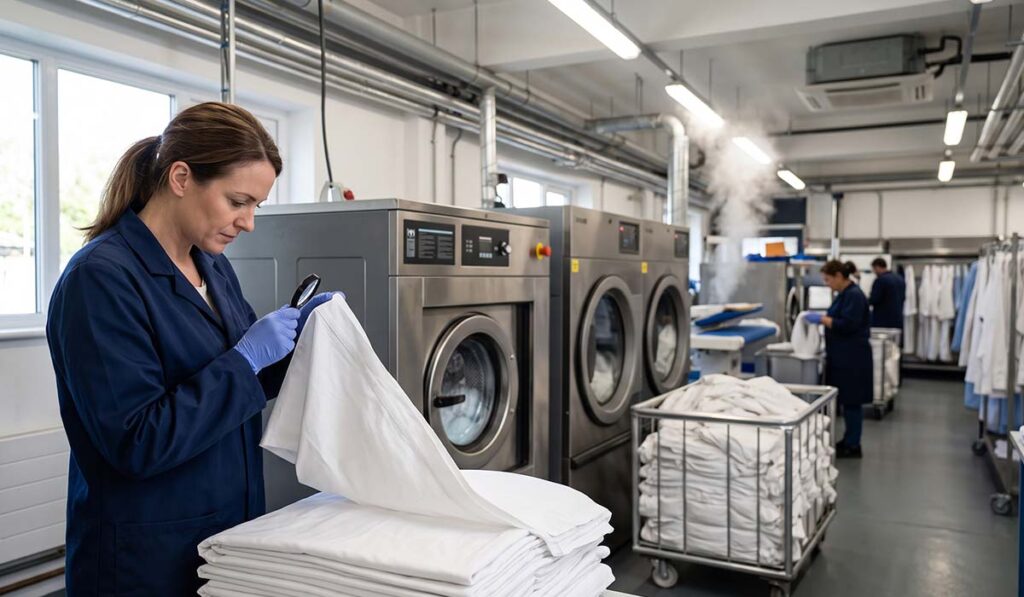
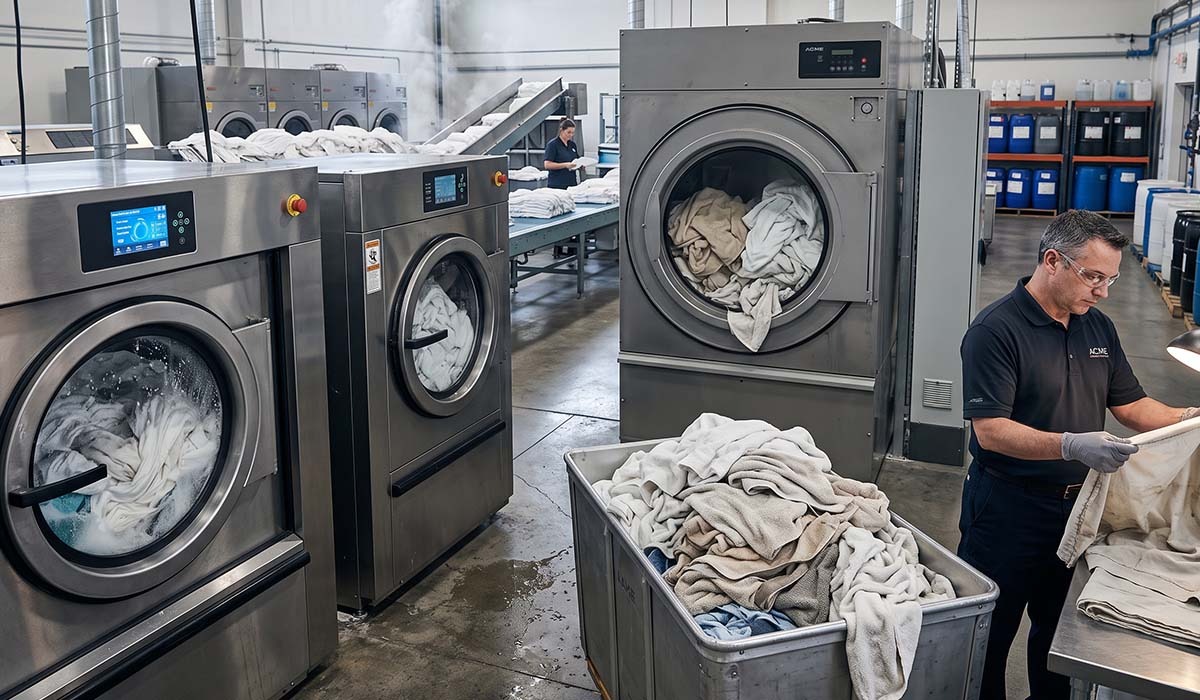
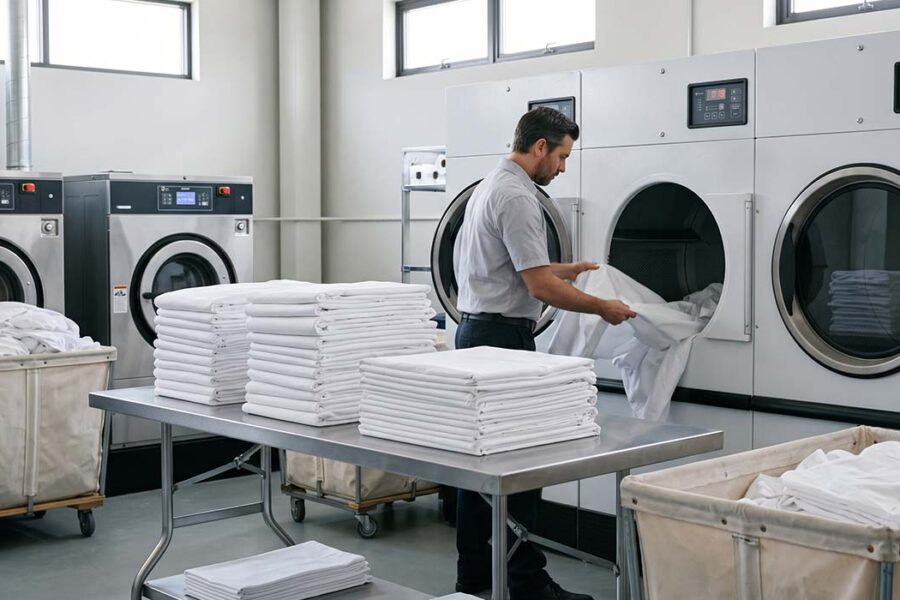
Hotel sheets face much more demanding laundry conditions than residential bedding. Repeated washing, drying, folding, and handling gradually put stress on the fabric.
For wholesale buyers, these factors matter most:
- Heat: High washing and drying temperatures can accelerate shrinkage and fabric wear.
- Mechanical action: Frequent tumbling and extraction place repeated stress on yarns and seams.
- Detergents: Commercial chemicals must be properly balanced to avoid unnecessary fabric damage.
- Drying: Excessive heat can affect dimensions and surface feel over time.
- Laundry frequency: A sheet used and washed several times a week will naturally face greater wear than one used less frequently.
The more frequently a property launders its sheets, the more important fabric stability and construction become when selecting a linen program.
Learn More: How to Launder Luxury Cotton Sheets Industrially?.
5. How ACME’s Cotton and Poly-Cotton Sheets Compare
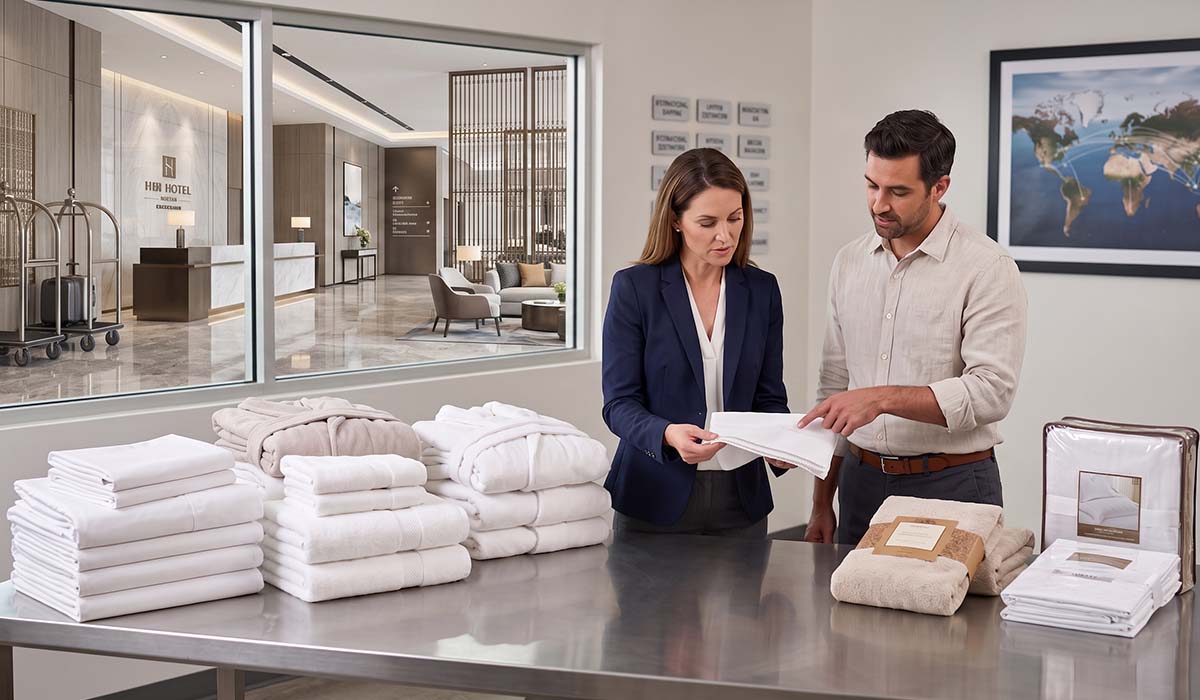
ACME offers both 100% cotton and 60/40 cotton-polyester sheets, allowing buyers to select a construction based on the property’s priorities rather than forcing every property into one material.
| ACME Collection | Construction | Key Features | Best For |
| T-300 Luxury | 100% cotton | long-staple combed cotton, 300 thread count, double-needle stitching | Luxury hotels and premium properties |
| T-250 Satin | 60% combed cotton / 40% polyester | Air-jet loom, mercerized finish, crease-resistant, 5MM sateen stripes | Upscale hotels seeking comfort with easier maintenance |
| T-250 Premium | 60% combed cotton / 40% polyester | Twill weave, crease-resistant finish, reduced shrinkage and fading | Full-service and mid-scale hotels |
| T-200 Percale | 60% ring-spun combed cotton / 40% polyester | Lightweight, breathable, percale weave, crease-resistant | Hotels seeking a balance of comfort and durability |
| T-180 Economy | 60% cotton / 40% polyester | Economical, breathable, reduced wrinkles and shrinkage | Economy hotels and high-volume operations |
The key difference is not simply cotton vs. poly-cotton. Each ACME collection uses a different combination of fiber content, yarn, weave, and finishing to meet specific operating requirements.
Learn More: Why Wholesalers Invest in T-250 Cotton Blend Bed Sheets
6. Common Mistakes When Comparing Cotton and Poly-Cotton Sheets
Fiber content is easy to compare on a specification sheet. Actual performance is more complicated. Avoid these common sourcing mistakes:
- Assuming 100% cotton always lasts longer: Service life also depends on yarn quality, weave, finishing, and laundering.
- Choosing by thread count alone: Thread count does not tell you how the fabric will perform under commercial use.
- Ignoring the blend ratio: A 60/40 poly-cotton sheet can perform differently from another blend with a different fiber ratio.
- Overlooking finishing: Shrinkage control, crease resistance, and other finishes can directly affect maintenance and service life.
- Testing sheets only for softness: A sheet may feel excellent initially but perform poorly after repeated commercial washing.
- Ignoring the property’s laundry conditions: High-temperature washing, frequent drying, and heavy mechanical action should influence the material you select.
Compare the complete construction and expected operating conditions—not just the fiber percentage.
ACME Textiles: Hotel Sheets Built for Commercial Use
For more than 60 years, ACME Textiles has manufactured hospitality textiles for hotels, resorts, distributors, healthcare facilities, and institutional buyers worldwide.
Our bed linen collection includes both 100% cotton and 60/40 cotton-polyester constructions, giving wholesale buyers options for different property requirements.
Learn More: Wholesale Bed Sheets: Quality Standards Distributors Must Know
Why Wholesale Buyers Choose ACME Textiles
- Over 60 years of hospitality textile manufacturing expertise
- 100% cotton and poly-cotton bed sheet collections
- Commercial-grade construction for repeated laundering
- Consistent quality across production runs
- Factory-direct pricing and volume discounts
- Reliable supply for recurring wholesale programs
- Global manufacturing and export capabilities
Frequently Asked Questions
- Which lasts longer, cotton or poly-cotton hotel sheets?
Poly-cotton generally lasts longer in high-frequency commercial use because polyester adds strength, resilience, and dimensional stability. However, overall service life also depends on yarn quality, construction, finishing, and laundering.
- Are 100% cotton sheets good for hotels?
Yes. 100% cotton hotel sheets are well suited to properties that prioritise natural softness, breathability, and premium guest comfort. High-quality cotton constructions can also provide excellent durability.
- Why do hotels use poly-cotton sheets?
Poly-cotton hotel sheets combine cotton’s comfort with polyester’s strength and stability. This makes them practical for properties that handle frequent laundering and need consistent sheet dimensions and easier maintenance.
- Does a higher thread count mean longer-lasting hotel sheets?
Not necessarily. Thread count is only one specification. Yarn quality, weave, fiber composition, finishing, and construction all influence sheet durability.
- Which ACME sheets are best for high-turnover hotels?
ACME’s 60/40 poly-cotton collections are well suited to high-turnover properties because they offer durability, dimensional stability, and easier maintenance. The right collection depends on the property’s comfort and budget requirements.
- Can cotton and poly-cotton sheets be used in the same hotel?
Yes. Hotels can use different collections across property tiers, room categories, or operational requirements. For example, poly-cotton may be used for standard rooms while 100% cotton is reserved for premium accommodations.
Final Thoughts
Poly-cotton generally offers longer service life under demanding hotel conditions, while 100% cotton provides the natural softness and breathability associated with premium bedding.
The better choice depends on how the property balances durability, guest comfort, laundering frequency, maintenance, and budget.
Rather than choosing based on fiber content alone, wholesale buyers should evaluate the complete construction, including yarn quality, weave, finishing, and commercial laundry requirements.
Looking for hotel sheets built for your property’s needs?
Explore ACME Textiles‘ complete bed linen collection or contact our team to discuss your requirements, request samples, and get factory-direct pricing for your next wholesale order.