
Hotel linen is a constant expense, but hotels can cut on their annual budget without giving guests rough towels, worn sheets, or poorly presented bedding.
Focus on reducing total replacement costs rather than just the initial purchase price. Opting for cheaper sheets often backfires, as rapid wear-and-tear drives up long-term operational costs compared to investing in higher-quality linens.
Here is how to reduce hotel linen costs while keeping the guest experience outstanding.
1- Measure Total Hotel Textiles Cost, Not Purchase Price
The first mistake in hotel linen procurement is judging products by unit price alone.
A useful cost review should consider:
- Purchase price
- Expected service life
- Number of wash cycles
- Laundry cost
- Replacement frequency
- Storage requirements
- Shipping and reorder costs
- Housekeeping labor
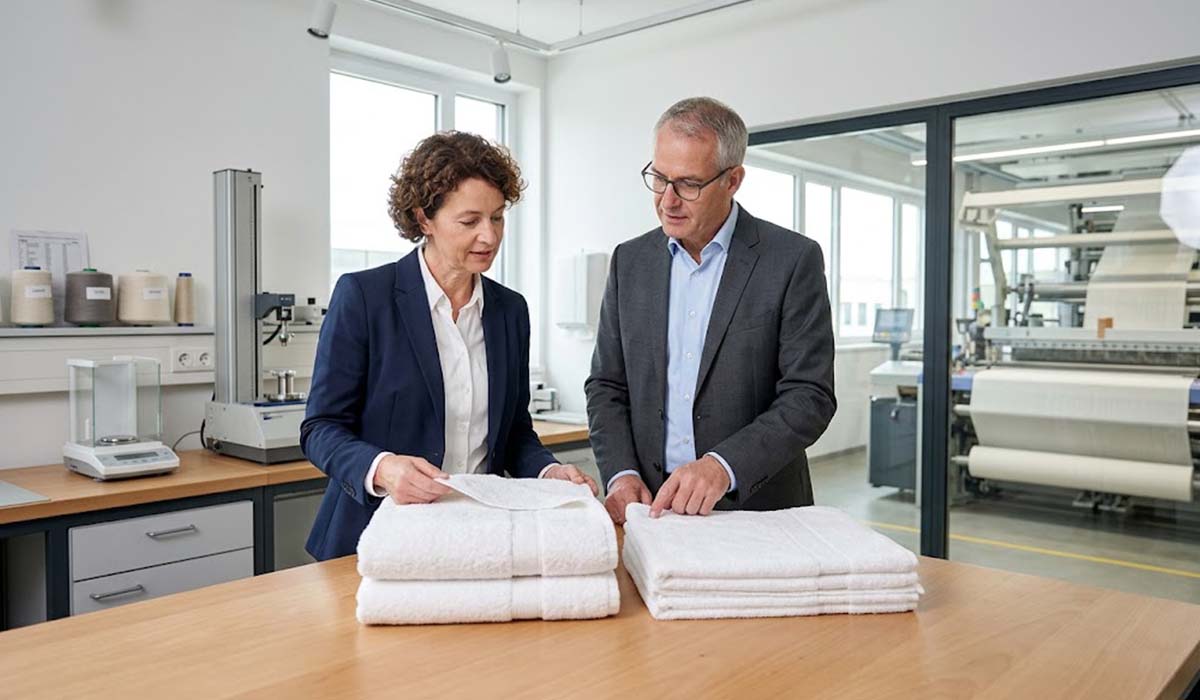
For example, a cheaper towel may look attractive during purchasing, but if it loses its appearance or absorbency quickly, the hotel may need to replace it sooner.
A more durable towel can have a higher upfront cost but lower cost per use.
Commercial linen procurement is therefore better evaluated on cost per occupied room night or cost per use, rather than simply cost per piece.
Read 10 Mistakes To Avoid When Buying Hotel Linens to learn how to buy hotel linens without common mistakes.
2- Choose Hotel Supplies Designed for Commercial Laundry
Hotel sheets and towels face much more frequent washing than residential textiles.
They are exposed to:
- Repeated washing
- Ironing Heat
- Detergents and other laundry chemicals
- Tumble drying
- Folding and usage
When comparing hotel bed sheets, look beyond thread count. Consider the fiber composition, yarn quality, weave, finishing, seam construction, dimensional stability, and suitability for commercial laundering.
Thread count can help describe a fabric, but it should not be treated as a standalone durability guarantee.
For high-turnover properties, a suitable cotton-polyester blend may also be worth evaluating because blends can offer wrinkle resistance and practical drying characteristics compared with some 100% cotton options.
Buy for the laundry your hotel actually operates.
If your property washes linen every day, select products based on how they perform after repeated commercial washing, not just how they feel when new.
3- Analyze Your Hospitality Textiles Par Level
A par level is the amount of linen required to keep rooms operating while other inventory is being washed, stored, or held as backup.
Three-par inventory is a common starting point:
| Par Level | Typical Purpose |
| 1 PAR | Linen currently in rooms |
| 2 PAR | One set in rooms + one in laundry |
| 3 PAR | Rooms + laundry + clean shelf stock |
| 4–5 PAR | May be appropriate for some luxury, high-occupancy, or slower laundry operations |
The correct number depends on occupancy, laundry turnaround, property type, storage capacity, and operating model.
Too little inventory can force emergency purchasing. Too much means money is sitting on shelves.
Review par levels by item rather than automatically applying the same number to every textile.
Here’s the Essential Hotel Room Linens Checklist for New Hotels to analyze what your hotel truly needs.
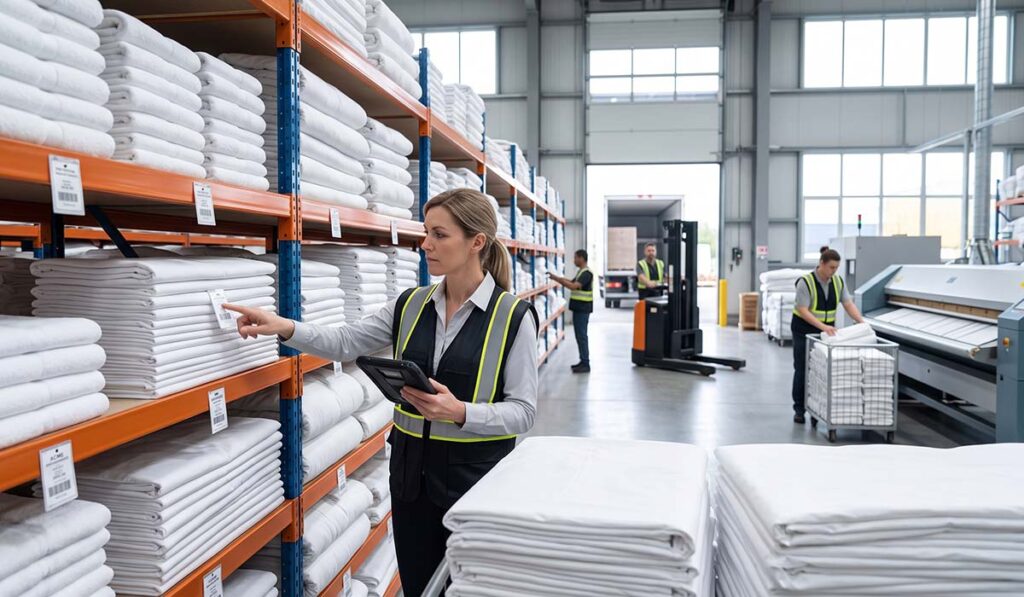
- Reduce Linen Loss Through Better Inventory Control
Not every linen replacement is caused by normal wear.
Losses can also come from:
- Miscounts
- Incorrect distribution
- Linen moving between departments
- Guest removal
- Damaged items remaining in circulation
- Poor tracking during laundry handoffs
A simple inventory process can help.
Track quantities by:
- Linen type
- Size
- Department
- Floor or room area
- Condition
- Date purchased
- Replacement status
Regular counting also helps housekeeping identify abnormal losses before they become a large procurement expense.
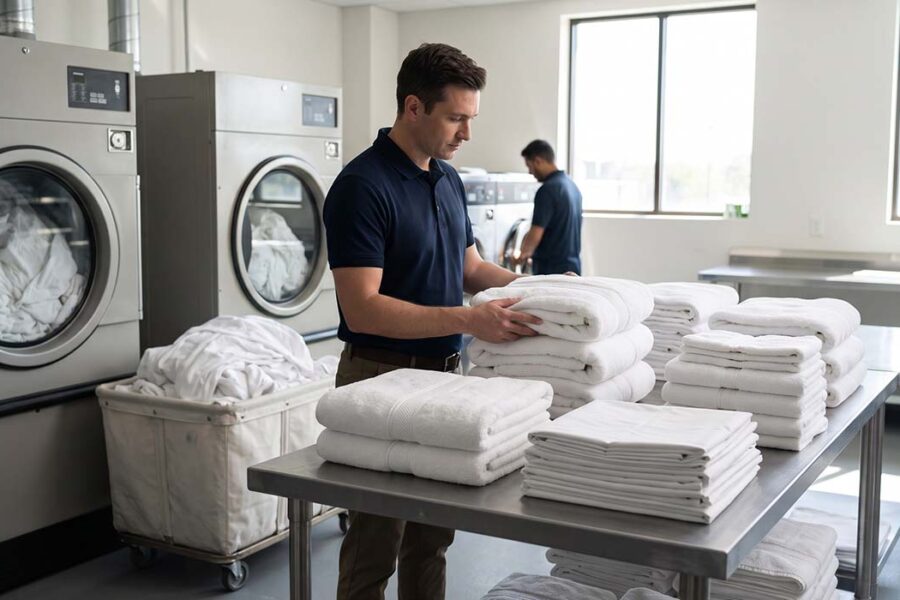
- Improve Laundry Practices Before Buying Linen for Hotels
Laundry is one of the biggest factors affecting hotel linen lifespan.
Overloading machines, excessive drying, unsuitable chemistry, repeated rewashing, and poor sorting can accelerate textile deterioration. Commercial laundry guidance also emphasizes correct sorting, loading, extraction, drying, quality checks, and clean-stock counting as part of an effective linen cycle.
Simple ways to protect linen
- Sort by linen type and soil level.
- Avoid overloading washers.
- Follow the textile supplier’s recommended wash process.
- Treat stains promptly.
- Avoid unnecessary rewashing.
- Do not over-dry textiles.
- Separate damaged items before they return to guest rooms.
- Keep clean and soiled linen physically separated.
The goal is not simply to make linen clean. It is to make it clean without unnecessarily damaging it.
Learn More: How Often Should Hotels Replace Bed Linens?
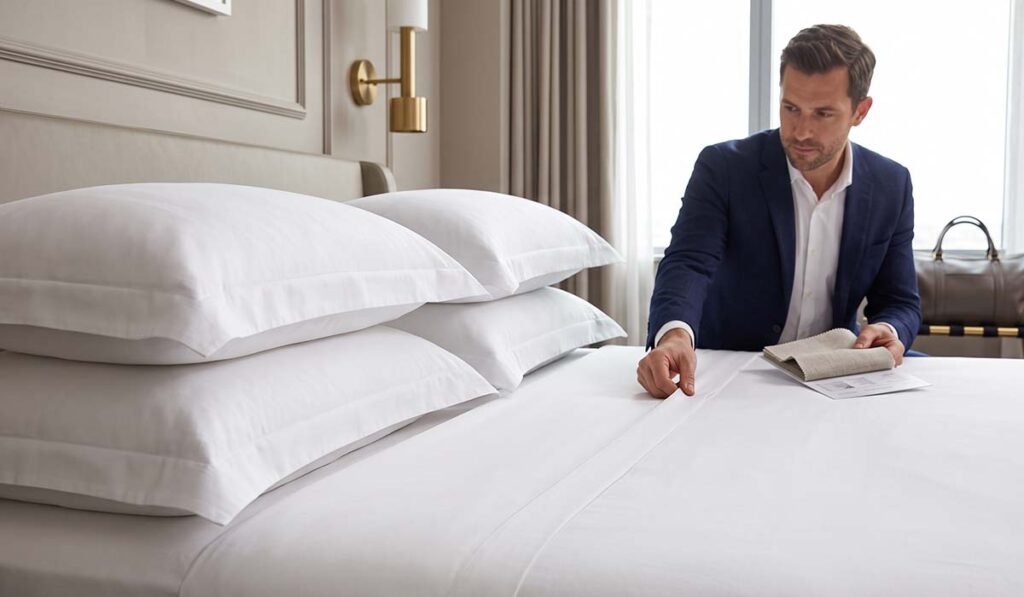
- Don’t Compromise on Linen Quality to Save a Few Dollars
Some linen categories have a direct effect on how guests perceive a room.
Prioritize guest experience on:
- Bed sheets
- Pillowcases
- Bath towels
- Hand towels
- Decorative bedding
Instead of reducing quality across the board, standardize specifications according to the property’s positioning.
A limited-service hotel does not necessarily need the same textile specification as a luxury resort. But both need linen that remains clean, comfortable, presentable, and functional after repeated use.
A better strategy
Spend more where guests directly interact with the product and optimize specifications where the difference is less noticeable.
This creates a targeted, tiered linen strategy instead of broad cost-cutting.
- Negotiate Around the Entire Purchase
Hotel procurement teams should not negotiate only on piece price.
Ask suppliers about:
- Volume pricing
- MOQ requirements
- Lead times
- Reorder consistency
- Custom specifications
- Packaging
- Shipping arrangements
- Production capacity
- Sample approval
- Replacement policies
A supplier offering a slightly lower price is not necessarily the lower-cost supplier if lead-time problems force you to make expensive emergency purchases.
Make sure the same products can easily be reordered with the same specifications without any trouble.
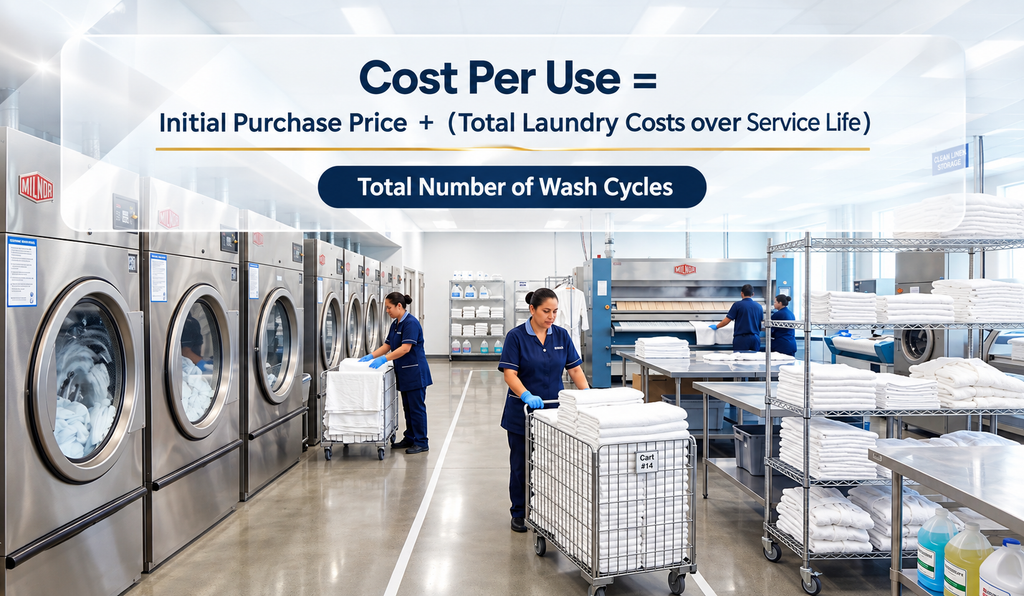
- Calculating the Total Cost of Ownership (TCO)
To make informed procurement decisions, hotel linen buyers should calculate the Total Cost of Ownership (TCO) instead of relying solely on the initial unit price. Evaluating TCO provides a complete picture of the long-term value and operational impact of textile investments.
A comprehensive TCO calculation should factor in the following key variables:
- Initial purchase price: The upfront cost paid per piece or unit.
- Expected service life: The total number of commercial wash cycles the item can withstand before degrading.
- Ongoing laundry operational costs: Expenses incurred during cleaning cycles, including energy, water, and detergent consumption.
- Housekeeping labor: Staff time and labor involved in handling, restocking, and managing linen replacements.
9. Choosing a Hotel Linen Supplier
The right supplier should do more than quote a price.
A commercial hotel linen supplier should be able to discuss:
- Product specifications
- Commercial laundering
- Bulk production
- Quality consistency
- Size and color consistency
- MOQ
- Lead times
- Reordering
- Customization
- Shipping
- Long-term supply reliability
For a hotel, the supplier relationship matters because linen is a recurring operational requirement, not a one-time purchase.
ACME Textiles: Trusted Hotel Linen Supplier & Manufacturer of Hospitality Textiles in the US
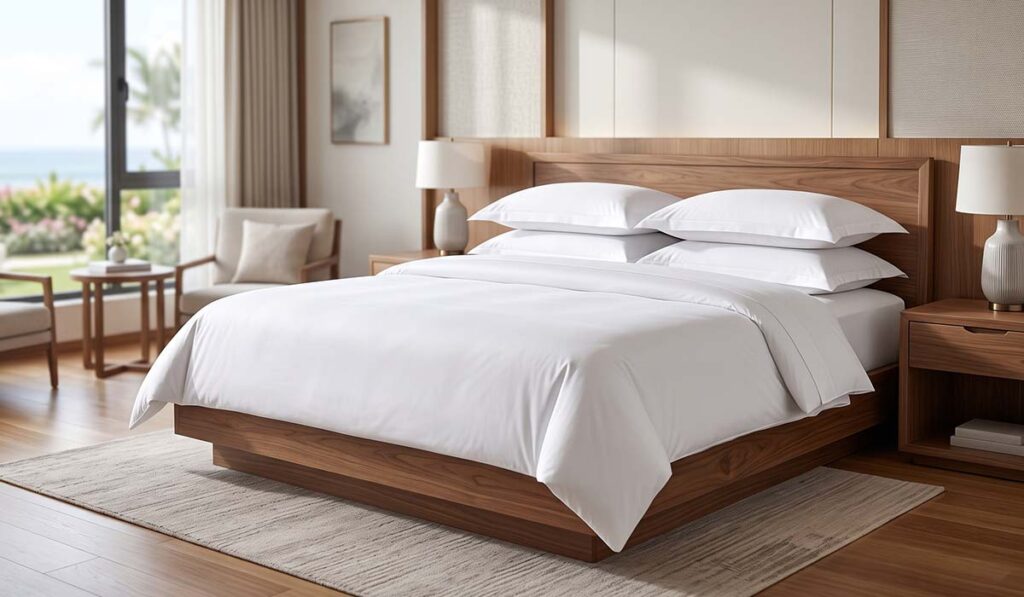
As a leading hotel linen supplier with over 25 years of manufacturing and supply experience, ACME Textiles has successfully partnered with over 10,000 hotels.
Our manufacturing facility utilizes the absolute best technologies to craft high-quality hotel linen designed to meet the rigorous demands of the hospitality industry. We cater to all property types by offering product tiers ranging from economy and mid-scale to luxury.
By offering factory-direct pricing and reliable shipping, we help you manage your operational costs effectively while providing comprehensive solutions including hotel towels, bed sheets, bedding accessories, and decorative bedding.
Final Words
The best way to reduce hotel linen costs is not to buy the cheapest linen.
It is to build a linen program around durability, appropriate specifications, efficient laundry, controlled inventory, and reliable replenishment.
The most effective strategy is:
Buy smarter → wash smarter → control inventory → track replacement → buy from one supplier.
That approach can reduce unnecessary linen expenditure while protecting the two things that matter most: operational efficiency and guest comfort.
Frequently Asked Questions
- How can hotels effectively lower linen replacement costs?
Hotels can reduce replacement costs by purchasing commercial-grade textiles, improving laundry practices, controlling linen losses, maintaining appropriate par levels, and tracking replacement patterns.
- What causes hotel linens to wear out prematurely?
Common causes include excessive heat, over-drying, harsh or unsuitable laundry chemistry, machine overloading, excessive mechanical action, repeated rewashing, and poor handling.
- Is higher thread count always better for hotel sheets?
No. Thread count should be considered alongside fiber composition, yarn quality, weave, construction, durability, and commercial laundry requirements.
- How many par levels does a hotel need?
Three PAR is a common starting point, but the correct level depends on occupancy, laundry turnaround, property type, storage, and whether laundry is handled in-house or externally.
- Should hotels use cotton or poly-cotton sheets?
There is no universal answer. 100% cotton can provide the comfort and breathability expected in many upscale properties, while suitable poly-cotton blends can offer practical advantages for high-turnover operations. The decision should reflect the hotel’s positioning and laundry process.
- How often should hotels replace sheets and towels?
There is no single replacement schedule. Hotels should replace items based on condition, performance, appearance, damage, guest-facing quality, and actual lifecycle cost rather than an arbitrary calendar date.
- Is cheaper hotel linen always more cost-effective?
No. Purchase price is only one part of total cost. A lower-priced product that requires frequent replacement can have a higher cost per use than a more durable alternative.