What are ring-spun cotton towels? They are towels woven from cotton yarn made by the ring-spinning method, which twists and draws the fibers into a finer, smoother, stronger yarn than faster methods like open-end spinning.
For hotels, that usually means a softer feel and better durability through repeated commercial laundering, at a somewhat higher cost per towel.
If you buy hotel bath towels, the yarn matters more than most spec sheets let on. Towels are among the most-laundered, most-replaced items in your inventory, and guests judge them by touch within seconds.
This guide shows you what ring-spun means, when it is worth paying for, and how to evaluate it like a buyer.
Ring-Spun vs. Open-End: Comparison Chart

| Factor | Ring-spun yarn | Open-end (rotor) yarn |
| Yarn feel | Smoother, finer | Rougher, bulkier |
| Strength | Generally stronger | Generally weaker |
| Surface fuzz and lint | Typically lower | Typically higher |
| Production cost | Higher | Lower |
| Typical use | Mid- to upper-tier towels | Budget, high-volume towels |
These are general tendencies. Quality still varies by mill, cotton grade, and construction.
Learn More: What Are the Best Hotel Towels in 2026? A Buyer’s Guide
How Ring-Spinning Works for Hotel Towels
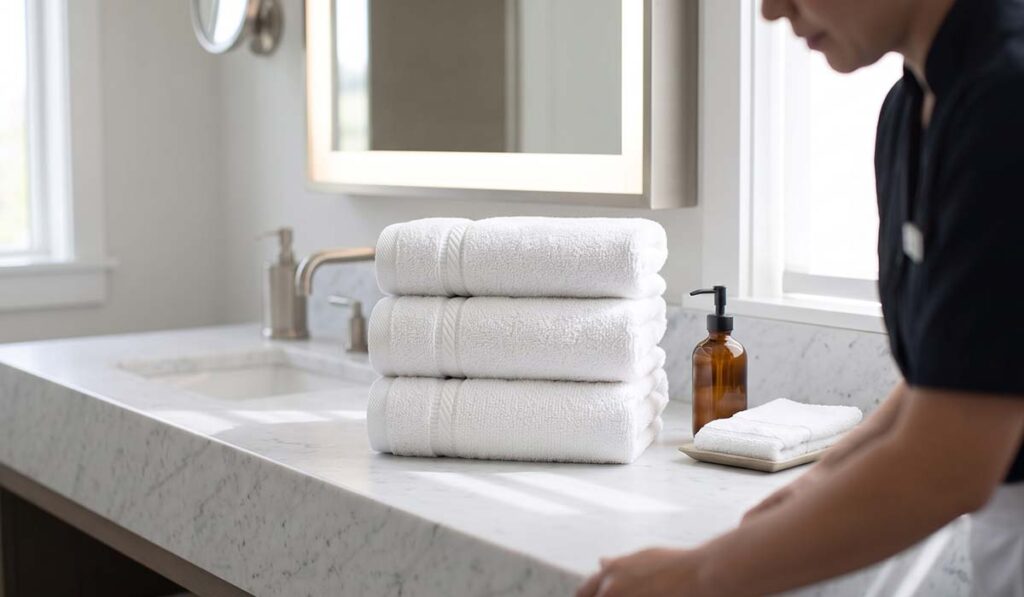
Cotton fibers are first cleaned and aligned into a loose strand. In ring spinning, that strand is stretched and twisted continuously onto a spindle. The extra drawing and twisting lay the fibers more parallel and tighter together.
Open-end spinning skips much of that process. It is faster and cheaper, but the fibers are less aligned, so the yarn is usually bulkier and weaker.
Think of it like rope: tightly twisted, well-aligned strands resist fraying better than loosely packed ones.
Ring-Spun Cotton is Not the Same as Combed Cotton
This is a common point of confusion on spec sheets.
- Ring-spun describes how the yarn is spun.
- Combed describes how the fiber is prepared. Combing removes short fibers before spinning.
A towel can be ring-spun, combed, both, or neither. Combed ring-spun cotton is generally the smoothest and strongest of the group because the short fibers that cause lint and weak spots are removed first. When a supplier says “premium cotton,” ask which of these applies.
Why Ring-Spun Towels Matter in a Hotel
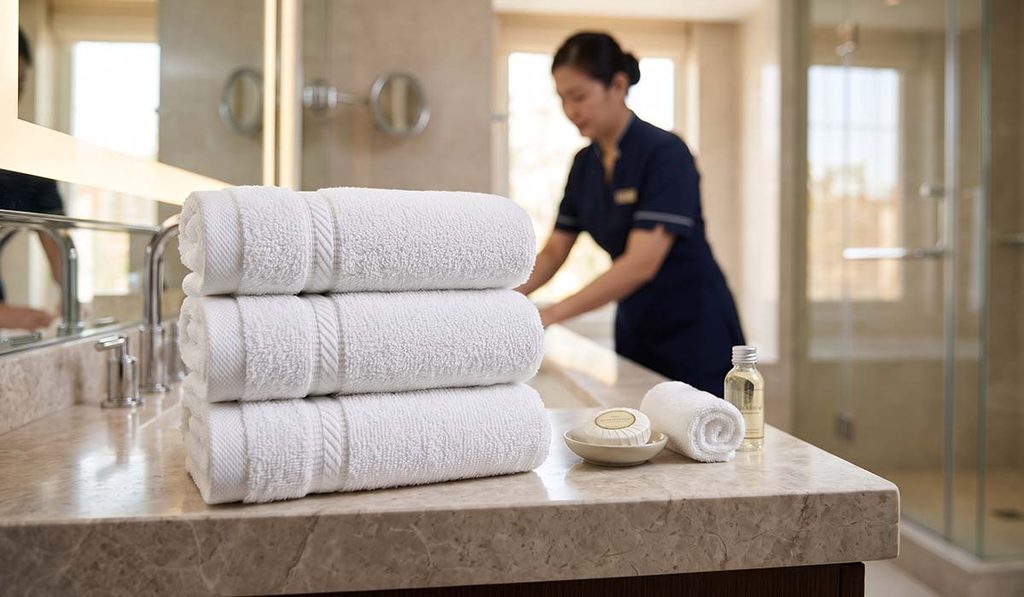
Are ring-spun towels better for hotels? Often yes, when guests feel and lifespan both matter. The benefits show up in operations:
- Guest comfort. Finer yarn feels softer against skin.
- Durability. Stronger yarn tends to hold up better to hot water, harsh chemicals, and heavy mechanical action.
- Less lint. Fewer loose fibers mean cleaner laundry, less dryer buildup, and a tidier look on dark clothing and in rooms.
- Appearance over time. Towels that keep their pile and shape look “new” longer, which supports your brand standard.
Learn More: Polycotton Vs. Cotton Towels For Hotels: Ultimate Buying Guide
A misconception to avoid: ring-spun does not automatically mean more absorbent. Absorbency depends on fiber, pile construction, weight, and finishing, plus how well residue is rinsed out in laundry. Judge the full towel, not one label term.
If you want to see a ring-spun construction in a hospitality line, Mikado Ring Spun Cotton Classic Dobby Towels is a reasonable place to start your evaluation.
What Else to Check Beyond the Yarn of Cotton Towels
Yarn is one factor in a larger specification. Before you approve a towel, look at:
- Weight and density (GSM or lb/dozen). Heavier is not always better. Dense towels can feel plush but take longer to dry and cost more to launder. Match weight to your laundry capacity.
- Ply. A 2-ply yarn is made of two strands twisted together, which adds strength. Towels like Ryotei 2 Ply Cotton Piano Border Towels use this approach.
- Border and hem construction. Hems and borders take the most abuse. Check stitching quality and finish.
- Fiber composition. 100% cotton, or a cotton/polyester blend. Blends can dry faster and last longer, and cotton usually feels more natural. Opal Super Blend Plus Towels are an example of a blended option for operations that prioritize laundry efficiency.
- Shrinkage and colorfastness. Ask for the tolerances, since inconsistent sizes make folding and par management harder.
- Consistency between lots. Reorders should match the original in size, weight, and color.
Which Towel for Which Property?
There’s no single right answer. Here is a practical starting framework:
| Property type | Priority | Where to look |
| Economy / limited-service | Low cost per use, fast drying | Durable blends such as Opal Super Blend Plus |
| Midscale / select-service | Balance of comfort and durability | Cotton dobby styles such as Opal Preferred Diamond Dobby Towels or Mikado |
| Upscale / resort | Softness and visual impact | Forte Resort Collection Towels or Belem Exclusive 2 Ply Combed Cotton Towels |
| Spa/wellness | Plush feel, consistent quality | Premium combed or 2-ply cotton, confirmed with samples |
Treat this as a guide, not a rule. Confirm composition, weight, and construction on each product page, because those details drive the real-world result.
Think Total Cost of Ownership, Not Unit Price
A cheaper towel that needs replacing sooner can cost more per use. Use this simple formula:
Cost per use = (purchase price + laundering cost over its life) ÷ number of uses before retirement
Track how long towels last in your laundry process. Results depend on your wash formulas, water, equipment, and standards. A ring-spun towel with a higher price may pay off if it stays presentable for more cycles. Only your own data can confirm that.
Learn More: How To Choose The Best Commercial Towels For Hotels
Frequently asked questions
- What is ring-spun cotton?
Cotton yarn made by twisting and drawing fibers continuously on a ring-spinning frame, producing a finer, smoother, and stronger yarn than open-end spinning.
- What is the difference between ring-spun and regular cotton towels?
“Regular” often means open-end spun yarn. Ring-spun yarn is typically smoother and stronger, with less lint, but costs more to produce.
- Are ring-spun towels more absorbent?
Not automatically. Absorbency depends on pile construction, weight, fiber, and finishing, as well as proper laundering.
- Is ring-spun the same as combed cotton?
No. Ring-spun is a spinning method and combed is a fiber-prep step. Towels can be one, both, or neither.
- What type of cotton is best for hotel towels?
There’s no single best. Combed ring-spun cotton is often chosen for softness and durability, while blends are chosen for faster drying and lower laundry cost.
- Are ring-spun towels worth the higher price?
They can be, if they stay softer and presentable through more wash cycles. Compare cost per use using your own laundry results.
- How do hotels choose quality bath towels?
Check yarn type, fiber composition, weight, ply, hem construction and lot-to-lot consistency, then wash-test samples before bulk ordering.
- Do ring-spun towels last longer in commercial laundry?
Typically, they hold up well because the yarn is stronger, but laundry practice matters just as much. Avoid overdosing chemicals and over-drying.
Final Words
Selecting property towels requires balancing upfront cost, durability, and guest satisfaction. Though ring-spun cotton costs more initially, its softness, minimal linting, and longer lifespan lower the total cost of ownership.
Ready to compare options for your property? Browse ACME Textiles bath towels, request samples, and ask for wholesale pricing based on your room count and laundry setup.