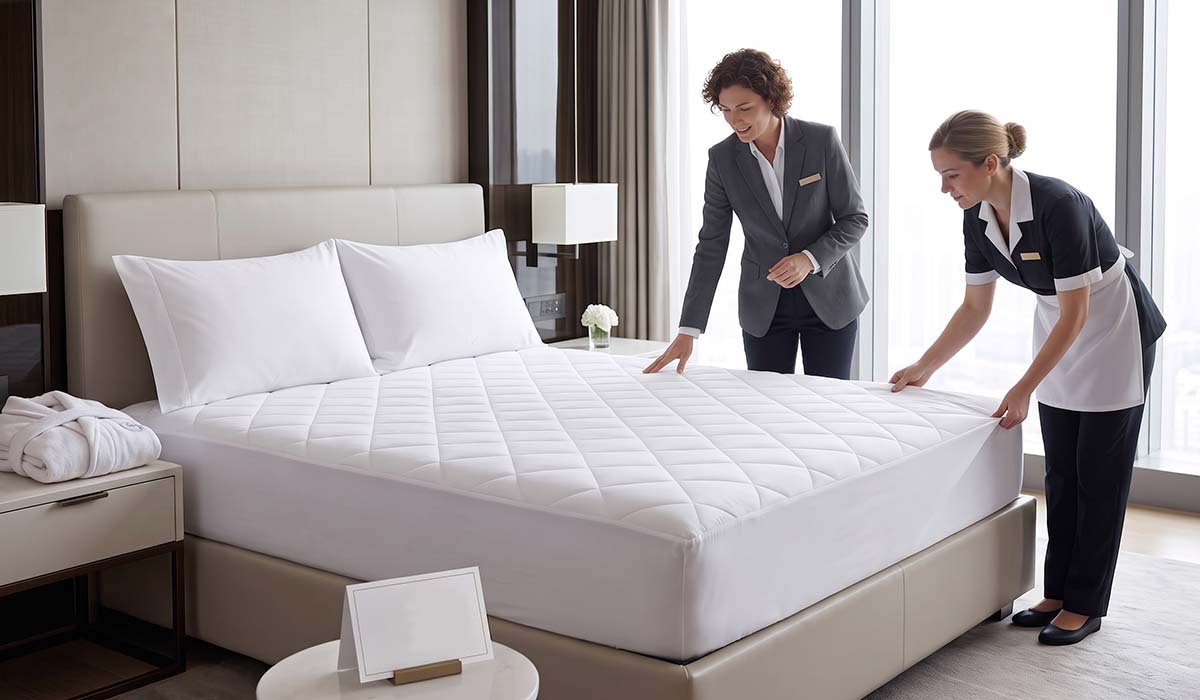
A hotel mattress is constantly exposed to moisture, spills, sweat, and other fluids. A standard sheet cannot provide a waterproof barrier, which means liquids can eventually reach the mattress underneath.
That is why waterproof mattress pads are an important part of hotel mattress protection. They help protect mattresses, support housekeeping operations, and reduce avoidable damage.
For hotel owners and purchasing managers, the real question is not whether mattress protection is useful. It is which waterproof mattress pad can provide reliable protection while remaining comfortable, durable, easy to launder, and suitable for commercial use.
Here’s all hoteliers need to know about the right kind of mattress protection for their hotels.
Why Do Hotels Use Waterproof Mattress Pads?
A waterproof pad adds another layer of protection that can be removed, washed, and replaced when necessary.
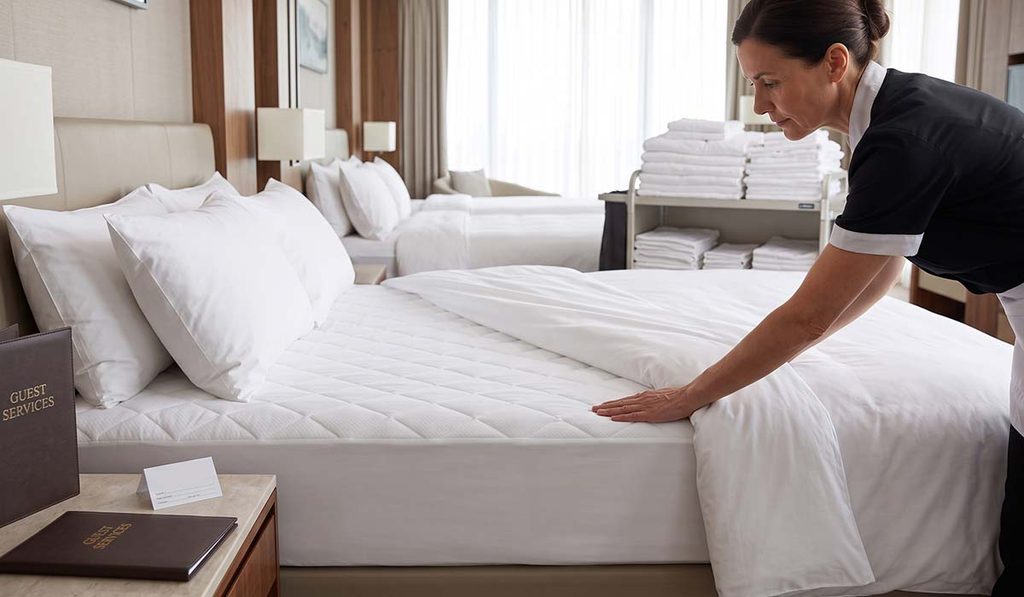
The main benefits include:
- Protecting mattresses from spills and moisture
- Supporting longer mattress service life
- Making housekeeping easier
- Reducing avoidable mattress replacement
- Maintaining a consistent bedding setup
- Adding another layer of protection beneath hotel sheets
For high-turnover properties, this protection becomes particularly important because the same mattresses are repeatedly used by different guests.
- Waterproof Pads Help Protect Hotel Mattress Investments
Replacing a hotel mattress involves more than the cost of a new mattress. There may also be transportation, labor, disposal, storage, and room-operation costs.
A waterproof mattress pad cannot prevent every type of mattress damage, but it can help stop many, including dust, stains, damage, and liquid-related incidents, before they reach the mattress.
The basic protection system is simple:
Guest → Sheet → Waterproof Mattress Pad → Mattress
If a spill passes through the sheet, the waterproof pad provides another opportunity to keep the mattress dry and resist mold or mildew buildup.
This is one reason waterproof mattress protection should be viewed as part of hotel bedding maintenance and asset protection, rather than as an optional bedding accessory.
- Waterproof Mattress Pads Support Housekeeping
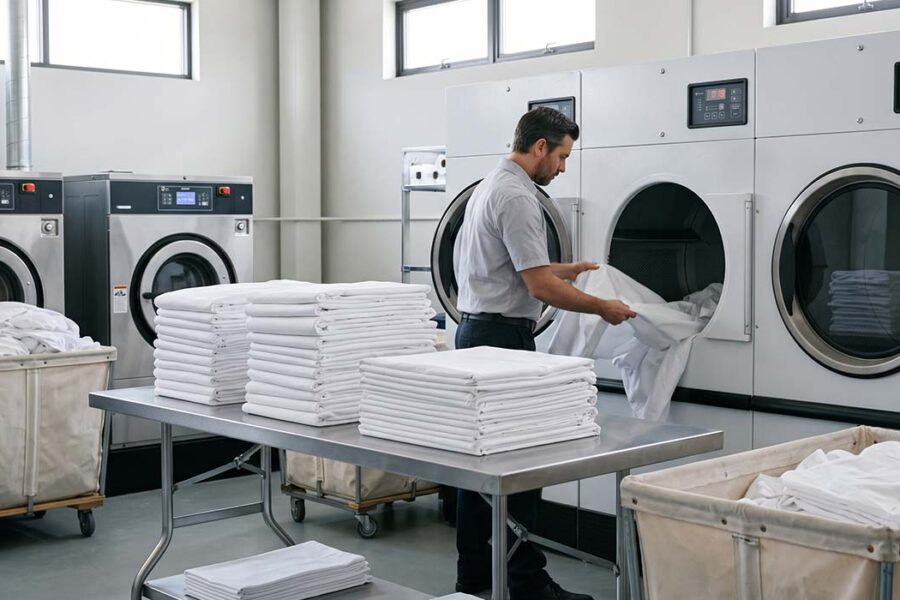
Hotel housekeeping teams need bedding products that can withstand frequent use and laundering.
A snug waterproof pad can be removed from the mattress and laundered according to the manufacturer’s care instructions. This gives housekeeping a replaceable protective layer rather than requiring the mattress itself to be cleaned after every incident.
When selecting commercial waterproof mattress pads, buyers should verify:
- Recommended washing temperature
- Drying requirements
- Detergent compatibility
- Bleach compatibility, if applicable
- Expected durability
- Waterproof barrier performance after repeated laundering
A product that works in a residential laundry environment may not necessarily be appropriate for a hotel’s commercial laundry process.
Learn More: How Often Should Hotels Replace Bed Linens?
- Guest Comfort Still Matters
Waterproof protection should not come at the expense of guest comfort.
Poorly constructed mattress protectors can create unwanted noise, heat, movement, or a plastic-like feel. Because the pad sits directly beneath the sheets, guests may notice these problems even if they never see the product.
Hotels should look for:
- A soft top surface
- Comfortable quilted construction where appropriate
- Low-noise materials
- A secure fit
- A waterproof barrier that does not unnecessarily compromise comfort
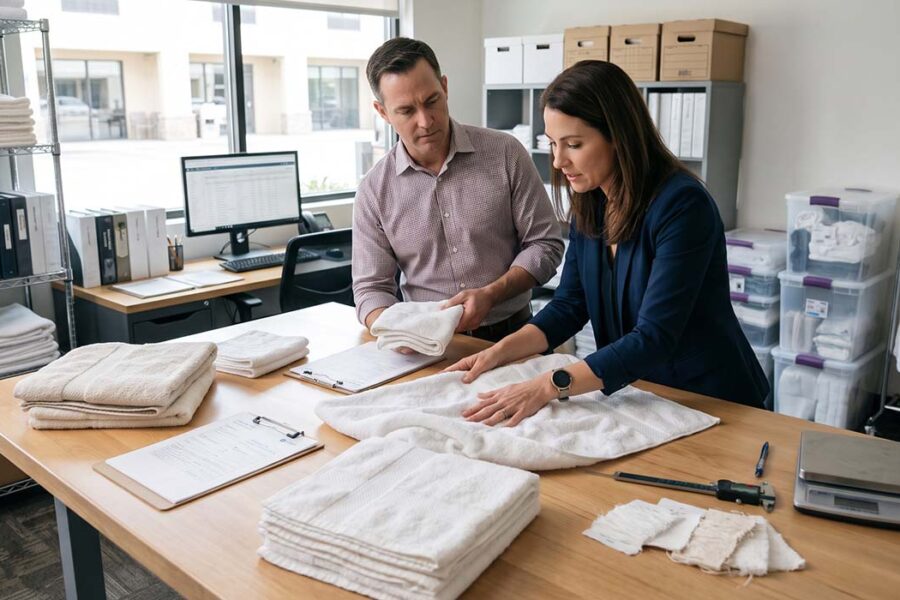
If possible, purchasing teams should test samples on the actual mattresses used in their rooms before making a property-wide purchase.
What Should Hotels Look for in a Waterproof Mattress Pad?
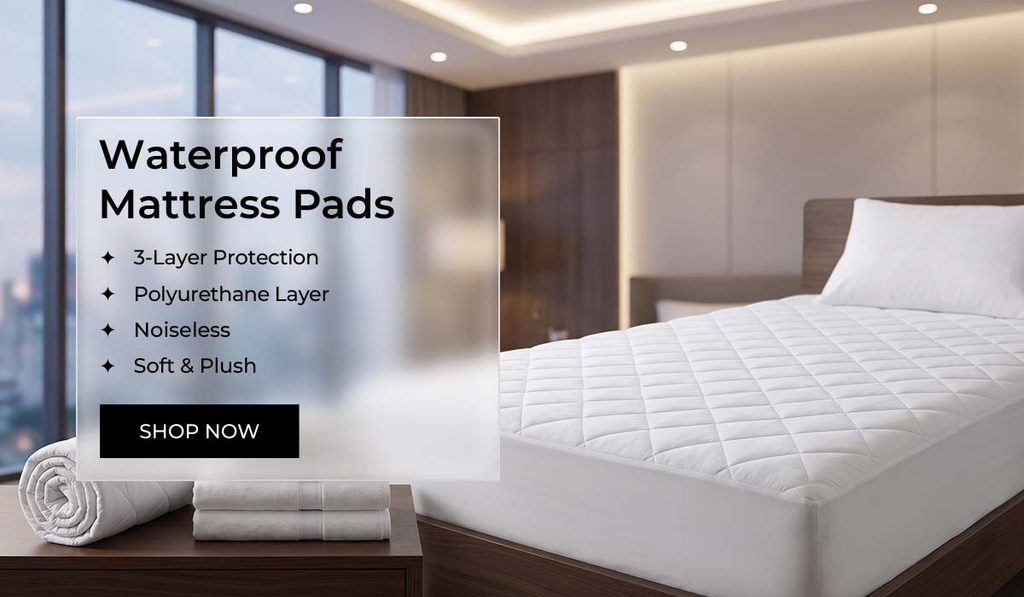
The word “waterproof” alone is not enough to make a product suitable for hospitality use.
- Waterproof Barrier
Confirm what material provides the fluid barrier and how the barrier is constructed. If the supplier provides care instructions, review how washing and drying can affect the waterproof layer.
- Secure Fit
A mattress pad should stay in place during guest use and housekeeping.
Check both the mattress dimensions and depth before ordering. A pad designed for a standard mattress may not fit correctly on a deeper pillow-top mattress.
- Commercial Laundry Compatibility
This is one of the most important considerations for hotels.
Before purchasing, confirm that the product’s recommended care instructions fit the property’s actual laundry operation. Repeated high-temperature washing or drying can affect some materials, so suppliers should provide clear care information.
- Durability
Look at the overall construction, including:
- Fabric
- Stitching
- Quilting
- Elastic
- Skirt construction
- Waterproof membrane
- Seams
For bulk hotel purchasing, consistent construction is also important because replacement orders should match the original product as closely as possible.
Waterproof Mattress Pad Buying Checklist
| Buying factor | What to check |
| Waterproof protection | Confirm the fluid-barrier construction |
| Mattress fit | Match mattress dimensions and depth |
| Comfort | Check surface feel and noise |
| Fitted design | Confirm how the pad stays in place |
| Laundry | Verify washing and drying requirements |
| Durability | Consider repeated commercial use |
| Inventory | Plan for laundry rotation and replacements |
| MOQ | Confirm minimum wholesale quantities |
| Lead time | Check availability and replenishment |
| Consistency | Verify quality across repeat orders |
| Supplier support | Ask for specifications and samples |
How Many Waterproof Mattress Pads Does a Hotel Need?
There is no single number that works for every property.
A hotel should account for three basic inventory requirements:
1. In-use inventory: One pad installed on each mattress.
2. Laundry rotation: Additional pads available while used units are being washed and dried.
3. Replacement stock: Extra units available when a pad is damaged, stained, or worn.
Properties with high occupancy and frequent room turnover may require a larger operating reserve.
Buying only one pad per mattress can create problems when several units are simultaneously in the laundry or need replacement.
Waterproof Mattress Pads Are Not the Same as Bed Bug Encasements
Hotels should not assume that a waterproof mattress pad provides complete bed bug protection.
Waterproofing and bed bug protection are different functions. The EPA recommends mattress and box-spring encasements as part of bed bug control. Hotels should therefore select a product based on the specific protection they need rather than assuming one product performs every function.
If bed bug protection is required, confirm that the product is specifically designed for that purpose.
Learn More: 10 Mistakes To Avoid When Buying Hotel Linen
How Waterproof Mattress Pads Support Hotel ROI
The financial value of a waterproof mattress pad comes from helping prevent avoidable damage and replacement costs.
A useful way to evaluate the investment is:
Protection value = avoided damage + potential replacement savings + operational benefits − product cost
The actual value will vary by property. A busy hotel with frequent spills and high room turnover may have different requirements from a small boutique property.
This is why buyers should consider total cost of ownership, not just the initial unit price.
A low-cost mattress protector may not remain economical if it wears out quickly, fits poorly, or creates additional housekeeping problems.
Learn More: What Makes A Good-Quality Hotel Pillow? A Buying Guide
ACME Textiles Waterproof Mattress Pad For Hospitality
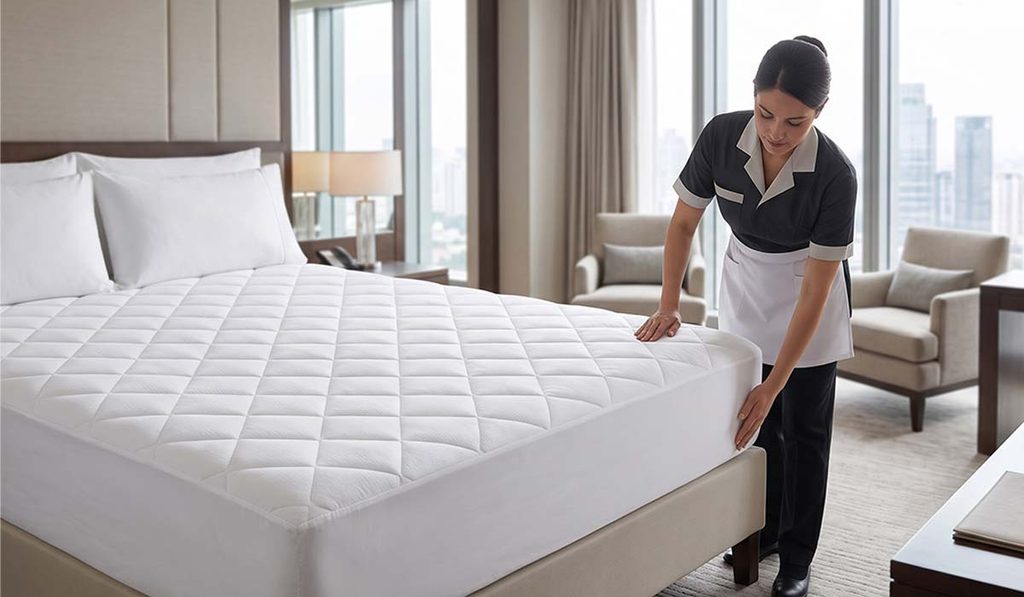
For hotels, resorts, and vacation rentals looking for commercial mattress protection, ACME Textiles, a leading hotel linen supplier, offers a waterproof mattress pad designed for hospitality use.
Why Hotels Can Consider ACME’s Waterproof Mattress Pad
- Waterproof polyurethane backing helps protect mattresses from spills and moisture.
- Microfiber quilted surface adds a softer, more comfortable layer beneath hotel sheets.
- Diamond stitching helps maintain the pad’s structured appearance and construction.
- Breathable construction supports a more comfortable sleeping environment.
- Fitted design helps keep the mattress pad securely in place during guest use.
- Up to 15-inch mattress depth accommodates many standard hotel mattress configurations.
- Twin, Full, Queen, and King sizes make it easier to standardize mattress protection across different room types.
Hotels should compare these specifications with their mattress dimensions, housekeeping requirements, and commercial laundry process before standardizing the product across rooms.
Explore ACME Textiles Waterproof Mattress Pad
Frequently Asked Questions
- Are waterproof mattress protectors worth it for boutique hotels?
Yes. Boutique hotels still need to protect valuable mattresses from repeated guest use. Their priorities may place greater emphasis on comfort, quietness, fit, and appearance.
- What is the best waterproof mattress cover for hotels?
The right product depends on mattress type, laundry requirements, room turnover, comfort expectations, and durability needs. Hotels should evaluate all of these factors rather than waterproofing alone.
- Do waterproof mattress pads affect guest sleep comfort?
They can if poorly designed or fitted. Hotels should look for soft surfaces, secure fitting, low-noise construction, and appropriate materials.
- Can waterproof mattress pads protect against bed bugs?
Not automatically. Waterproofing and bed bug protection are different functions. Hotels requiring bed bug protection should use an appropriate product specifically designed for that purpose.
- Can commercial waterproof mattress pads be machine washed?
Many are washable, but care requirements vary. Always follow the manufacturer’s washing and drying instructions.
- Should hotels buy waterproof mattress pads in bulk?
Bulk purchasing can help properties standardize bedding across rooms and simplify reordering. Choose a reliable supplier like ACME Textiles. Buyers should compare MOQ, lead time, quality, fit, durability, and total cost before ordering.