 Germany
 UK
UK
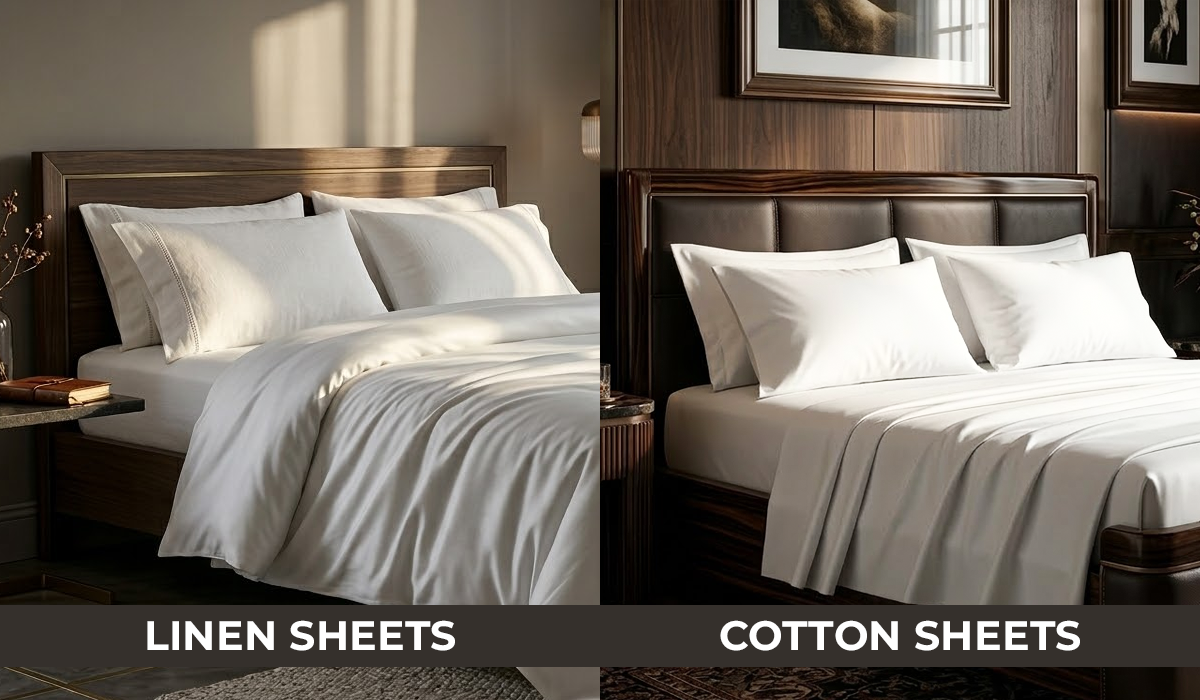
Linen Sheets are considered generally cooler than cotton sheets; however, cotton sheets are more suitable for hospitality use!
For hospitality textile wholesalers, distributors, and hotel owners, the “summer cooling” debate isn’t just about guest comfort; it’s about operational ROI. Every degree of heat perceived by a guest can translate into a lower review score, while every extra minute spent in the laundry room can affect your profit margins.
While linen often gets the “lifestyle” hype for its rustic aesthetic, cotton and polycotton blends remain the undisputed heavyweights for commercial hospitality.
In this guide, we break down why cotton is the superior cooling agent for high-traffic environments and why it remains the smartest investment for your business.
Why Cotton Sheets are Cooler Than Linen Sheets?
To understand which sheet is cooler, we must look at how fabric interacts with the human body’s thermal regulation.
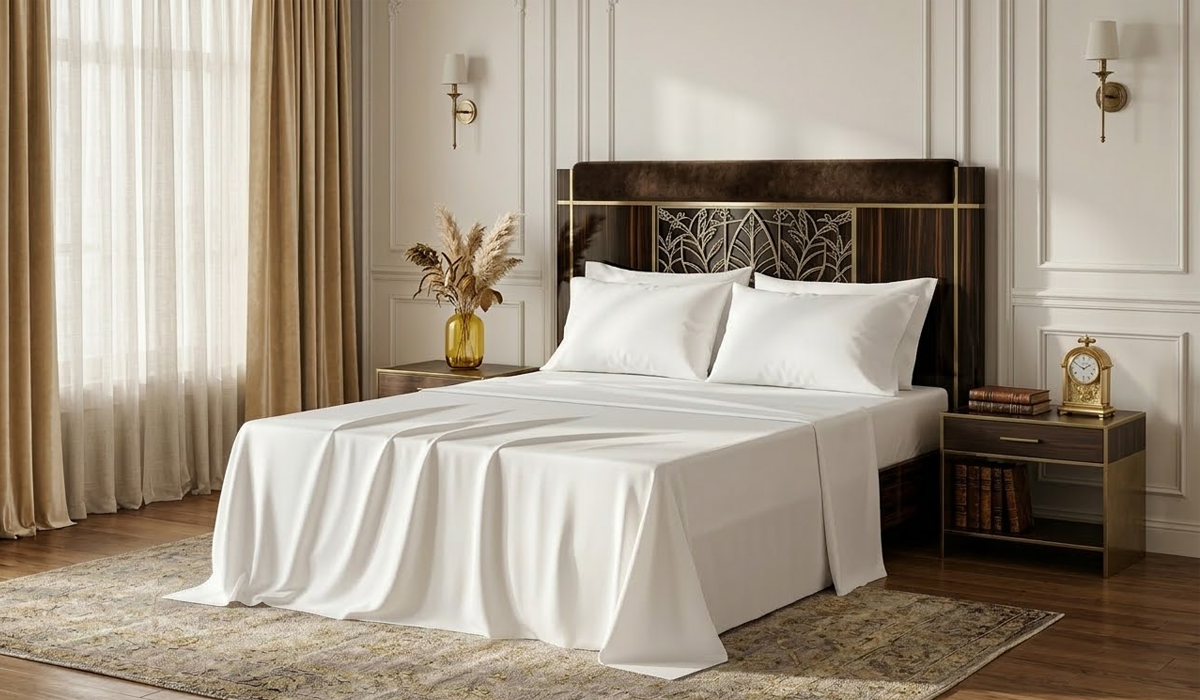
- Moisture-Wicking: Cotton fibers are naturally twisted, creating tiny air pockets in the yarn that allow heat to escape.
- Absorbency Rate: Cotton can absorb up to 27 times its weight in water. During a hot summer night, this “wicking” effect pulls moisture away from the guest’s skin instantly, preventing the “clammy” feel often associated with synthetic or heavy-textured fabrics.
- The Texture Factor: Linen is a thicker, stiffer fiber (derived from flax). While it has an open weave, its initial “coarse” texture can trap micro-layers of heat against sensitive skin until it has been washed dozens of times. Cotton offers immediate, smooth thermal relief from the first check-in.
Cotton Sheets vs. Polycotton Sheets vs. Linen Sheets
| Feature | 100% Premium Cotton | 100% Linen | Polycotton Blend (60/40) |
| Summer Cooling | Excellent (Smooth & Breathable) | High (But requires “break-in”) | Very Good (Active Wicking) |
| Initial Hand-Feel | Ultra-Soft / Silky | Stiff / Scratchy | Smooth / Consistent |
| Wrinkle Resistance | Moderate | Very Low (High Maintenance) | High (Zero-Iron Potential) |
| Drying Time | Standard | Long (High GSM) | Fast (30% Faster) |
| Operational Cost | Efficient | Expensive | Most Efficient |
Why Linen is a Logistics Nightmare for Hotels
As a hospitality professional, you aren’t just buying bed linen; you are managing a laundry cycle. Linen presents three major “hidden costs” that cotton eliminates:
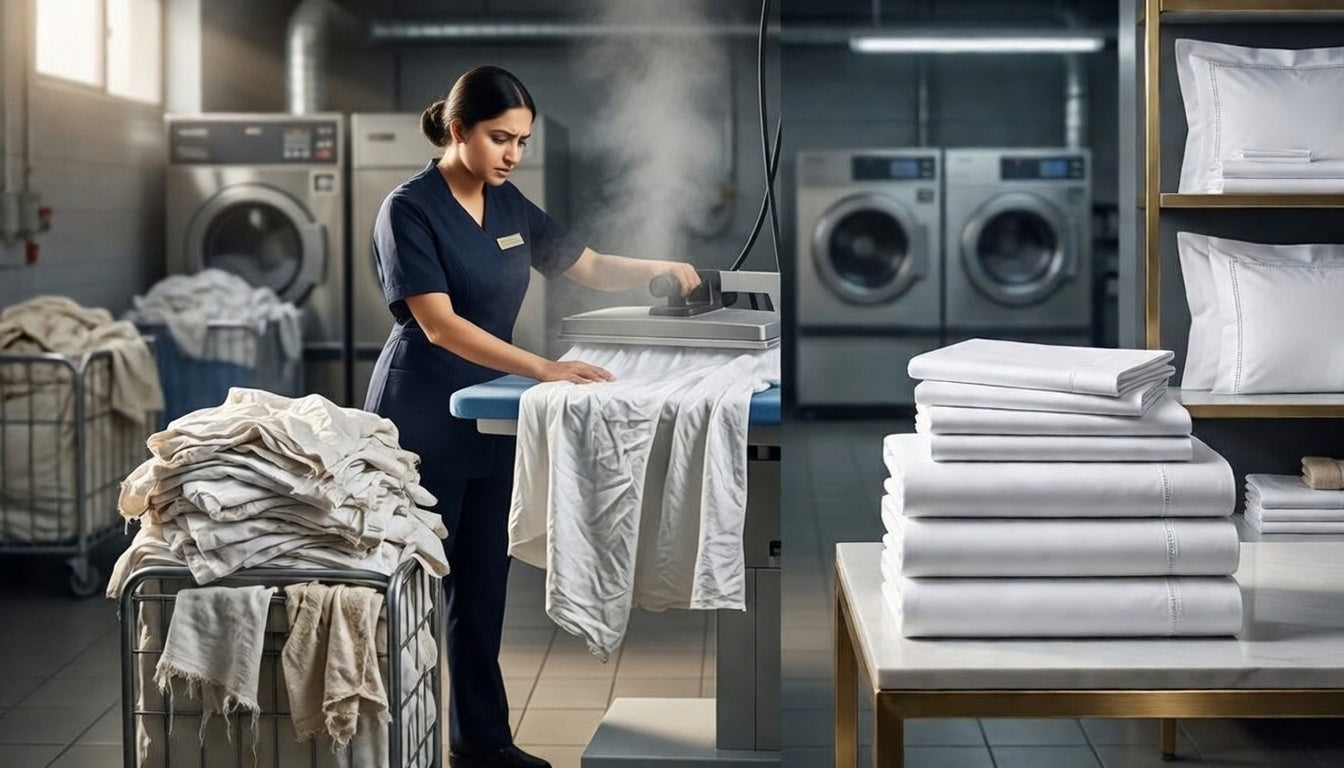
- The “Wrinkle” Tax: Linen thrives on a “lived-in” look. In a 5-star hotel, however, “lived-in” often looks “unmade.” To get linen to look professional, it requires intensive steam pressing. Cotton, especially in a Percale weave, maintains a crisp, flat finish with half the labor.
- Replacement Cycles: While linen is a strong fiber, it is prone to “shredding” in industrial high-heat dryers. Cotton and polycotton blends are engineered for the 200+ wash cycles required in the hospitality sector.
- Guest Polarization: Not every guest likes the feel of linen. It is a “niche” luxury. Cotton is the universal standard of comfort. By choosing cotton, you eliminate the risk of negative reviews regarding “scratchy” or “stiff” bedding.
How Polycotton Sheets are the Secret to Maximum Summer Profit?
For mid-to-high-range hotels, the 100% cotton vs. linen debate often ends with a third, better option: Polycotton Blends (60% Cotton / 40% Polyester).
“Time is money in the laundry room. Polycotton blends dry significantly faster and release stains more effectively than pure linen, making them the gold standard for high-occupancy summer seasons.”
- Heat Dissipation: Modern polycotton blends use “air-jet loom” technology, such as ACME Textiles, ensuring the fabric remains porous and breathable.
- Moisture Management: The polyester content helps the fabric dry nearly instantly on the bed, while the cotton content ensures the guest feels only natural softness.
- Cost Efficiency: You get the cooling sensation of high-end cotton at a fraction of the linen price point, allowing for more frequent inventory refreshes.
Strategic Sourcing: Thread Count vs. Weave
Distributors should advise their clients to look beyond just the “Thread Count” (TC) number. For summer cooling, the weave is actually more important than the count.
- Percale Weave (The Cool Choice):A one-over, one-under weave. It is the “crisp white shirt” of bedding. It allows maximum airflow and is significantly cooler than the denser Sateen weave.
- Optimal TC (200–300): For summer, a 200–300 TC provides the perfect balance. Anything higher (like 600+) becomes too dense, trapping heat and making the room feel stuffy.
Frequently Asked Questions
- Is cotton cooler than linen for hot sleepers?
While linen has high breathability, cotton’s ability to remain smooth and dry against the skin makes it the preferred choice for most “hot sleepers” in a hotel setting. It provides immediate cooling without the weight of heavy flax fibers.
- Why do hotels use cotton sheets instead of linen?
Hotels prioritize cotton because of its operational durability and universal guest appeal. Linen requires too much labor (ironing) and has a texture that some guests find irritating, whereas cotton is easy to maintain and globally recognized as the standard for “clean luxury.”
- Do linen sheets last longer than cotton?
In a residential setting, linen can last decades. However, in an industrial laundry environment, linen becomes brittle under high heat. Cotton and polycotton blends are specifically designed to withstand the chemicals and mechanical stress of commercial washing.
Partner with ACME Textiles: Your Hospitality Standard
When it comes to sourcing, ACME Textiles stands as the premier partner for distributors and hotel chains worldwide. We don’t just sell fabric; we provide high-performance sleep solutions.
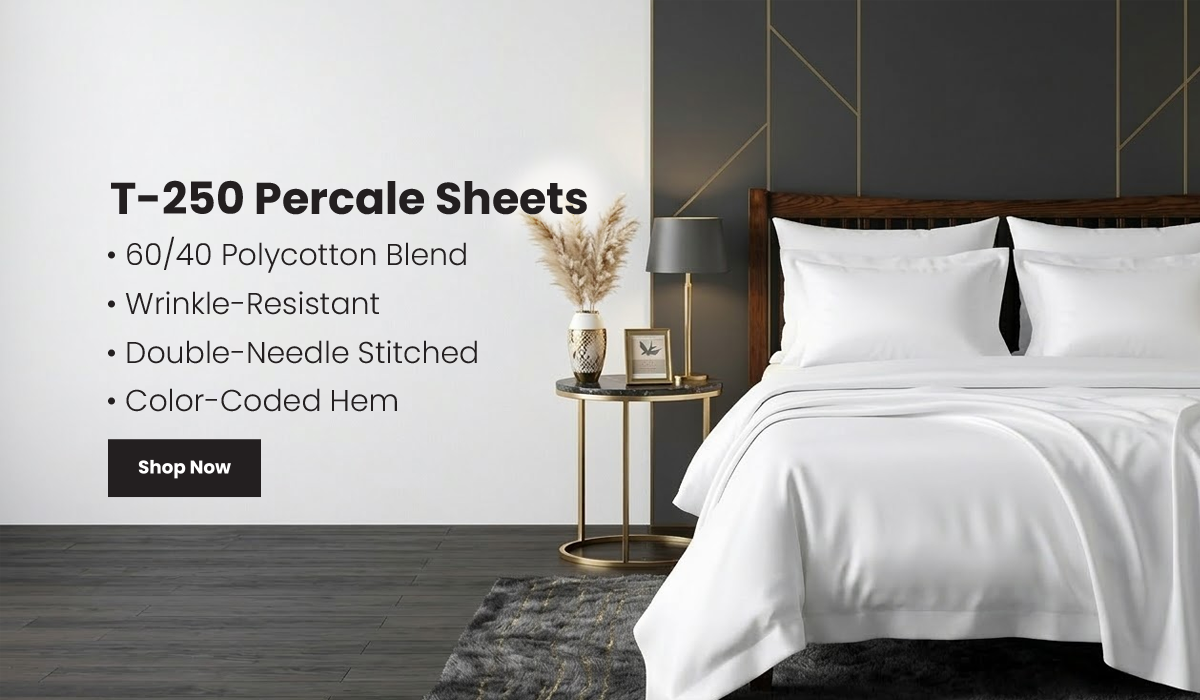
Specializing in the 180 to 300 thread count range, ACME Textiles understands the delicate balance between textile luxury and industrial durability. Our signature T-250 Percale sheets are engineered with advanced air-jet loom technology, providing a crisp, cooling sensation that mimics the finest Egyptian cotton while maintaining the ruggedness needed for daily commercial laundering.
Our polycotton blends are specifically treated to be anti-pilling and stain-resistant, ensuring your clients save on utility costs and replacement cycles. Whether you are outfitting a boutique summer resort or a high-volume hotel chain, ACME Textiles delivers the “cool” your guests demand and the “ROI” your business needs.
Final Words
For textile wholesalers and hoteliers, cotton and polycotton blends are the clear smart choice for summer. They offer superior moisture management, immediate softness, and the commercial durability necessary for industrial laundering. A crisp Percale weave (200–300 TC) minimizes utility and labor costs while guaranteeing consistent 5-star comfort.
Ready to maximize your summer ROI? Partner with ACME Textiles today. Explore our T-250 Percale sheets and high-performance polycotton blends, engineered for cooling comfort, commercial durability, and maximum profitability.