 Germany
 UK
UK
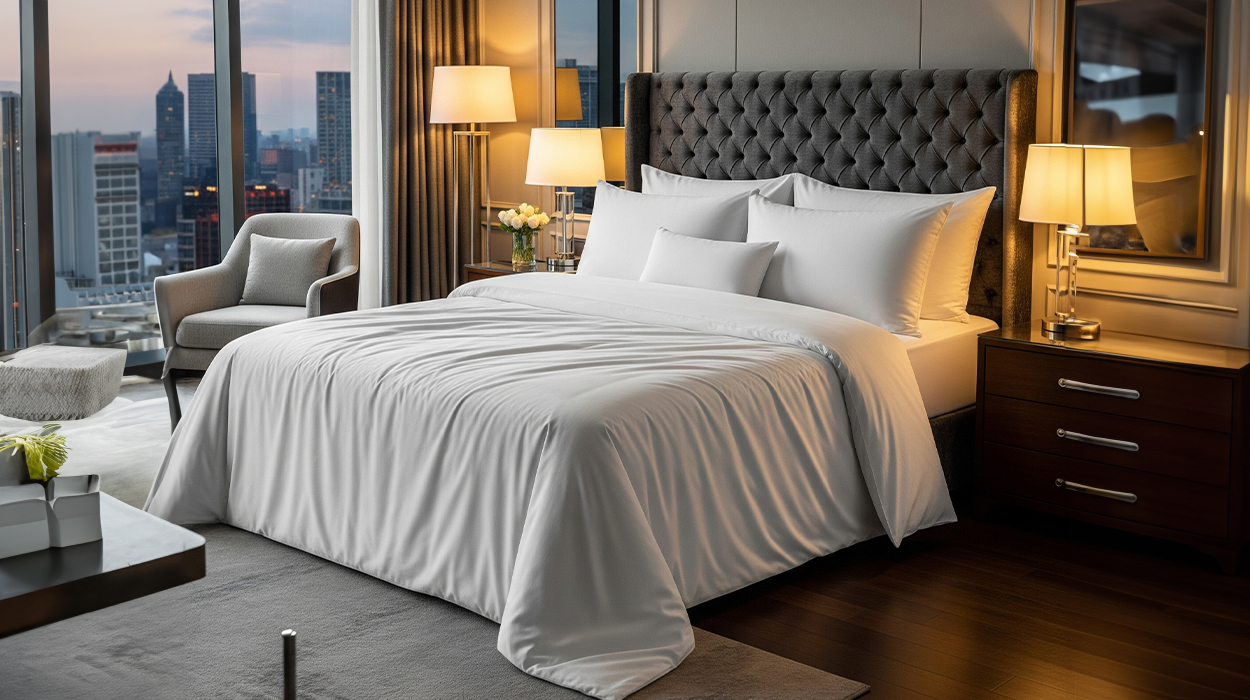
In hospitality, where guest experience and efficiency are paramount, a quiet revolution is unfolding. It’s not about robots, but the very sheets your guests sleep on: microfiber.
While natural fibers like cotton have long been seen as the eco-standard, advancements in textile technology are illuminating microfiber’s surprising role in sustainable hospitality.
This blog will explore the nuanced relationship between microfiber sheets and a greener future for hotels, examining their environmental impact and practical benefits.
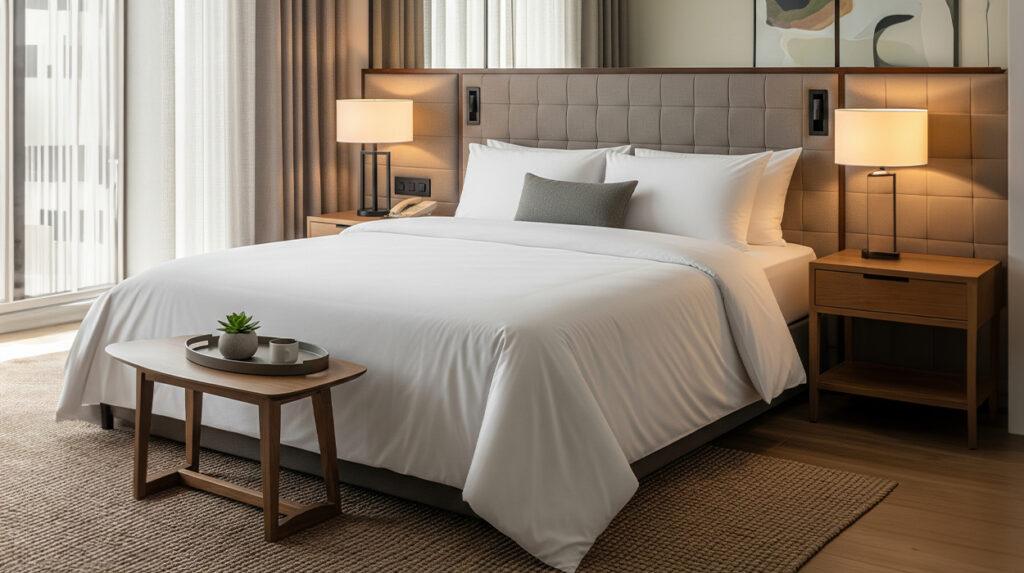
Understanding the Microfiber Paradox
When “sustainability” is mentioned, many immediately picture organic cotton fields or recycled plastics. Microfiber, a synthetic blend often made from polyester and polyamide, might not immediately spring to mind. However, its sustainable credibility is often misunderstood.
The “Plastic” Problem vs. Practical Longevity
Yes, microfiber is a petroleum-derived product. This is a legitimate concern when viewed in isolation. However, a holistic approach to sustainability considers the entire lifecycle of a product. Microfiber’s exceptional durability and longevity mean fewer replacements, reducing waste sent to landfills.
Unlike natural fibers that can degrade quickly with frequent commercial laundering, microfiber holds its integrity for significantly longer, leading to a much lower consumption rate over time.
Water and Energy Consumption in Laundry
This is where microfiber truly shines in a hospitality context.
- Reduced Water Usage
Microfiber’s dense, fine fibers absorb less water than cotton during washing. This translates directly to shorter wash cycles and a substantial reduction in water consumption per load. In a high-volume hotel laundry, this adds up to millions of liters saved annually.
- Lower Drying Times and Energy
Due to their low water retention, microfiber sheets dry remarkably faster than cotton. This dramatically cuts down on the energy required for commercial dryers, a major energy drain in any hotel operation. The energy savings alone can be a significant step towards a hotel’s carbon footprint reduction goals.
Why Hotels Are Moving Towards Microfiber
Beyond the environmental considerations, microfiber offers a compelling array of practical benefits that directly contribute to a sustainable and efficient hotel operation:
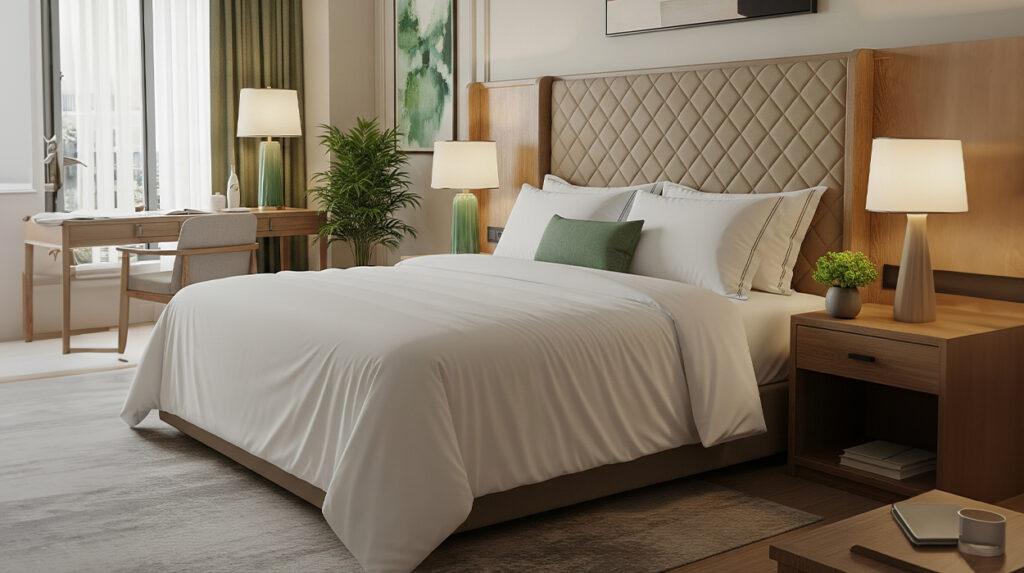
- Exceptional Durability and Longevity
As mentioned, microfiber’s robust construction means it can withstand the rigors of industrial laundering far better than many natural fibers. This reduces the frequency of sheet replacement, saving money and resources.
- Stain Resistance and Easy Care
Microfiber’s tightly woven fibers are naturally resistant to stains, making cleaning easier and reducing the need for harsh chemicals or intensive stain treatments. This extends the life of the linen and minimizes the environmental impact of cleaning agents.
- Wrinkle Resistance
For hotels aiming for a polished look without excessive ironing, microfiber is a game-changer. Its inherent wrinkle resistance reduces the need for energy-intensive pressing, further contributing to energy savings.
- Luxurious Softness and Guest Comfort
Modern microfiber has come a long way from its early iterations. High-quality microfiber sheets are now incredibly soft, breathable, and comfortable, providing a luxurious experience that often rivals or surpasses that of higher-thread-count cotton, ensuring positive guest reviews.
- Hypoallergenic Properties
Microfiber’s tightly woven structure makes it more resistant to dust mites and allergens, contributing to a healthier sleeping environment for guests, especially those with sensitivities.
Also Learn: How to Select Hotel Bed Sheets That Impress Guests and Cut Costs
Integrating Microfiber into a Comprehensive Sustainability Strategy
While microfiber offers significant advantages, hotels must integrate it as part of a broader sustainability strategy. This includes:
- Responsible Sourcing
Hotels should prioritize microfiber from suppliers who adhere to ethical manufacturing practices and consider the use of recycled content in their microfiber products when available.
- End-of-Life Solutions
Researching and supporting initiatives for recycling microfiber textiles at the end of their useful life is essential to close the loop and mitigate the “plastic” concern.
- Educating Guests
While not always necessary, hotels can subtly communicate their sustainable choices, including the benefits of microfiber, to guests who are increasingly environmentally conscious.
- Optimizing Laundry Practices
Even with microfiber, efficient laundry practices remain paramount. This includes optimizing load sizes, using energy-efficient machines, and utilizing cold water washes whenever possible.
ACME Textiles – Premium Quality Microfiber Sheets
Our luxury microfiber sheets set a new standard of elegance and comfort, setting our customers up for success. At ACME Textiles, we understand that exceptional guest experiences translate directly into repeat business and glowing reviews. That’s why our premium microfiber sheet sets are meticulously crafted to deliver unparalleled softness, durability, and practical benefits that resonate with both hoteliers and their guests.
By choosing ACME Textiles, you’re not just purchasing sheets; you’re investing in a superior bedding solution that enhances your brand’s reputation for quality. Our microfiber sheets offer rapid drying properties, remarkable resilience for long-lasting use, and a smooth, stain-resistant finish that maintains its pristine appearance even after rigorous commercial laundering.
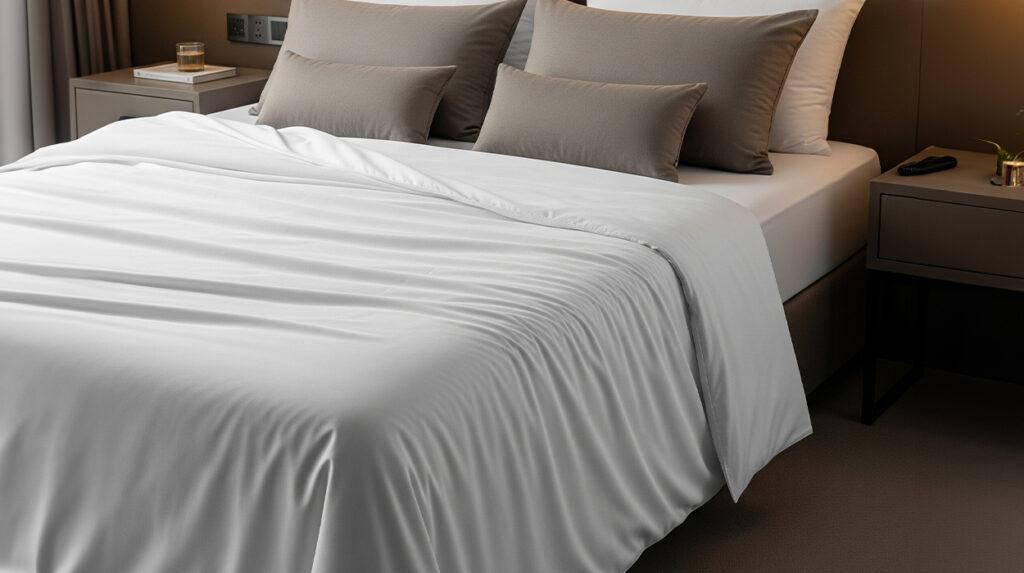
Designed for breathability and moisture-wicking, they ensure year-round comfort, making them an ideal choice for any climate and any discerning guest. Partner with ACME Textiles to elevate your hotel’s bedding offerings and provide the luxurious comfort your guests deserve, securing your position as a leader in hospitality excellence.
Conclusion
Microfiber sheets are emerging as a sustainable and economical choice for hotels. Their durability and reduced water/energy use during laundering significantly lessen environmental impact. High-quality microfiber offers guest comfort while boosting operational efficiency, proving sustainability can coexist with luxury and practicality.