 Germany
 UK
UK

Microfiber sheets could be a turning point for your business!
But before making the decision of investing in wholesale microfiber sheets, you must know the basics and suitability of these according to your hotel, motel, resort or spa.
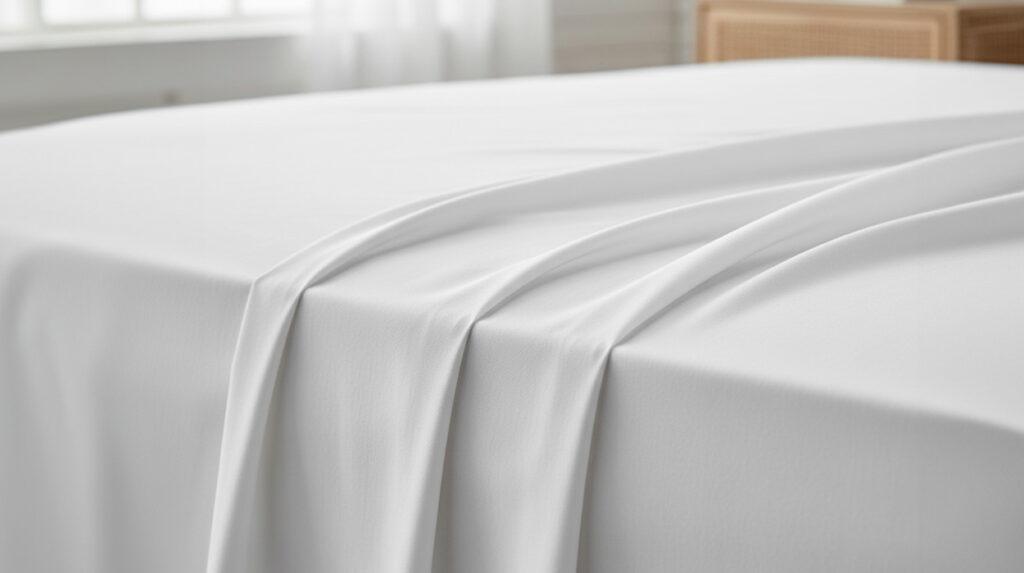
Microfiber sheets are synthetic sheets made of finely woven synthetic fabric. These sheets are either made from 100% polyester or a blend of polyester and nylon.
Here’s a detailed breakdown of what are microfiber sheets made of, pros and cons for your business, microfiber vs cotton sheets and how to care for microfiber sheets.
What Are Microfiber Sheets Made Of? (Quick Answer)
Microfiber sheets are not a natural material, but a finely woven synthetic fabric, most commonly made from 100% polyester or a blend of polyester and polyamide (nylon).
The term “microfiber” refers to the thickness of the individual fibers. To be classified as a microfiber, the thread must be extremely fine, thinner than a single strand of silk, and less than one denier in diameter. This ultra-fine quality is what gives the fabric its signature softness and tight weave.
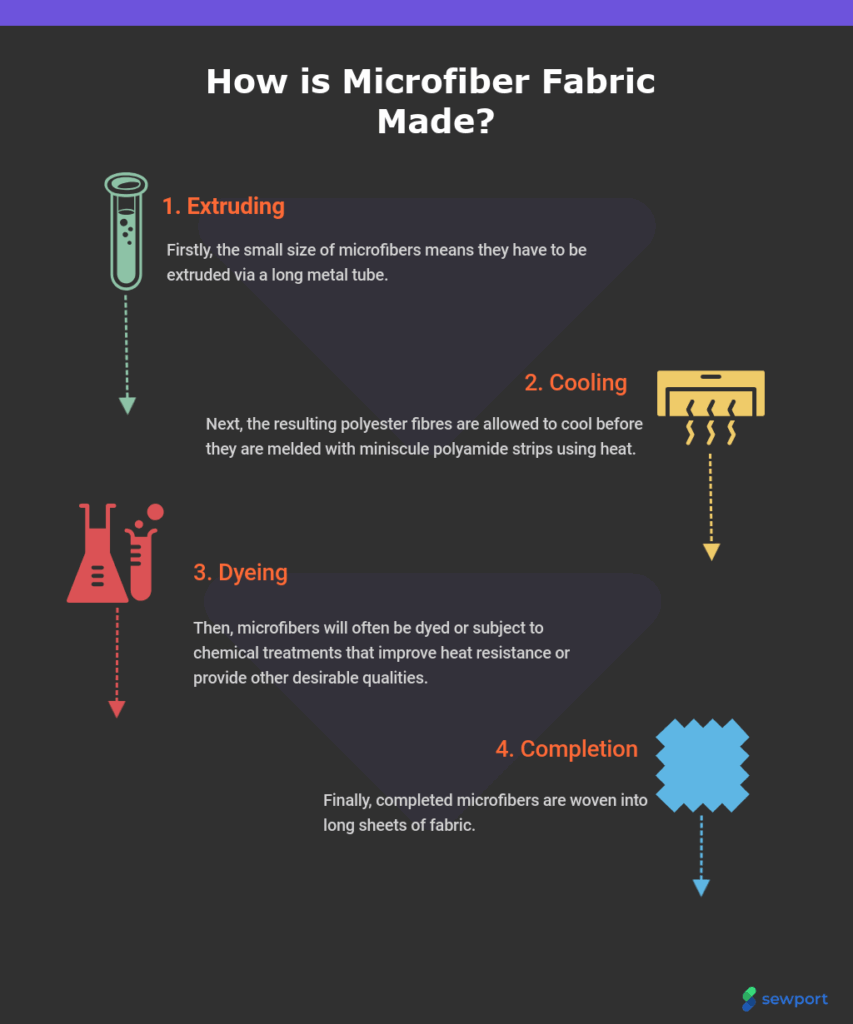
How is Microfiber Fabric Made?
The creation of microfiber is a marvel of textile engineering. It’s a multi-step chemical and mechanical process:
- Melt and Extrude: The synthetic polymers (like polyester) are melted down.
- Spinneret Process: The molten polymer is forced through a tiny nozzle called a spinneret, which creates extremely fine filaments.
- Cooling and Spinning: These filaments are quickly cooled and then spun into yarn.
- Weaving: The resulting microfiber yarn is tightly woven into a dense fabric, often using a Percale (crisp, strong) or Sateen (smooth, luxurious) weave.
The Magic of Brushed Microfiber
For an added level of luxurious softness that rivals high-end natural fibers, some microfiber goes through an extra step: Brushing.
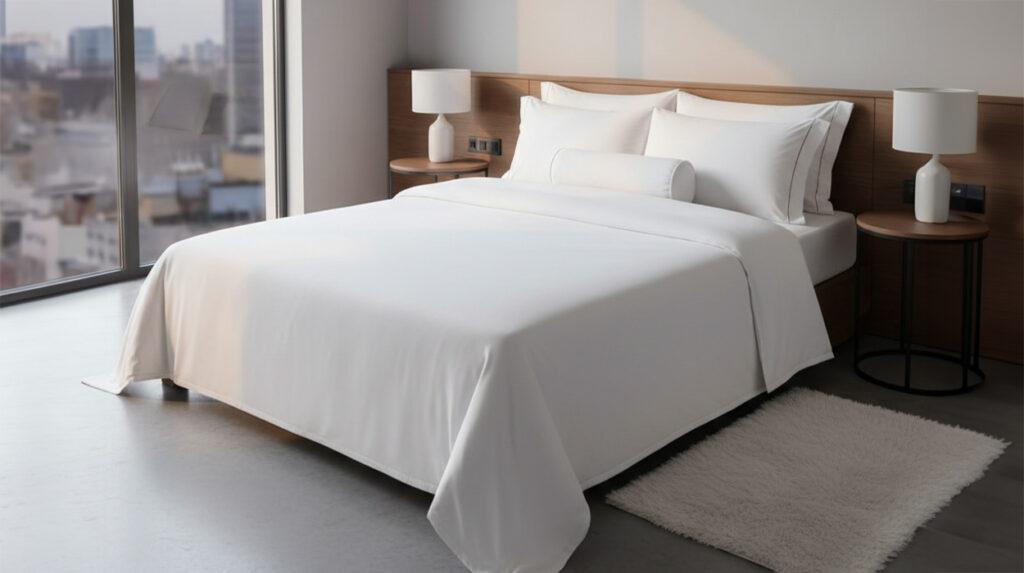
Brushed Microfiber sheets are created when the woven fabric is mechanically brushed on one or both sides (called Double-Brushed). This process raises the surface fibers to create a soft, velvety, flannel-like texture that significantly enhances guest comfort and warmth.
Pros and Cons Of Microfiber Sheets for Hospitality
For high-turnover businesses, wholesale microfiber sheets offer a powerful combination of value and performance.
Pros (Advantages for Your Business)
| Feature | Business Benefit |
| Exceptional Durability | Tightly woven synthetic fibers resist tearing, shrinking, and pilling, offering a longer lifespan than most cotton options, reducing replacement costs. |
| Superior Stain Resistance | The tight weave naturally resists spills and stains from penetrating the fibers, simplifying housekeeping and cutting down on deep-cleaning labor. |
| Wrinkle-Resistance | Microfiber sheets come out of the dryer virtually wrinkle-free, eliminating or minimizing the need for ironing, saving significant staff time and utility costs. |
| Low Cost, High Value | As a mass-produced synthetic material, microfiber offers a significantly lower initial purchase cost than premium cottons, providing luxury-level softness on a budget. |
| Quick-Drying | They dry much faster than cotton, which speeds up laundry turnaround, essential for properties with high occupancy and fast check-ins, and saves on drying energy. |
| Hypoallergenic | The ultra-tight weave forms a natural barrier against dust mites and allergens, making them an excellent choice for allergy-sensitive guests and promoting a healthier sleep environment. |
Cons (Important Considerations)
- Heat Retention: Tight weave traps more heat than cotton, potentially an issue in hot climates (mitigated by AC).
- Absorbency: Less absorbent than cotton; large spills may bead or run off.
- Environmental Impact: As polyester, it is non-biodegradable, a concern for eco-focused properties.
Microfiber vs Cotton Bed Sheets: A Business Comparison
While cotton is the traditional luxury choice, modern, high-GSM (Grams per Square Meter) microfiber is a compelling alternative that prioritizes the operational needs of a busy hotel.
| Feature | Microfiber Sheets | Cotton Sheets | Winner for Cost/Efficiency |
| Initial Cost | Significantly Lower (Excellent for bulk purchasing) | Varies widely; premium options are very high | Microfiber |
| Durability | Excellent (Resists tearing, pilling, and fading) | Good, but susceptible to fading and tearing over time | Microfiber |
| Wrinkle Care | Wrinkle-Resistant (Minimal to no ironing needed) | Prone to wrinkling (Often requires ironing for a crisp look) | Microfiber |
| Laundry Time | Quick-Drying (Fast turnover, lower energy cost) | Slower drying time (Higher energy cost) | Microfiber |
| Softness/Feel | Silky, velvety, and soft out of the box | Crisp, natural feel; softens with age and washing | Tie (Subjective) |
| Breathability | Good (Depends on GSM, can trap heat) | Excellent (Natural, highly breathable) | Cotton |
The Bottom Line for Your Business
For hospitality owners focused on value, efficiency, and a consistently comfortable guest experience, microfiber sheets are an essential investment. They deliver:
- Cost Control: Lower initial purchase price and reduced long-term replacement costs.
- Operational Savings: Less time and energy spent on washing and ironing.
- Consistent Quality: Sheets that look new and inviting, wash after wash.
Make the smart choice that keeps your housekeeping running smoothly and your budget in check, without compromising on the soft touch your guests expect.

Frequently Asked Questions (FAQs)
- Are microfiber sheets hot to sleep on?
High-quality, brushed microfiber sheets are warm and cozy, making them excellent for cooler climates or properties with climate-controlled rooms. While they are less breathable than cotton, their warmth is a major plus for many guests.
- Do microfiber sheets pill easily?
No. Due to their tight weave and synthetic nature, quality microfiber sheets are highly resistant to pilling (the formation of small fuzz balls), even after repeated washing, which helps them maintain a smooth, fresh appearance for much longer.
- What does “GSM” mean for microfiber sheets?
GSM stands for Grams per Square Meter. It is a measure of the fabric’s density. For microfiber, a higher GSM (typically 90-120) indicates a denser, stronger, more durable, and softer sheet. This is the quality metric you should focus on when buying for commercial use.
Your Partner in Hospitality Textiles: ACME Textiles
At ACME Textiles, we understand the demands of running a successful hospitality business. For over two decades, we have dedicated ourselves to manufacturing and exporting the highest quality textiles designed for commercial durability and guest luxury. From our state-of-the-art facilities, we provide superior microfiber and cotton sheeting, toweling, and more to hotels, resorts, and vacation rentals across the globe.
We are proud to be the No. 1 hospitality textile manufacturer and exporter worldwide, trusted by leading brands to deliver exceptional value and performance.
Final Words
Ready to see how our premium, commercially graded microfiber sheets can elevate your guest experience and reduce your operational overhead?
Choosing ACME Textiles means investing in linens that are engineered to last, maintain their luxurious feel, and keep your operational costs low. Browse ACME Textiles today!