 Germany
 UK
UK
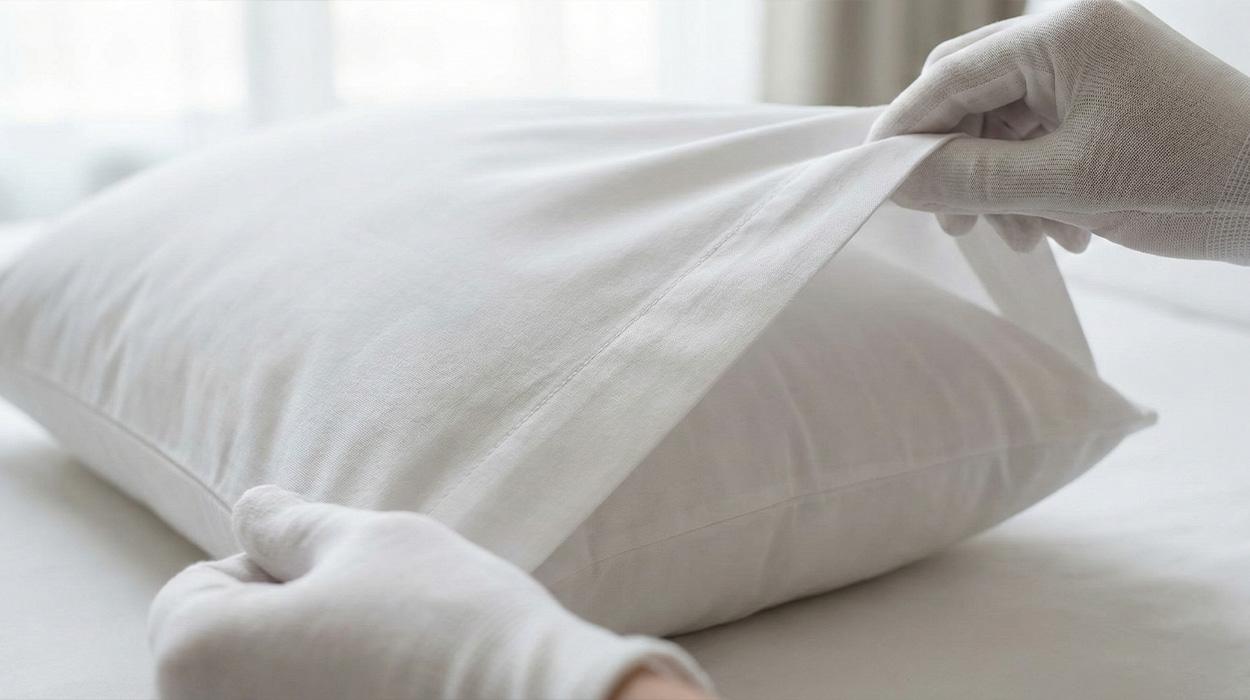
Distributors and hospitality businesses must determine the most suitable material and style of pillow protectors before making a bulk purchase.
Pillow protectors not only ensure hygiene for the end customer, but reduces frequent washing and replacement of the pillow.
Here are the best materials for pillow protectors, which enclosure style will suit your business best, and the answer to common questions we get from distributors and hoteliers.
What is The Best Material for Pillow Protectors?
The best material for a pillow protector is known to be Polycotton. A polycotton pillow protector is soft and breathable for the guest while being highly durable for rigorous industrial laundry.
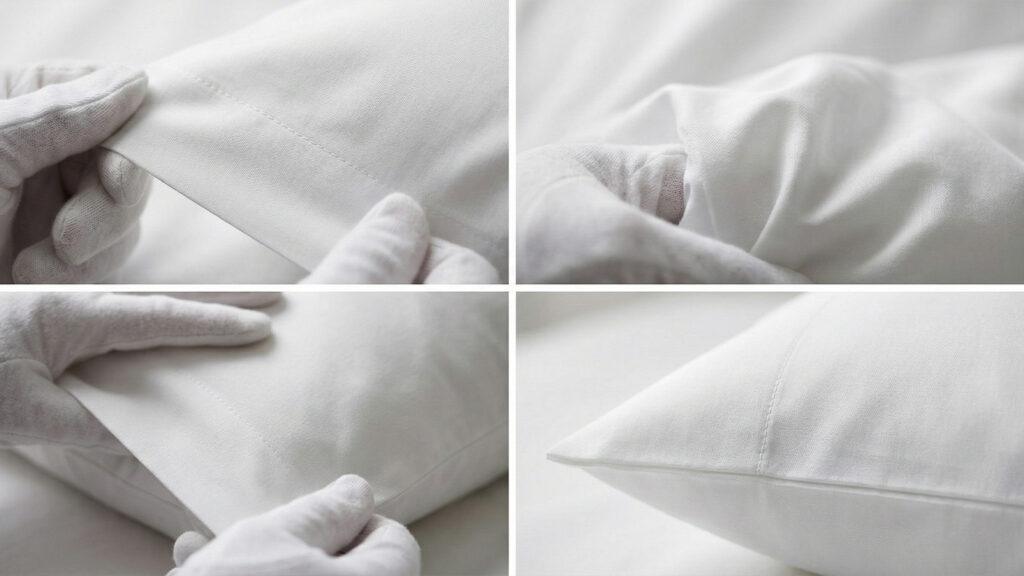
Key Features of Polycotton Pillow Protectors
Here are the key benefits polycotton pillows deliver to hospitality businesses.
- Breathable
Cotton, being a natural material, allows proper air flow, making it adequately breathable for the guests.
- Enhanced Durability
Polycotton pillow protectors are designed to endure the rigors of commercial laundering, ensuring minimum replacement for hotels.
- Hygienic Protective Layer
These act as a hygienic barrier from dust, mites, microbial growth, and minor spills, keeping the pillows clean and safe.
- Hypoallergenic
The blend of synthetic polyester is highly suitable for allergy-prone guests, making it the best choice for a diverse range of guests.
- Energy & Cost-Efficient
Pillow protectors offer hoteliers a simple way to keep pillows fresh by minimizing the need for frequent pillow washing. Furthermore, the quick-drying technology used in the protectors reduces drying time, saving cost and energy.
Learn More: Why Do Wholesale Distributors Source Hotel Linen From Pakistan?
Comparison Between Cotton and Polycotton Pillow Protectors
| Feature | Polycotton Pillow Protectors | Cotton Pillow Protectors |
| Durability | High, for commercial laundering | Moderate; wears sooner with industrial washing |
| Drying Time | Quick-drying; energy efficient | Longer drying time |
| Wrinkle Resistance | High; minimal ironing | Low; prone to wrinkling |
| Hypoallergenic | Excellent for allergy-prone guests | Good, but may harbor mites more easily |
| Cost | More cost-effective due to longevity | A higher replacement rate increases long-term cost |
What is The Best Style for Pillow Protectors?
Choosing the right pillow protector is essential for both hygiene and the longevity of your pillows. While their primary function is protection, the style of closure significantly impacts ease of use and the level of security they offer.
The two most common styles are Zipper and French Fold (or Envelope).
Comparison Between Zipper and French Fold Pillow Protector
| Feature | Zipper Pillow Protector | French Fold (Envelope) Pillow Protector |
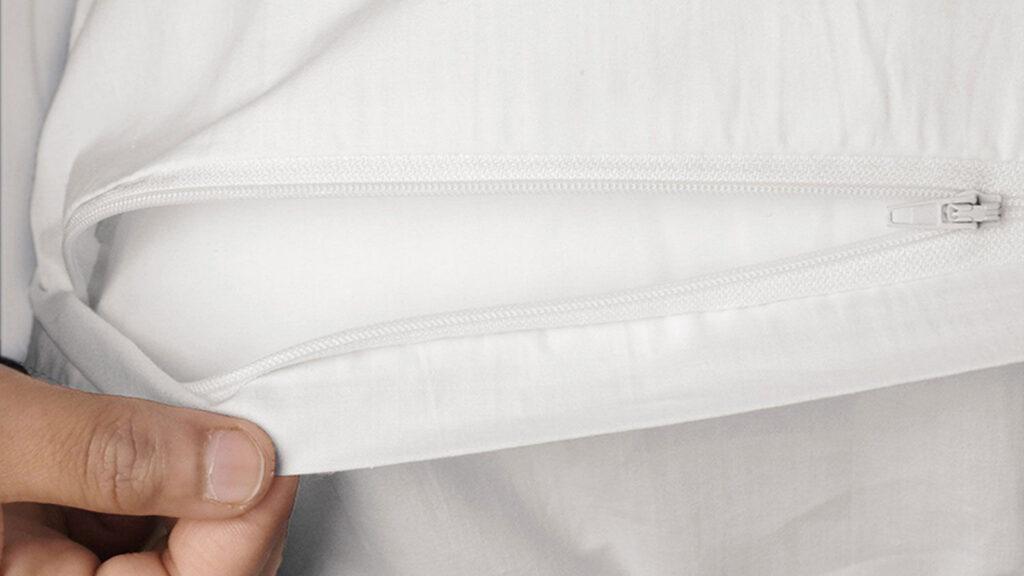
| Closure | Fully enclosed with a durable zipper. | An overlapping flap of fabric (like an envelope). |
| Pillow Protection | Offers maximum, 360-degree protection against dust mites, allergens, spills, and bed bugs. | Provides good protection, but the opening leaves a small gap. |
| Security | The pillow is completely sealed inside; minimal shifting. | The pillow stays in place and is nicely sealed. |
| Ease of Use | Slightly more time-consuming to put on or take off, as the zipper must be fully opened/closed. | Quick and easy to slide the pillow in and out for washing. |
| Comfort | Can sometimes have a slight hard edge from the zipper if not properly closed. | No hard components; often feels seamless and more like a standard pillowcase. |
| Recommended For | Allergy sufferers, high-traffic hospitality settings, and maximum pillow lifespan. | Allergy sufferers, high-traffic hospitality settings, and maximum pillow lifespan are where quick change-out is preferred. |
Why Pillow Protectors Are a Must-Have in Hospitality Settings?
Pillow protectors are an indispensable investment for hotels, resorts, and vacation rentals. They serve multiple critical functions that directly impact guest satisfaction and operational costs:
- Barrier Against Allergens and Dust Mites
Hotels host thousands of guests, making allergen control paramount. Zippered pillow protectors create a sealed environment that prevents dust mites, a common allergen, from colonizing the pillow filling. This ensures a healthier sleep experience for sensitive guests.
- Protection Against Moisture and Stains
Spills, sweat, and facial oils are inevitable. A pillow protector (especially one with a moisture-resistant barrier) prevents these from soaking into the expensive pillow, keeping it fresh, white, and odor-free.
- Extending Pillow Lifespan
By protecting the inner materials from degradation caused by moisture and soil, protectors significantly extend the usable life of the pillow, reducing the frequency and cost of replacement.
- Meeting Hygiene Standards
Guests expect the highest standards of cleanliness. Using a pillow protector, which is washed along with the linens, demonstrates a commitment to deep hygiene that goes beyond a standard pillowcase.
- Bed Bug Prevention
High-quality, zippered protectors can serve as an encasement, making it impossible for bed bugs to infest the pillow core, a crucial defense in the hospitality environment.
Learn More: Wholesale Bed Sheets: Quality Standards Distributors Must Know
Care and Maintenance For Pillow Protectors
Proper care ensures your protectors maintain their effectiveness and longevity:
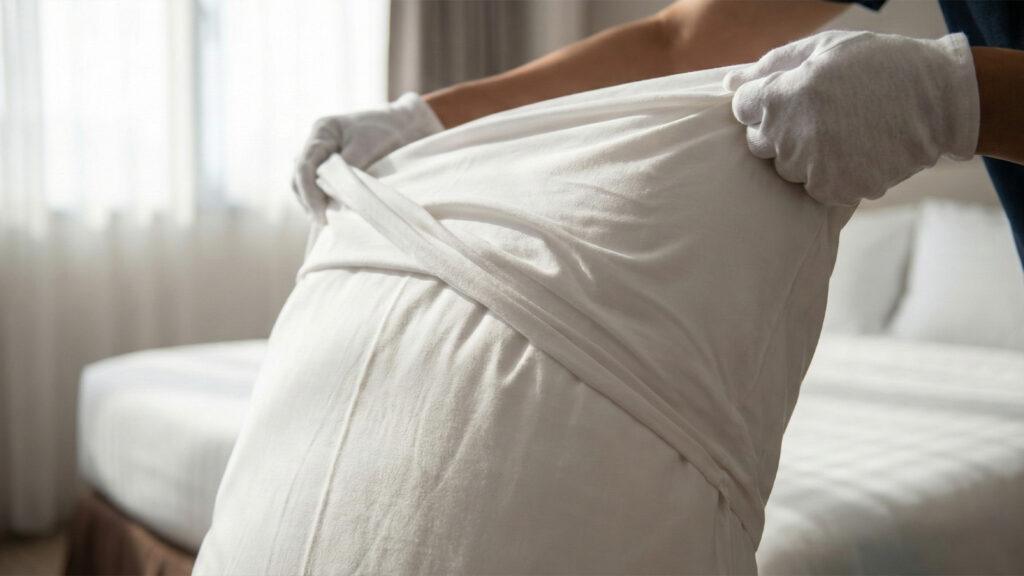
- Frequency: Pillow protectors should be washed as frequently as the pillowcases, or at least every one to two weeks, especially in high-turnover settings.
- Washing Temperature: Always follow the manufacturer’s label. Most cotton or polyester protectors can be washed in warm or hot water (check for thermal washing guidelines if used for bed bug control). Hot water is recommended for sanitization.
- Detergent: Use a mild, non-chlorine bleach detergent. Avoid excessive use of fabric softeners, as they can sometimes reduce the breathability or water-resistance of specialized materials.
- Drying: Tumble dry on a low to medium setting. High heat can damage waterproofing membranes or shrink cotton. Remove promptly to prevent wrinkles.
- Zipper Care: Ensure the zipper is closed before washing to prevent the teeth from snagging on other laundry items.
ACME Textiles: Global Hospitality Textile Manufacturer and Exporter
ACME Textiles is a world-leading manufacturer and exporter specializing in high-quality, durable textile solutions for 50 years in the global hospitality sector. We understand the rigorous demands of commercial laundering and guest satisfaction.
Our range of pillow protectors, available in both premium zippered and envelope styles, is crafted from ultra-fine, tightly woven fabrics to ensure maximum protection and comfort, helping you maintain the highest standards of room hygiene and cost efficiency.
Learn More: What Makes A Hospitality Textile Supply Reliable
Frequently Asked Questions (FAQs)
- Is a pillow protector the same as a pillowcase?
No. A pillow protector is worn under the pillowcase. Its primary purpose is to protect the pillow from moisture, stains, and allergens. The pillowcase is the decorative outer layer that provides direct contact comfort.
- Do zippered protectors make noise?
High-quality modern zippered protectors, especially those made from tightly woven micro-polyester or cotton, are silent. Older, less breathable, or plastic-backed protectors may crinkle, but this is rare with commercial-grade textile products.
- How often should pillows be replaced if using a protector?
While protectors extend the lifespan, pillows still need replacement as they lose their loft and support. With a good protector, a quality polyester pillow may last 2-3 years, and down/feather pillows can last 5+ years.
- Are French Fold protectors suitable for allergy sufferers?
While better than no protector, a French Fold pillow protector does not offer a sealed, 360-degree barrier. Allergy sufferers, particularly in hospitality, are better served by a certified, tightly woven zippered encasement.
Final Words
The decision to use a pillow protector is simple; it’s a non-negotiable step toward hygienic and cost-effective pillow maintenance. Both Zippered and French Fold Pillow protectors are used according to the different needs of hospitality.
For quick room turnovers, French fold provides the ease of sliding the pillows in or out. However, for maximum protection, zippered pillow protectors serve the best.
Visit ACME Textiles to discover our wide range of products and request a quote today!