 Germany
 UK
UK
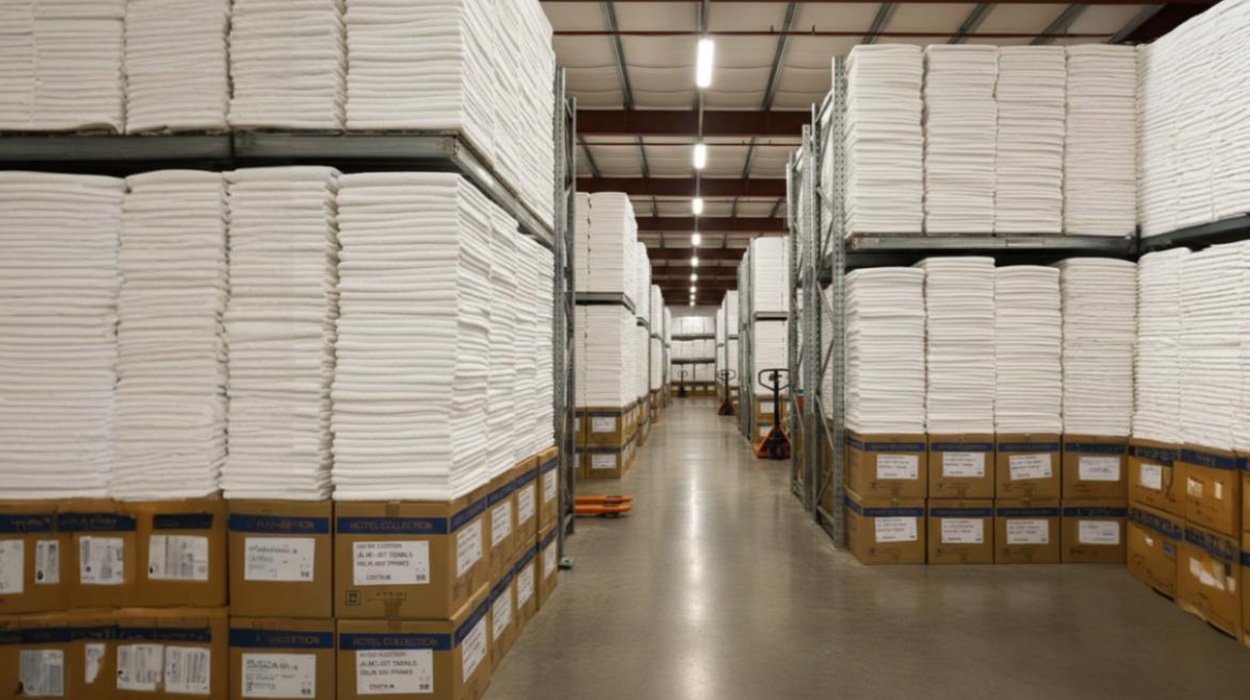
In the hospitality business, a wholesale hotel supply distributor’s reputation depends entirely on the manufacturing of products. If a shipment arrives with frayed edges or towels that pill after a few washes, the hotel doesn’t blame the factory, they blame you.
With rising costs and a demand for longer-lasting linens, distributors can’t afford poor quality. That is why industry leaders have switched to Air-Jet loom technology.
It isn’t just an upgrade; it’s a strategic move to prevent returns, stop complaints, and protect your contracts.
What is an Air-Jet Loom? (The Technical Edge)
To understand the value, we must understand the mechanics. Traditionally, towels were woven using shuttle or rapier looms, where a mechanical arm or projectile carries the weft yarn across the warp. While functional, these methods are limited by mechanical friction and slower speeds.
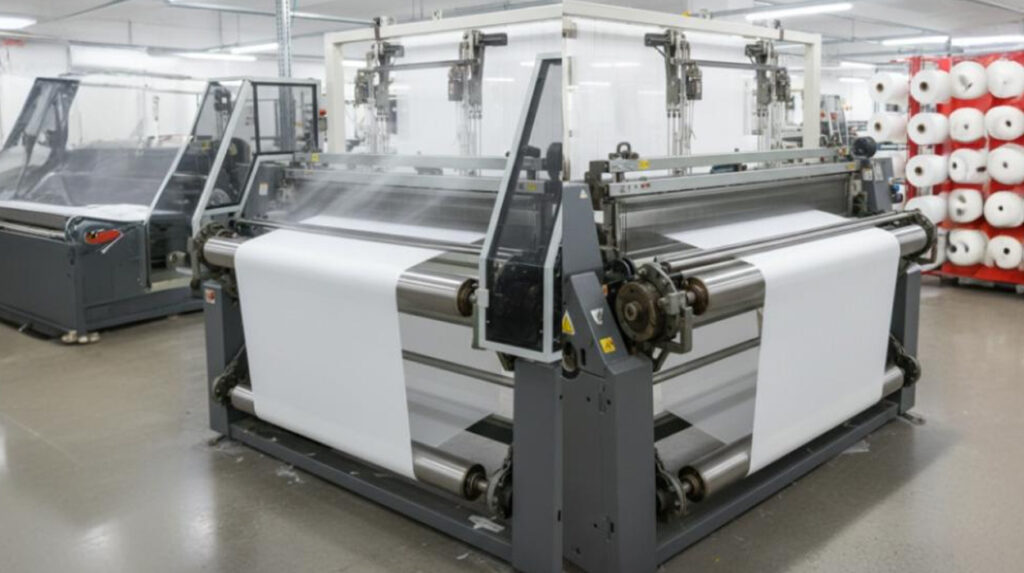
Air-Jet technology replaces these mechanical arms with a high-pressure stream of compressed air. This “jet” propels the yarn across the loom at staggering speeds, often exceeding 1,000 picks per minute (PPM).
For a distributor, this translates to precision. Every single loop is placed with calculated force, ensuring that the “terry” (the loop of the towel) is uniform across the entire 50,000-unit production run.
5 Reasons Why Air-Jet Towels Outperform the Competition
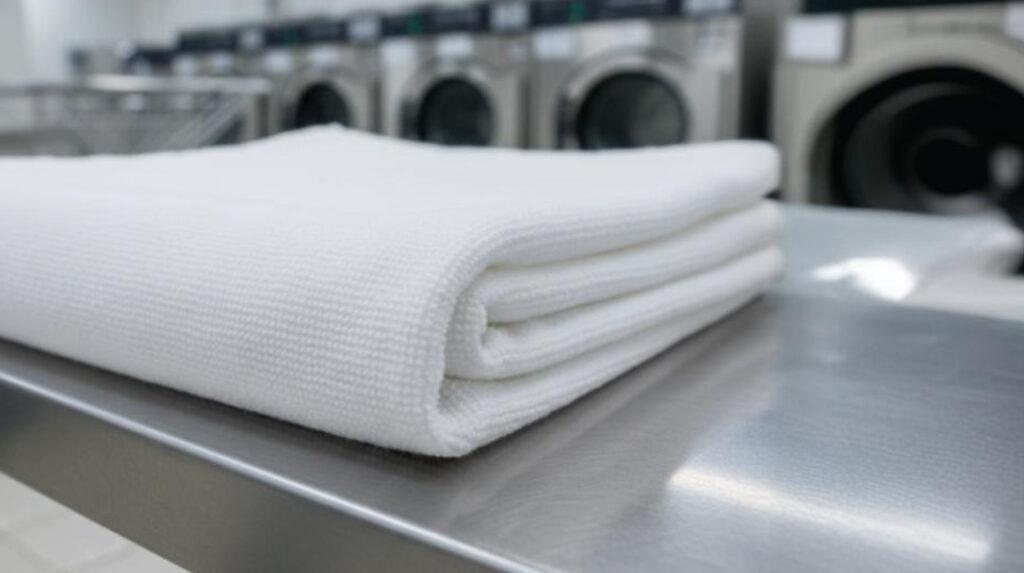
Here are the 5 main reasons to get Air-Jet Loom Towels for your hospitality distribution business.
1. Unmatched Batch-to-Batch Uniformity
One of the biggest headaches for a distributor is receiving a container where the towels in the back look different from the towels in the front. Air-jet looms utilize electronic tension sensors that adjust in real-time. This eliminates the “wonky” borders and varying pile heights common in rapier weaving, ensuring your client receives the exact same product every time they reorder.
2. Structural Integrity for the “Commercial Wash” Test
A hotel towel doesn’t live a gentle life; it lives in a cycle of high-heat industrial chemicals and heavy-duty extractors. Air-jet weaving creates a more stable “ground” fabric. Because the tension is so consistent, the loops are locked in tighter. This significantly reduces the risk of “pulls” and thinning, allowing the towel to survive 150+ industrial laundering without losing its shape.
3. Enhanced Absorbency & Hand-Feel
Guest satisfaction is measured in “fluffiness.” The air-propulsion method is gentler on the cotton fibers than mechanical grippers. This keeps the cotton “open” and airy rather than compressed. The result is a towel that feels heavier and more luxurious than its actual GSM (grams per square meter) might suggest, providing a premium guest experience at a competitive price point.
4. Drastically Lower Defect Rates
Mechanical looms are prone to oil spots and “weft stops” that leave visible lines in the fabric. Air-jet looms have fewer moving parts touching the yarn, which leads to higher “Grade A” yields. When you are moving thousands of dozens, a 2% reduction in defect rates can save a distributor tens of thousands of dollars in annual “returns and allowances.”
5. Speed: The Cure for Supply Chain Gaps
In 2025, speed is a currency. Air-jet looms produce fabric 2x to 3x faster than older technologies. For a distributor facing a sudden spike in demand from a resort group, this means your “out-of-stock” window is cut in half. You become the reliable partner who can fulfill orders while others are still waiting for the looms to turn.
Air-Jet vs. Rapier Looms: A Comparison for Sourcing Managers
| Feature | Air-Jet Loom | Rapier/Shuttle Loom |
| Production Speed | Ultra-High (Best for Bulk) | Moderate to Slow |
| Tensile Strength | High (Consistent) | Variable |
| Surface Finish | Smooth & Uniform | Occasional Mechanical Slubs |
| Lead Times | Short (Efficient) | Longer |
The ACME Textiles Advantage: Powering Global Distribution
At ACME Textiles, we didn’t become the world’s leading source for hospitality supply by following the status quo. We recognized early on that for wholesale distributors to thrive, they needed a manufacturing partner that prioritized technical precision over cheap shortcuts. Our facilities are anchored by the latest generation of Air-Jet looms, allowing us to produce millions of high-performance economy bath towels as well as luxury towels that meet the rigorous standards of 5-star global hotel chains.
As the No. 1 source for hospitality supply globally, ACME Textiles serves as the backbone for wholesale distributors across six continents. We don’t just sell towels; we sell confidence. Our Air-Jet production lines ensure that every container you receive is a carbon copy of the gold-standard sample. From custom Dobby borders to high-tensile Jacquard weaves, ACME Textiles provides the scale and quality that allow our partners to dominate their local markets.
Frequently Asked Question (FAQs)
- Are air-jet towels better than ring-spun towels?
They serve different purposes. Air-jet refers to the weaving method, while ring-spun refers to the yarn quality. For the ultimate hospitality product, ACME Textiles recommends using Ring-spun combed cotton woven on an Air-Jet loom.
- Why do air-jet towels last longer in industrial laundries?
The consistent air-pressure weaving locks the weft and warp together more tightly than mechanical looms. This prevents the “unraveling” effect often seen in cheaper towels after exposure to high-heat commercial dryers.
- Can air-jet looms handle custom hotel branding?
Absolutely. Modern Air-Jet looms are fully compatible with electronic Jacquard systems, allowing for high-speed weaving of custom logos and bespoke border designs without sacrificing the speed of production.
Final Words
The hospitality industry is more competitive than ever. Hotels are demanding longer-lasting linens to meet sustainability goals, and guests are more vocal than ever about towel quality in online reviews. As a distributor, staying relevant means providing products that can withstand the heat.